One of the 3 sifakas on WAnimals
Mammals · Primates · Indriidae
Milne-Edward's Sifaka
Propithecus edwardsi
It faces a very high risk of extinction in the wild in the near future. See full glossary
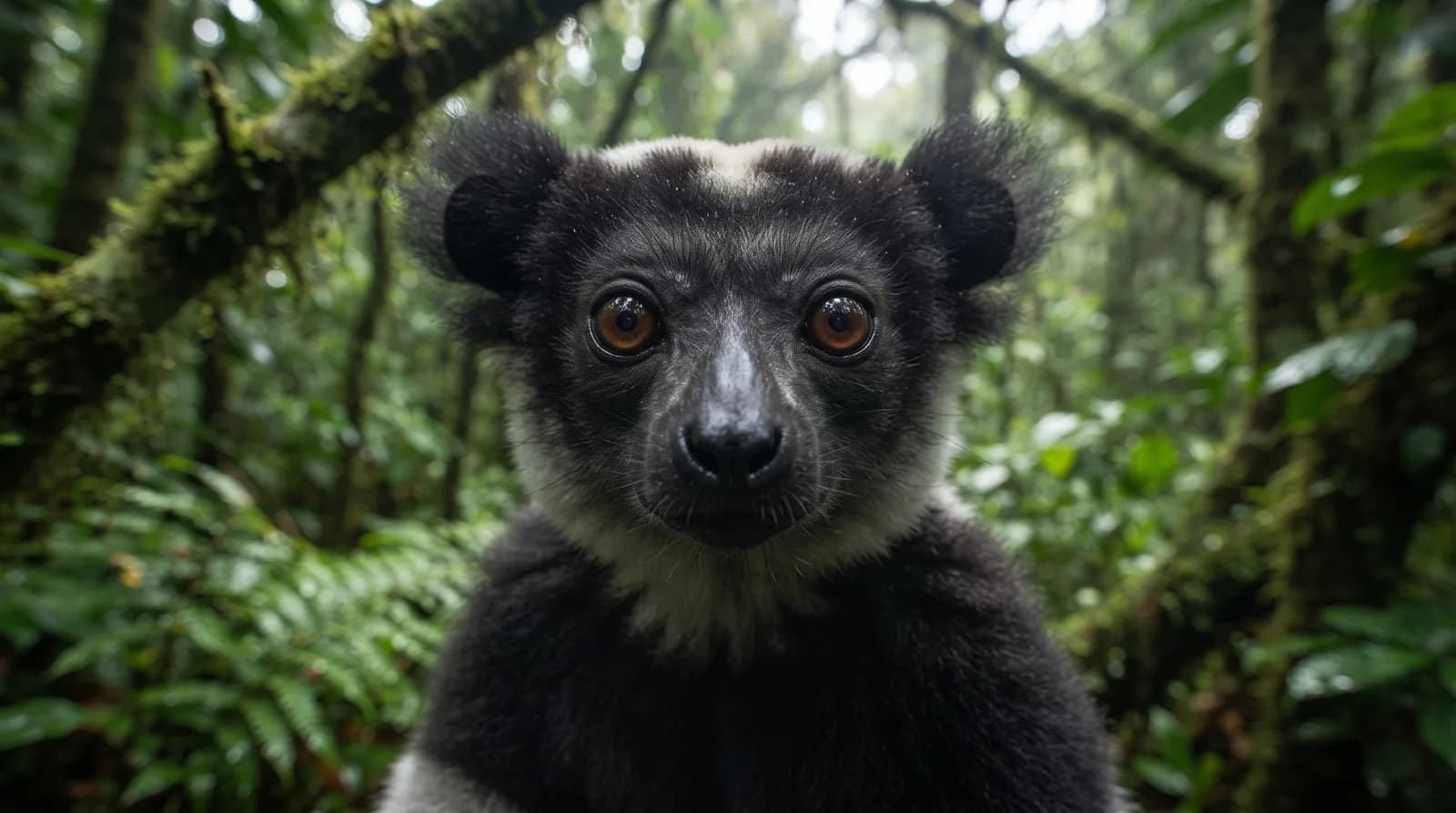
Milne-Edwards's sifaka is a large, dark lemur, black with a broad white patch on the back, native to the rainforests of eastern Madagascar. It lives in small groups in which the females are dominant, a characteristic trait of lemurs. It feeds on leaves, seeds and unripe fruit. It is one of the best-studied lemur populations in the world thanks to continuous monitoring in Ranomafana National Park since the 1980s.
Weight
5 kg – 6.5 kg
Size
42 cm – 52 cm
Lifespan
25 years
Diet
Herbivore
Feeds mainly on plants.
Activity
Diurnal
Active mainly during the day.
Sighting difficulty
Hard
Fun facts
- It moves by clinging to vertical trunks and launching itself from one to the next with its hind legs, never resting horizontally: it is a pure vertical clinger and leaper.
- Its gut flora breaks down toxic plant compounds that other lemurs cannot tolerate, which opens up to it leaves and seeds its competitors cannot eat.
Life cycle & biology
- Skeleton type
- Vertebrate - internal bony skeleton (mammal)
- Habitat & environment
- Montane rainforest of eastern Madagascar, between 600 and 1,600 metres
- Sexual maturity
- 4 years
- Gestation / incubation
- 6 months
- Litter / clutch size
- 1
Sources consulted: https://es.wikipedia.org/wiki/Propithecus_edwardsi
Where to watch it
Parks and dive sites where this species has been documented.
Related species
Other species in the catalogue with the most in common with Milne-Edward's Sifaka — same habitat, park, country, tags or family.
 Critically Endangered
Indri
Indri indri
Coquerel's Sifaka
Propithecus coquereli
Ring-tailed Lemur
Lemur catta
Aye-aye
Daubentonia madagascariensis
How to help
The milne-edward's sifaka is classified as endangered. Organizations such as UICN, WWF y Wildlife Conservation Society work specifically on its conservation and that of its habitat; looking into their programs is a good starting point if you want to get involved.
It's documented in 3 real protected areas — part of why protecting these places matters for its conservation.
Keep exploring
Based on what we already know about milne-edward's sifaka.
Comments
Share an experience, a fun fact or a tip for seeing the milne-edward's sifaka.
Be the first to comment.