One of the 6 lemurs on WAnimals
Mammals · Primates · Lemuridae
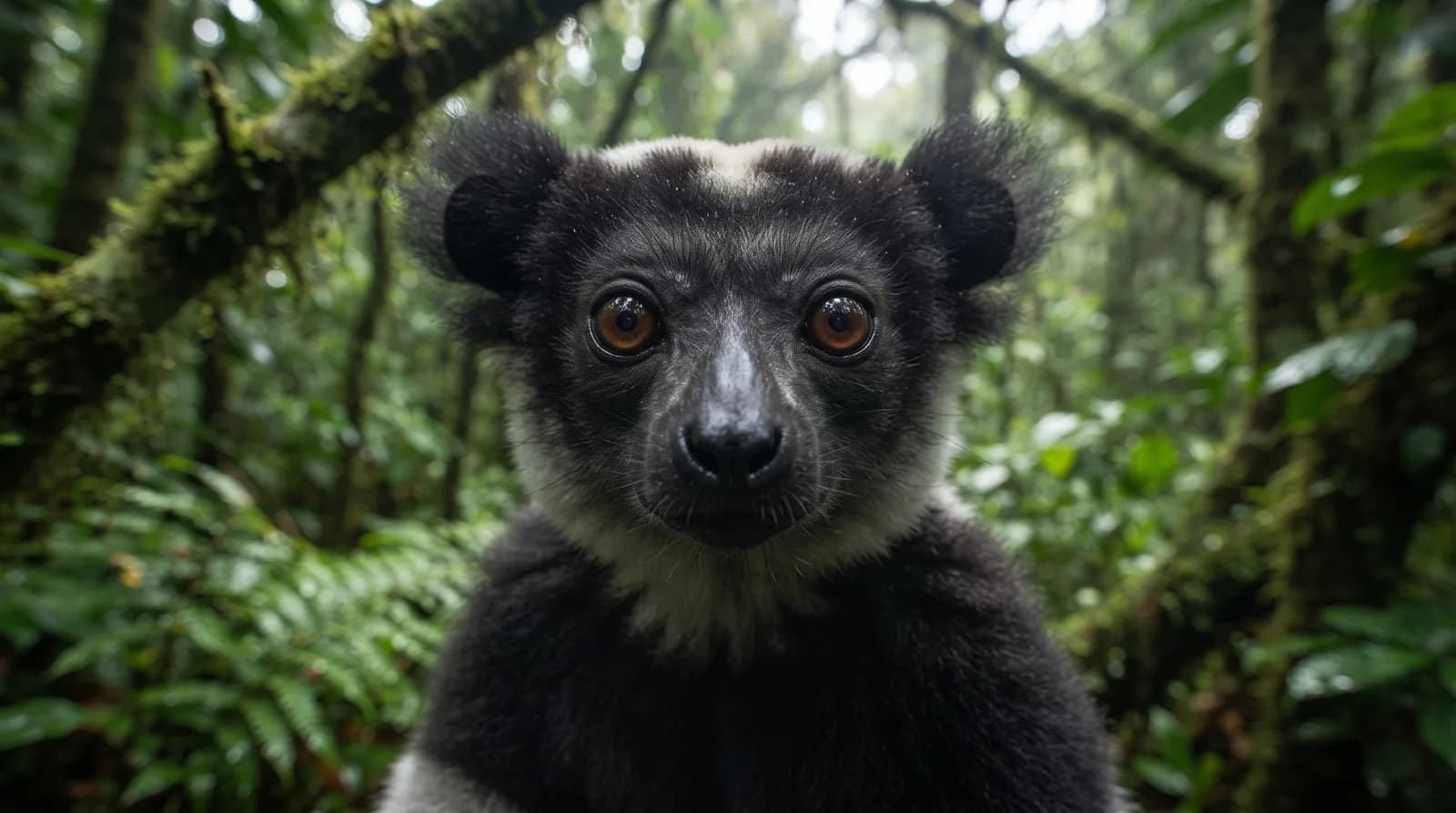
Black-and-white Ruffed Lemur
Varecia variegata
It faces an extremely high risk of imminent extinction in the wild. See full glossary
It is one of the largest known pollinators in the world: it feeds on flowers face-first, and the pollen sticks to the fur of its face and travels from tree to tree. Unlike other lemurs, it carries its young in its mouth.
Weight
3.1 kg – 4.5 kg
Size
1 m – 1.2 m
Lifespan
20 years
Diet
Frugivore
Feeds mainly on fruit.
Activity
Diurnal
Active mainly during the day.
Social structure
Family group
Lives in small family groups with close bonds.
Sighting difficulty
Very hard
Fun facts
- It is one of the largest pollinators known among the mammals.
- It carries its young in its mouth, not clinging to its body as most lemurs do.
- More than half its births are twins.
Life cycle & biology
- Skeleton type
- Vertebrate - internal bony skeleton (mammal)
- Habitat & environment
- High-canopy tropical rainforest of the east coast of Madagascar
- Birth weight
- 107.17 grams
- Size at birth
- Extremely undeveloped at birth, carried in its mother's mouth and parked in nests while she forages, unlike most lemurs
- Sexual maturity
- 1.5-3 years
- Gestation / incubation
- 90-120 days (~3-4 months), notably short for its body size
- Litter / clutch size
- 1 to 6 young per litter (2-3 most often), with over 50% of births being twins
- Lifespan in captivity
- Documented record of up to 36-40 years in captivity
Sources consulted: AnAge; Animalia.bio; SeaWorld/Busch Gardens; Smithsonian National Zoo; Wisconsin National Primate Research Center; Animal Diversity Web; Duke Lemur Center
Where to find it
See its range on the interactive mapBest time: All year round in the rainforests of eastern Madagascar, by day; at Andasibe and Ranomafana its strident chorus carries for kilometres.
Where to watch it
Parks and dive sites where this species has been documented.
Related species
Other species in the catalogue with the most in common with Black-and-white Ruffed Lemur — same habitat, park, country, tags or family.
Ring-tailed Lemur
Lemur catta
Brown Lemur
Eulemur fulvus
Mongoose Lemur
Eulemur mongoz
 Critically Endangered
Indri
Indri indri
Golden Mantella
Mantella aurantiaca
How to help
The black-and-white ruffed lemur is classified as critically endangered. Organizations such as UICN, WWF y Wildlife Conservation Society work specifically on its conservation and that of its habitat; looking into their programs is a good starting point if you want to get involved.
It's documented in 5 real protected areas — part of why protecting these places matters for its conservation.
Keep exploring
Based on what we already know about black-and-white ruffed lemur.
Comments
Share an experience, a fun fact or a tip for seeing the black-and-white ruffed lemur.
Be the first to comment.