One of the 6 lemurs on WAnimals
Mammals · Primates · Lemuridae
Mongoose Lemur
Eulemur mongoz
It faces an extremely high risk of imminent extinction in the wild. See full glossary
The mongoose lemur is a medium-sized primate, greyish brown, with the males wearing reddish cheek whiskers that are white in females. It lives in small family groups made up of a pair and their young. It feeds mainly on nectar, fruit and flowers, and is an important pollinator of the Madagascar baobab. Its populations have collapsed through logging and hunting, to the point that it is now among the most threatened lemurs.
Weight
1.1 kg – 1.6 kg
Size
30 cm – 35 cm
Lifespan
26 years
Diet
Herbivore
Feeds mainly on plants.
Activity
Irregular activity
Active at irregular times, by day or night depending on circumstances.
Social structure
In pairs
Usually lives in pairs, sometimes for life.
Sighting difficulty
Very hard
Fun facts
- GeneralIt shifts between day and night activity with the season.
- It is one of only two lemurs living outside Madagascar: there are populations in the Comoros, probably taken there by people centuries ago.
- It changes its timetable with the season: it is diurnal during the wet season and becomes nocturnal in the dry one, a flexibility exceptional among primates.
Life cycle & biology
- Skeleton type
- Vertebrate - internal bony skeleton (mammal)
- Habitat & environment
- Dry deciduous forest of north-western Madagascar and moist forest of the Comoros
- Sexual maturity
- 21.4 months
- Gestation / incubation
- 3.9 months
- Litter / clutch size
- 1
Sources consulted: https://www.iucnredlist.org/ | https://animaldiversity.org/ | https://es.wikipedia.org/
Where to watch it
Parks and dive sites where this species has been documented.
Related species
Other species in the catalogue with the most in common with Mongoose Lemur — same habitat, park, country, tags or family.
Brown Lemur
Eulemur fulvus
Black-and-white Ruffed Lemur
Varecia variegata
Verreaux's Sifaka
Propithecus verreauxi
 Vulnerable
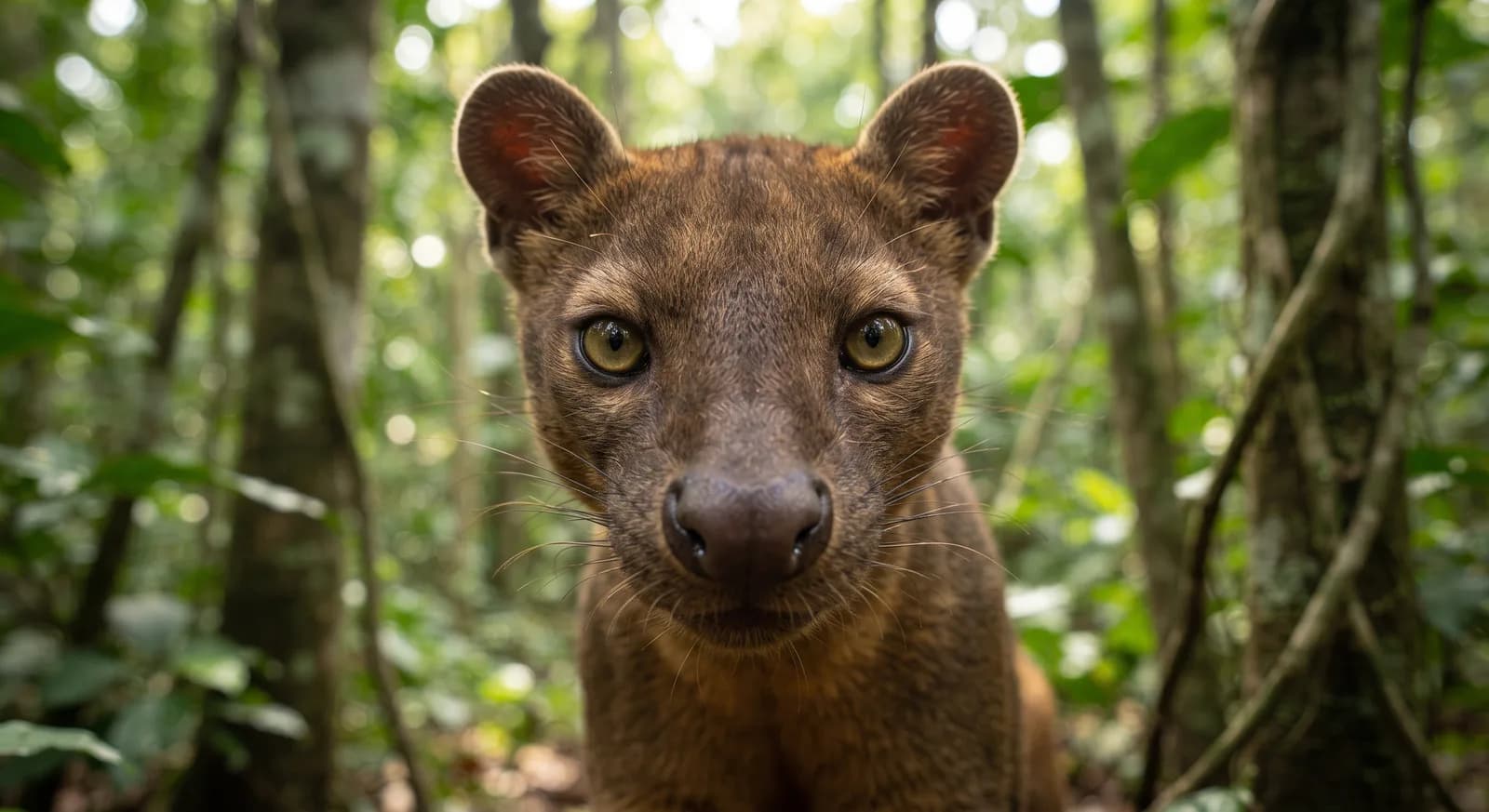
Fossa
Cryptoprocta ferox
Coquerel's Sifaka
Propithecus coquereli
Comoro Blue-Pigeon
Alectroenas sganzini
How to help
The mongoose lemur is classified as critically endangered. Organizations such as UICN, WWF y Wildlife Conservation Society work specifically on its conservation and that of its habitat; looking into their programs is a good starting point if you want to get involved.
Keep exploring
Based on what we already know about mongoose lemur.
Comments
Share an experience, a fun fact or a tip for seeing the mongoose lemur.
Be the first to comment.