One of the 3 sifakas on WAnimals
Mammals · Primates · Indriidae
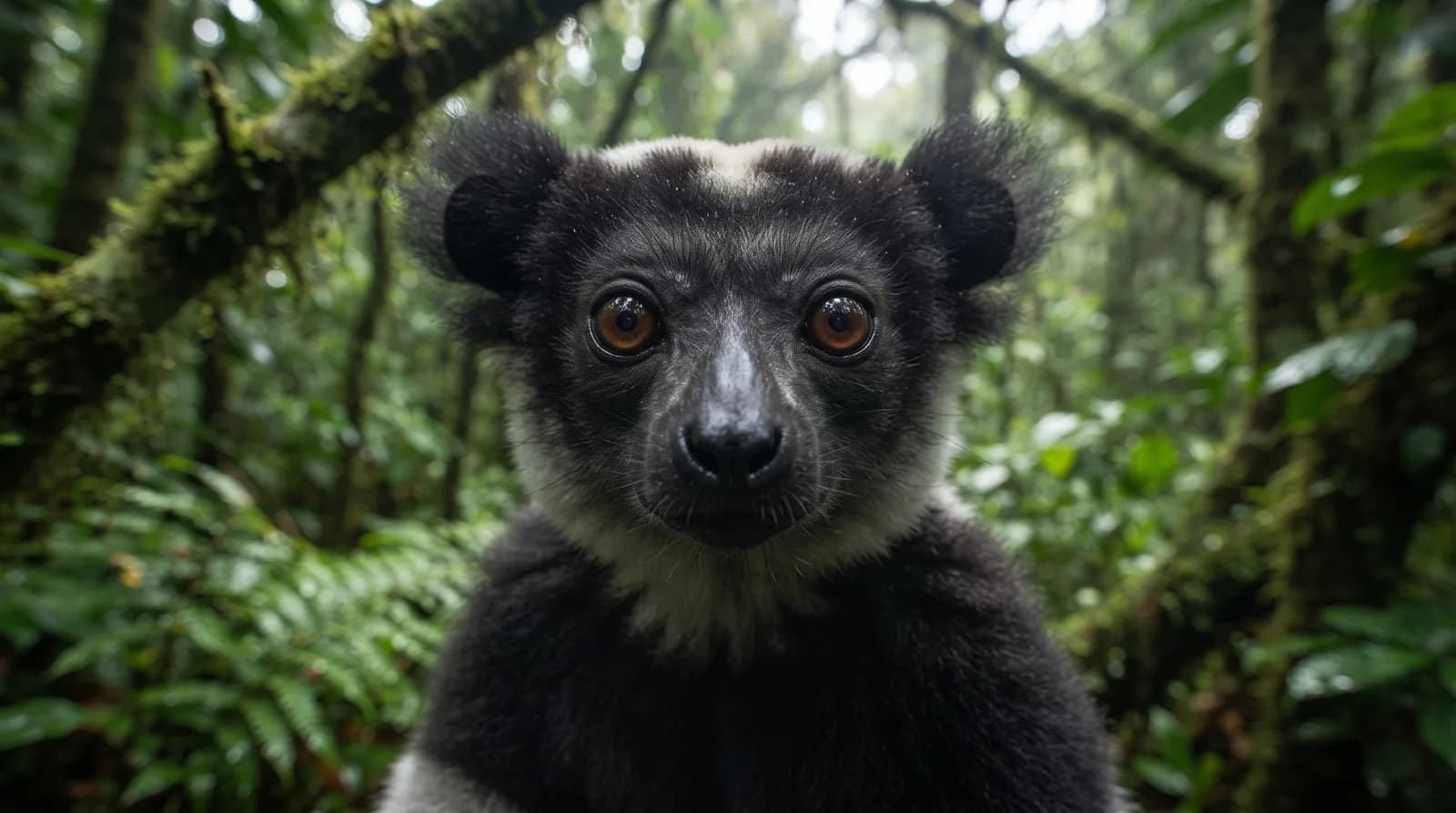
Verreaux's Sifaka
Propithecus verreauxi
It faces an extremely high risk of imminent extinction in the wild. See full glossary
Its only way of moving on the ground is a peculiar two-legged sideways hop with the arms held up, known as the sifaka dance, since its body is built almost entirely for moving vertically between trees.
Weight
3 kg – 4 kg
Size
42.5 cm – 45 cm
Lifespan
31 years
Diet
Herbivore
Feeds mainly on plants.
Activity
Diurnal
Active mainly during the day.
Social structure
Family group
Lives in small family groups with close bonds.
Sighting difficulty
Very hard
Fun facts
- Males come in two morphs according to the chest markings they carry, linked to differences in social dominance.
- It feeds mainly on leaves, supplemented with fruit, seeds, flowers and bark according to the season.
- It lives in dry deciduous forest and spiny thicket of western and southern Madagascar.
Life cycle & biology
- Skeleton type
- Vertebrate - internal bony skeleton (mammal)
- Habitat & environment
- Dry deciduous forest and spiny thicket of western and southern Madagascar
- Birth weight
- ~40 grams
- Size at birth
- Carried against its mother's belly for the first 2-3 months, then on her back
- Sexual maturity
- 2.5-3.5 years (some sources give as much as 3-5 years)
- Gestation / incubation
- 130-170 days (4.3-5.7 months)
- Litter / clutch size
- 1 young a year
- Lifespan in captivity
- Documented record of up to 30.5 years in captivity
Sources consulted: Animal Diversity Web; Animalia.bio; New England Primate Conservancy; AnAge (genomics.senescence.info); BioDB; Wildlife Madagascar; Wikipedia (Verreaux's sifaka); Critter Science; PMC (group size fitness study)
Where to watch it
Parks and dive sites where this species has been documented.
Related species
Other species in the catalogue with the most in common with Verreaux's Sifaka — same habitat, park, country, tags or family.
Coquerel's Sifaka
Propithecus coquereli
 Critically Endangered
Indri
Indri indri
Mongoose Lemur
Eulemur mongoz
Radiated Tortoise
Astrochelys radiata
Milne-Edward's Sifaka
Propithecus edwardsi
Ring-tailed Lemur
Lemur catta
How to help
The verreaux's sifaka is classified as critically endangered. Organizations such as UICN, WWF y Wildlife Conservation Society work specifically on its conservation and that of its habitat; looking into their programs is a good starting point if you want to get involved.
It's documented in 3 real protected areas — part of why protecting these places matters for its conservation.
Keep exploring
Based on what we already know about verreaux's sifaka.
Comments
Share an experience, a fun fact or a tip for seeing the verreaux's sifaka.
Be the first to comment.