One of the 3 tarsiers on WAnimals
Mammals · Primates · Tarsiidae
Philippine Tarsier
Tarsius syrichta
It could become endangered in the near future if current threats go unchecked. See full glossary
It has the largest eye-to-body ratio of any mammal, with individual eyes bigger than its own brain.
Weight
80 g – 165 g
Size
8.5 cm – 16 cm
Lifespan
12 years
Diet
Carnivore
Feeds mainly on other animals.
Activity
Nocturnal
Active mainly at night.
Social structure
Solitary
Lives and hunts alone, joining others only to breed.
Sighting difficulty
Moderate
Fun facts
- Unable to move its eyes within their sockets, it has evolved neck vertebrae that let it turn its head almost 180 degrees, much as an owl does.
- It eats insects and occasionally small vertebrates such as lizards, frogs and small birds.
- It lives in lowland rainforest, bamboo stands and dense scrub on several islands of the Philippines.
Life cycle & biology
- Skeleton type
- Vertebrate - internal bony skeleton (mammal)
- Habitat & environment
- Lowland rainforest, bamboo stands and dense scrub of the islands of Bohol, Samar, Leyte and Mindanao in the Philippines
- Birth weight
- No precise birth weight found; born very well developed for its size
- Size at birth
- Born fully furred and with its eyes open, able to climb within a day
- Sexual maturity
- 1-2 years
- Gestation / incubation
- ~6 months (the traditional approximation; studies of related species suggest ~178-179 days)
- Litter / clutch size
- 1 young per birth
- Lifespan in captivity
- Documented record of up to 13.5-16 years in captivity
Sources consulted: AnAge (genomics.senescence.info); Animal Diversity Web; ResearchGate (tarsier longevity study); A-Z Animals; Zoo-EKZO; Animal Spot; Animalia.bio
Where to find it
See its range on the interactive mapBest time: All year round on Bohol, Leyte and Samar, at dusk; by day it sleeps clinging to vertical stems in dense undergrowth.
Where to watch it
Parks and dive sites where this species has been documented.
Related species
Other species in the catalogue with the most in common with Philippine Tarsier — same habitat, park, country, tags or family.
Western Tarsier
Tarsius bancanus
Philippine Flying Lemur
Cynocephalus volans
Tokay Gecko
Gekko gecko
 Vulnerable
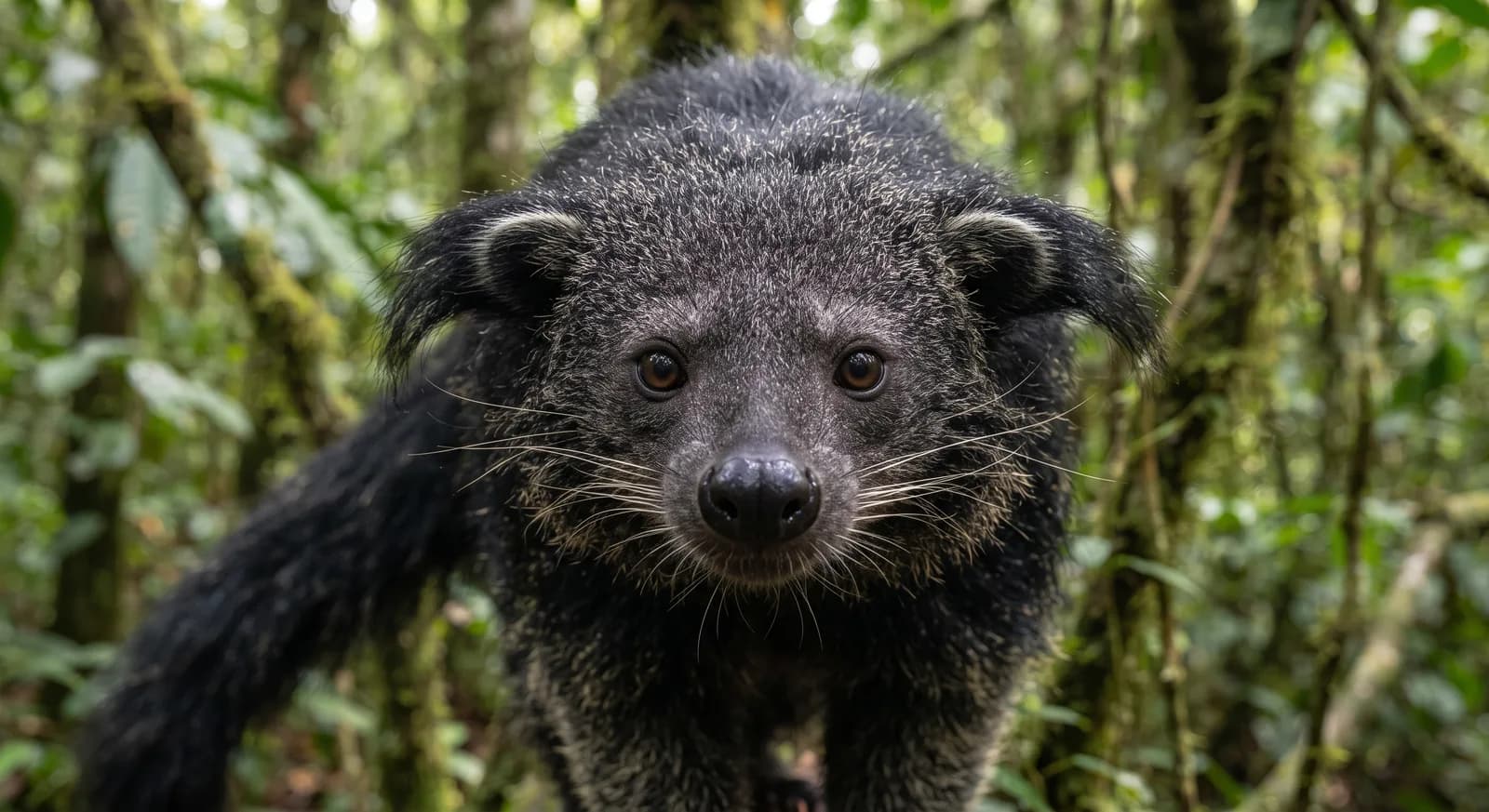
Binturong
Arctictis binturong
King Cobra
Ophiophagus hannah
Common House Gecko
Hemidactylus frenatus
Keep exploring
Based on what we already know about philippine tarsier.
Comments
Share an experience, a fun fact or a tip for seeing the philippine tarsier.
Be the first to comment.