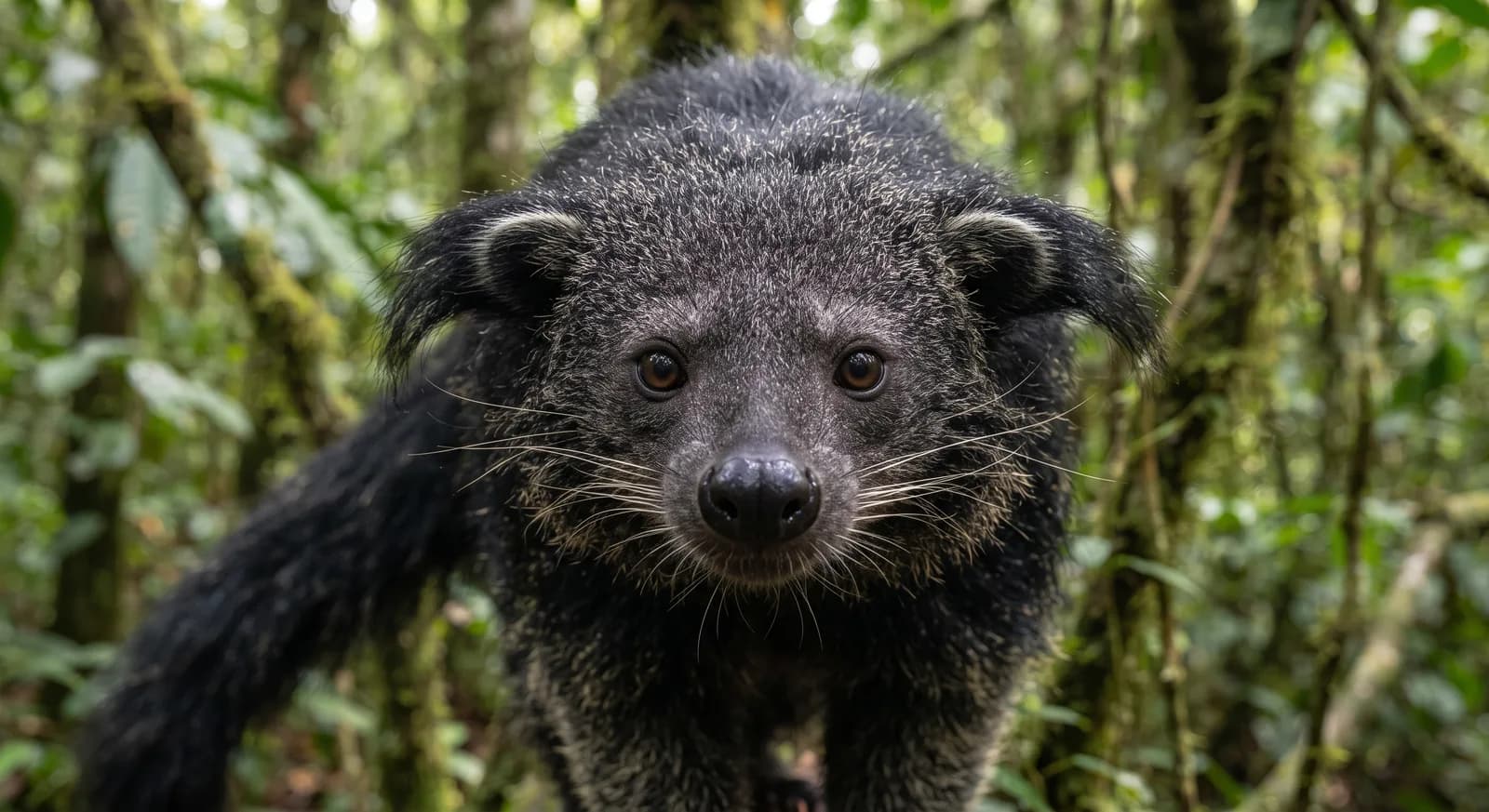
Mammals · Carnivora · Viverridae
Binturong
Arctictis binturong
It faces a high risk of extinction in the wild over the medium term. See full glossary
Its distinctive scent, likened to buttered popcorn, comes from a compound called 2-acetyl-1-pyrroline in its glandular secretions.
Weight
9 kg – 20 kg
Size
60 cm – 96 cm
Lifespan
18 years
Diet
Omnivore
Combines animal and plant food depending on availability.
Activity
Nocturnal
Active mainly at night.
Social structure
Solitary
Lives and hunts alone, joining others only to breed.
Sighting difficulty
Moderate
Fun facts
- It is one of the few Old World carnivores with a prehensile tail, used as a genuine fifth limb when climbing.
- It feeds mainly on figs and other forest fruit, supplemented with small vertebrates and invertebrates.
- It is the largest viverrid, living in the dense tropical forests of South and South East Asia.
- comunicaciónIt gives off a scent much like freshly made popcorn, thanks to a chemical compound in its urine used to mark territory.
- anatomíaIt is one of the few carnivores with a prehensile tail, which it uses as a fifth limb to move through the branches.
Life cycle & biology
- Skeleton type
- Vertebrate - internal bony skeleton (mammal)
- Habitat & environment
- Dense tropical forest of South and South East Asia, living mainly in the trees
- Birth weight
- ~142 g at birth, eyes closed
- Size at birth
- ~142 g at birth
- Sexual maturity
- Female: ~30 months | Male: ~28 months
- Gestation / incubation
- 84-99 days (~90-92 days), possibly including delayed implantation
- Litter / clutch size
- 1 to 6 young per litter (most commonly 2)
- Lifespan in captivity
- Documented record of up to 25-27 years
Sources consulted: A-Z Animals; Animal Diversity Web; AnimalWised; Discover Wildlife; AnAge (genomics.senescence.info)
Where to find it
See its range on the interactive mapWhere to watch it
Parques y spots de buceo donde se ha documentado esta especie — se muestran 10 de 22 documentados.
Related species
Other species in the catalogue with the most in common with Binturong — same habitat, park, country, tags or family.
Common Palm Civet
Paradoxurus hermaphroditus
Western Tarsier
Tarsius bancanus
 Vulnerable
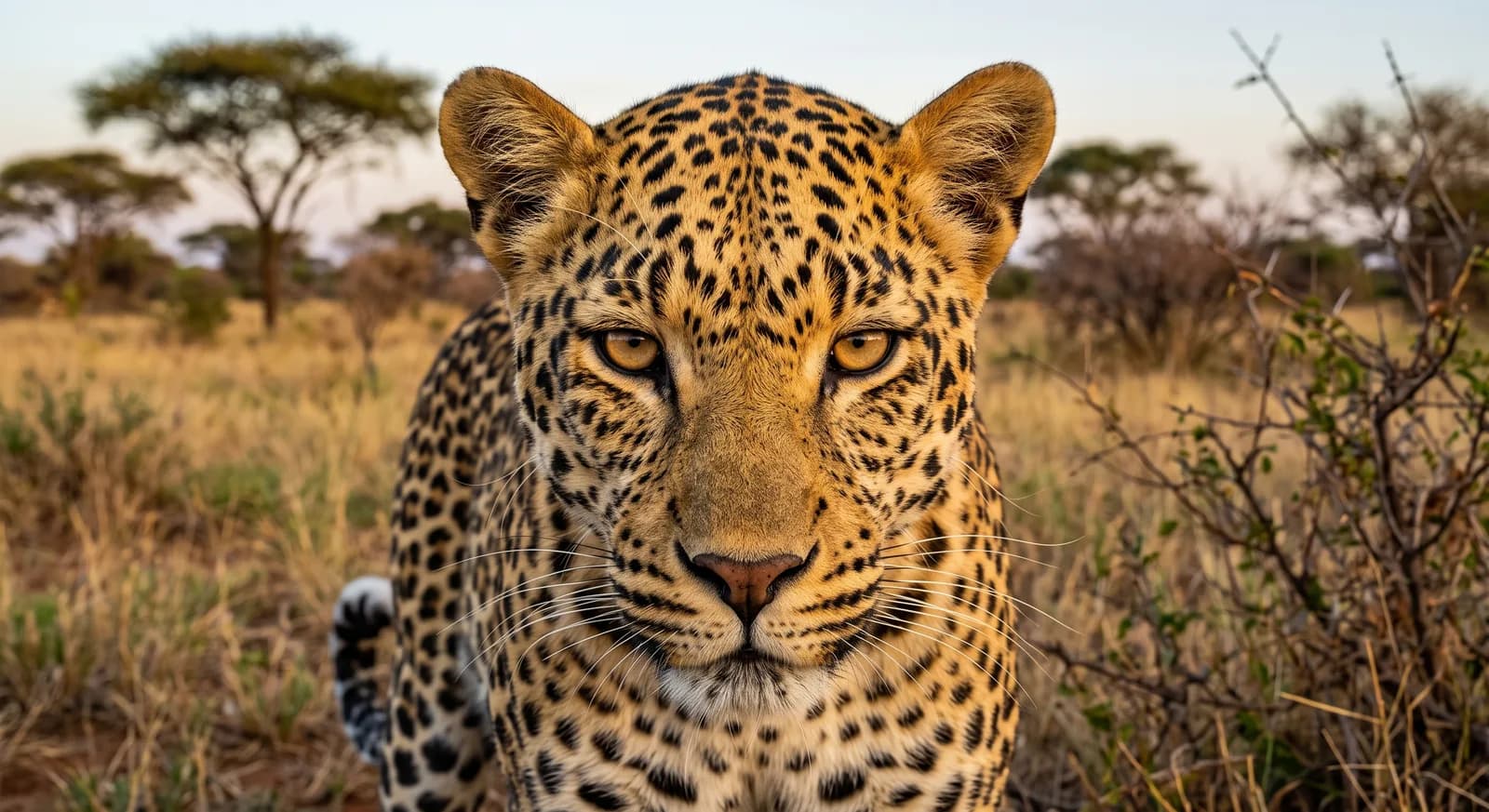
Leopard
Panthera pardus
 Vulnerable
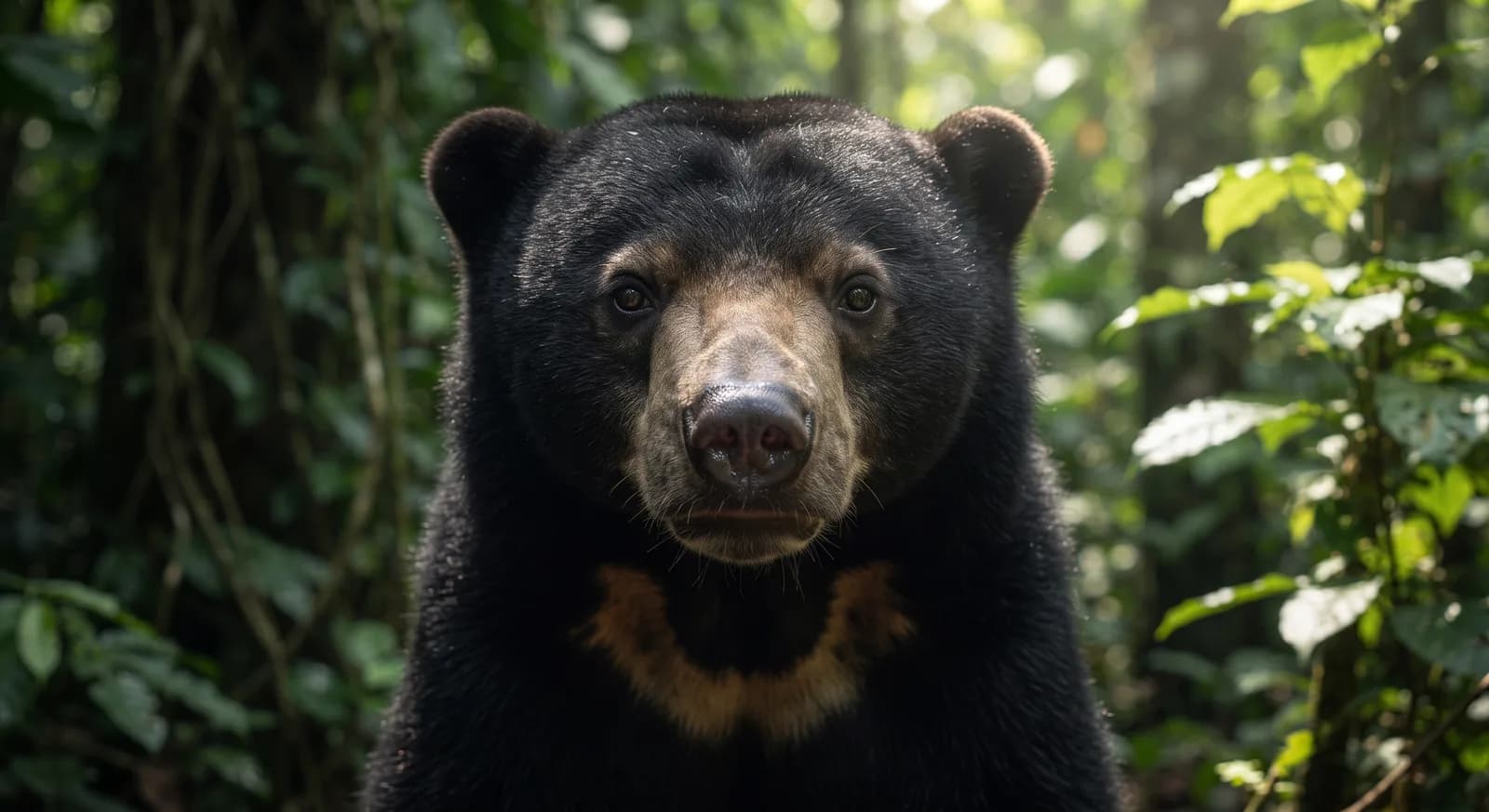
Sun Bear
Helarctos malayanus
 Vulnerable
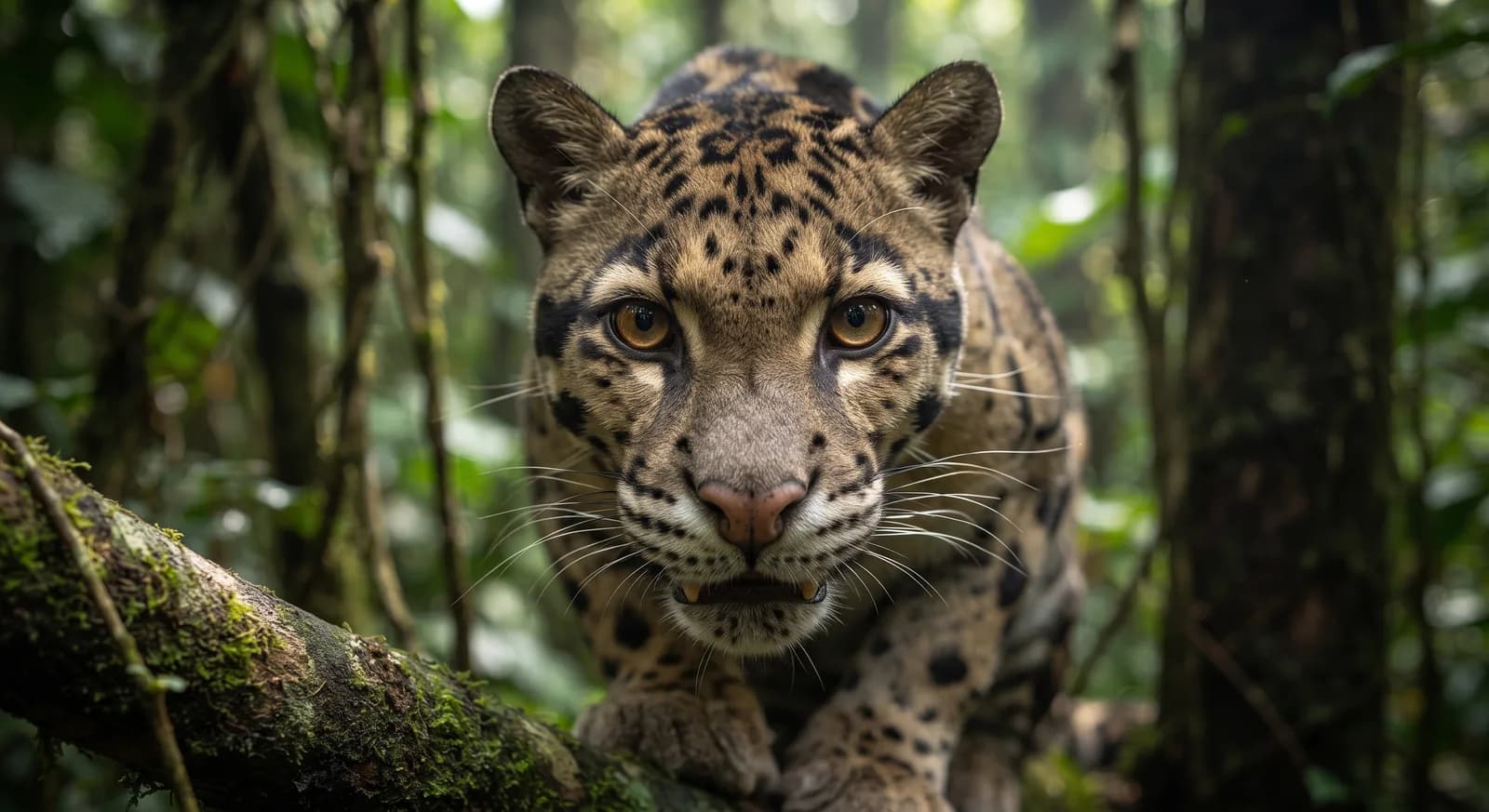
Clouded Leopard
Neofelis nebulosa
Great Argus
Argusianus argus
How to help
The binturong is classified as vulnerable. Organizations such as UICN, WWF y Wildlife Conservation Society work specifically on its conservation and that of its habitat; looking into their programs is a good starting point if you want to get involved.
It's documented in 9 real protected areas — part of why protecting these places matters for its conservation.
Keep exploring
Based on what we already know about binturong.
Comments
Share an experience, a fun fact or a tip for seeing the binturong.
Be the first to comment.