Aoraki/Mount Cook
New Zealand · South IslandIt protects Aoraki, New Zealand's highest peak and the cradle of New Zealand mountaineering, Edmund Hillary included
Area
707 km²
Declared in
1953
Region
South Island
Climate
Tropical, Templado, Montañoso
Best time
December to February
Highlight
It protects Aoraki, New Zealand's highest peak and the cradle of New Zealand mountaineering, Edmund Hillary included
Declared in 1953, it protects Aoraki/Mount Cook (3,724 m), the highest peak in New Zealand, whose Māori name — Aoraki — refers to a mythical ancestor turned to stone. It was here that Sir Edmund Hillary learnt to climb in the 1930s and 1940s, before becoming, with Tenzing Norgay, the first man to reach the summit of Everest in 1953; Hillary regularly used these mountains to train for his Himalayan expeditions. The park holds New Zealand's most extensive glaciers, the Tasman among them, though their accelerating retreat over recent decades has opened a rapidly growing proglacial lake where once there was nothing but solid ice.
Location
See on the interactive map2 dive sites within 300 km are also shown.
5 species documented in Aoraki/Mount Cook
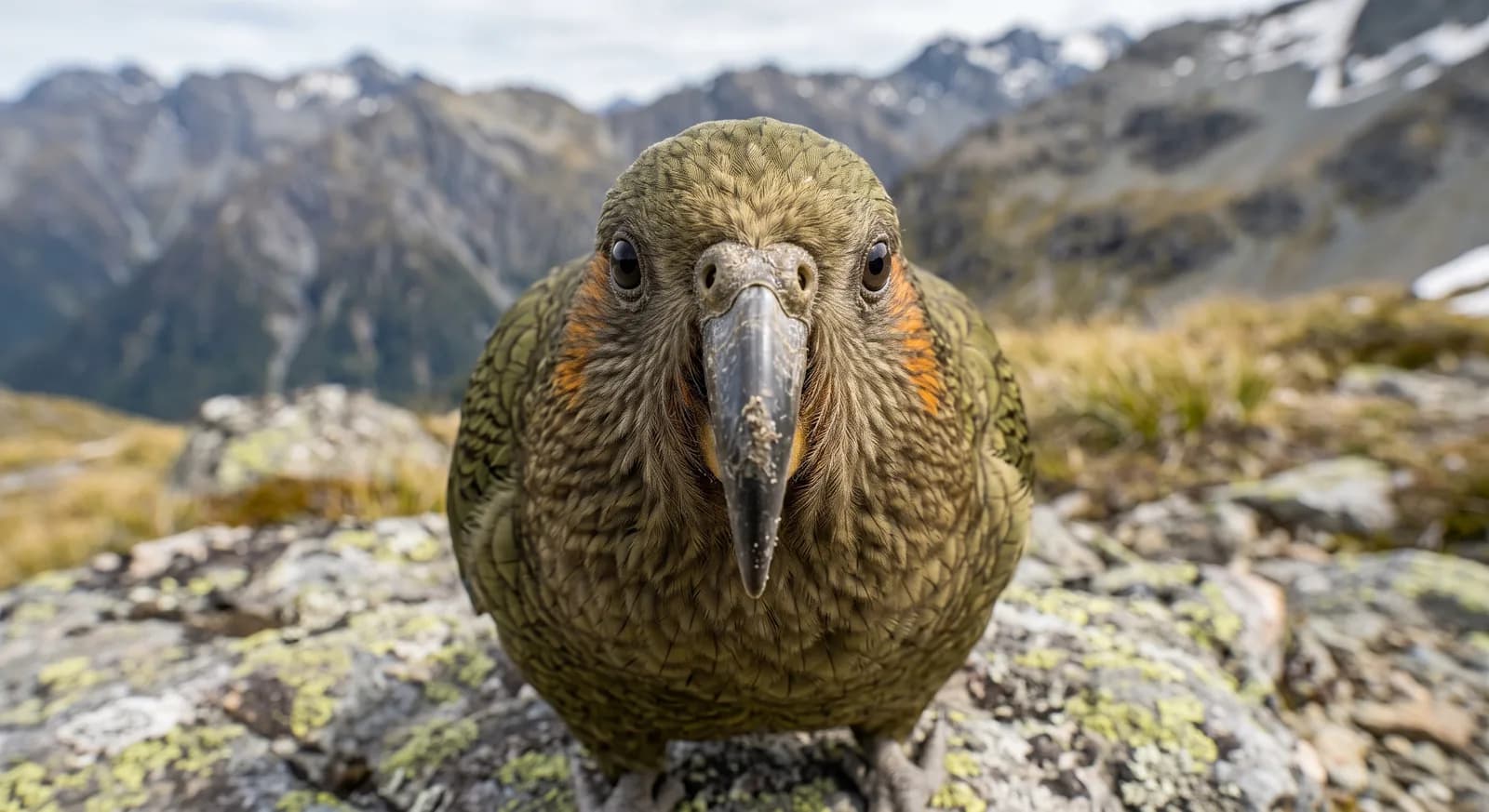
At conservation risk:Kea
Endemic to New Zealand:Kea
Flora and ecosystems
Ecosystems found in New Zealand, where Aoraki/Mount Cook lies.
Experiences in this park
Nearby dive sites
Where can I dive near here?
Fiordland (Milford Sound)
222 km away
Blue Lake (Nelson Lakes)
264 km away
Similar parks
Which other parks are like this one?
Arthur's Pass
New Zealand
Kea · Great Spotted Kiwi (roa)
Diciembre a febrero
View parkMismo país: New Zealand
Fiordland
New Zealand
Kea (alpine parrot) · great spotted kiwi
Diciembre a febrero
View parkMismo país: New Zealand
Tongariro
New Zealand
Kākā (forest parrot) · blue duck (whio)
Diciembre a febrero
View parkMismo país: New Zealand
Abel Tasman
New Zealand
New Zealand fur seal · kākā
Diciembre a febrero
View parkMismo país: New Zealand
Keep exploring
Based on what we already know about Aoraki/Mount Cook.
Your rating
How many stars would you give Aoraki/Mount Cook?
Comments
Share your experience visiting Aoraki/Mount Cook, or a tip for other travellers.
Be the first to comment.