One of the 13 cormorants on WAnimals
Birds · Suliformes · Phalacrocoracidae
Great Pied Cormorant
Phalacrocorax varius
The species is abundant and widely distributed; it faces no significant short-term risk. See full glossary
The pied cormorant is a black and white cormorant that is very common in Australia and New Zealand, on the coast and on inland waters alike. It is told apart by a bare yellow and orange stripe on the face. It fishes alone or in coordinated groups that drive shoals of fish into shallow water. It is one of the most familiar birds of Australian harbours and reservoirs.
Weight
1.7 kg – 2.2 kg
Size
65 cm – 85 cm
Lifespan
15 years
Diet
Carnivore
Feeds mainly on other animals.
Activity
Diurnal
Active mainly during the day.
Social structure
Colony
Lives in large concentrations, often for breeding reasons.
Sighting difficulty
Easy
Fun facts
- It fishes in groups with remarkable coordination: dozens of birds advance in a line, driving the shoals of fish into shallow water where they are easier to catch.
- It is one of the easiest birds to see in Australia: it perches on piles, buoys and harbour railings, always with its wings spread in the sun after each dive.
- It breeds in mixed colonies with other waterbirds and often reuses the same platform nests for years, enlarging them season after season.
Life cycle & biology
- Skeleton type
- Vertebrate - internal bony skeleton (bird)
- Habitat & environment
- Coasts, estuaries, lakes and reservoirs of Australia and New Zealand
- Sexual maturity
- 3 years
- Gestation / incubation
- 28 days of incubation
- Litter / clutch size
- 3 eggs
Sources consulted: https://es.wikipedia.org/wiki/Phalacrocorax_varius
Where to find it
See its range on the interactive mapWhere to watch it
Parques y spots de buceo donde se ha documentado esta especie — se muestran 10 de 49 documentados.
Related species
Other species in the catalogue with the most in common with Great Pied Cormorant — same habitat, park, country, tags or family.
Spotted Shag
Phalacrocorax punctatus
 Least Concern
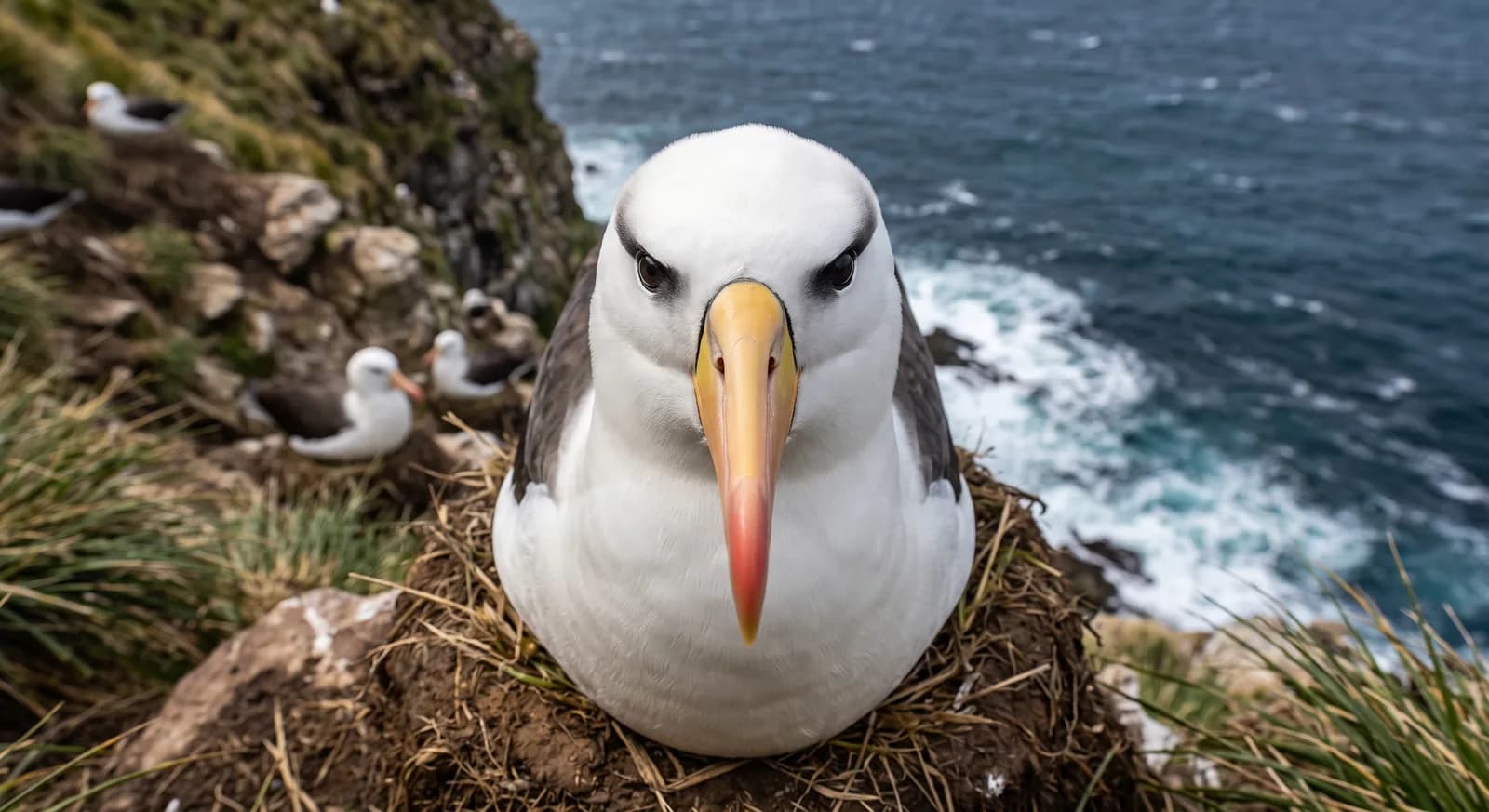
Black-browed Albatross
Thalassarche melanophris
 Least Concern
Osprey
Pandion haliaetus
Skipjack
Katsuwonus pelamis
Banded Archerfish
Toxotes jaculatrix
Little Penguin
Eudyptula minor
Keep exploring
Based on what we already know about great pied cormorant.
Comments
Share an experience, a fun fact or a tip for seeing the great pied cormorant.
Be the first to comment.