 UNESCO
National Park
Niokolo-Koba
Senegal
 Senegal
West African lion · elephant
See parkThe first water migrating birds find after crossing the Sahara, with three million individuals a year.
Area
160 km²
Designated in
1971
Region
West Africa
A wetland in the Senegal delta just south of the Sahara
The Djoudj National Bird Park was established in 1971 in northern Senegal, in the delta of the Senegal River and some sixty kilometres from Saint-Louis, and protects some 160 km². UNESCO inscribed it on the World Heritage List in 1981.
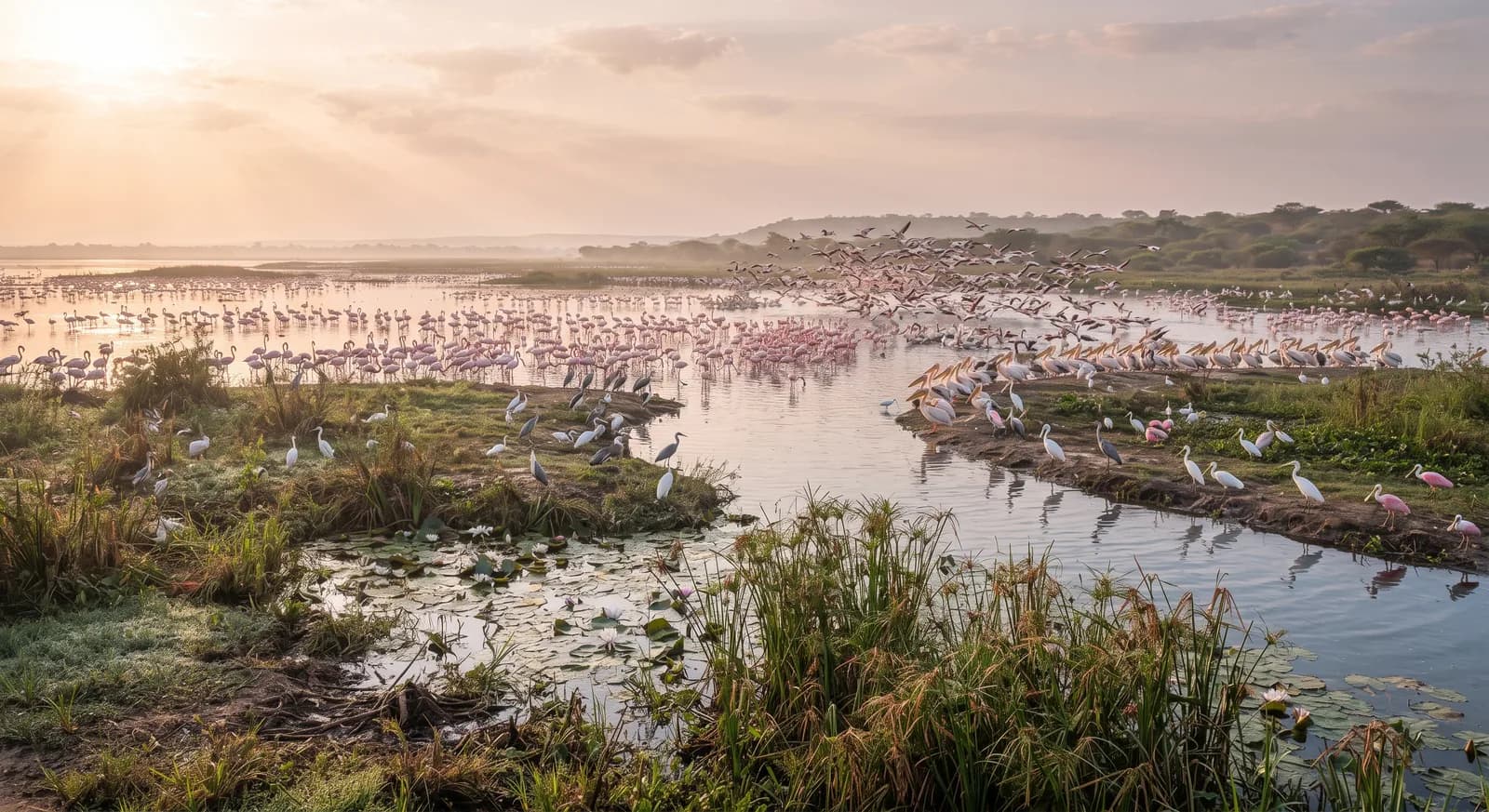
Its importance is best understood from its geographical position: it is the first freshwater wetland that Palaearctic migratory birds meet after crossing the Sahara. Around three million birds pass through it each year, and the park holds one of the largest great white pelican colonies in the world, alongside flamingos, spoonbills, herons, cormorants and wildfowl in enormous concentrations.
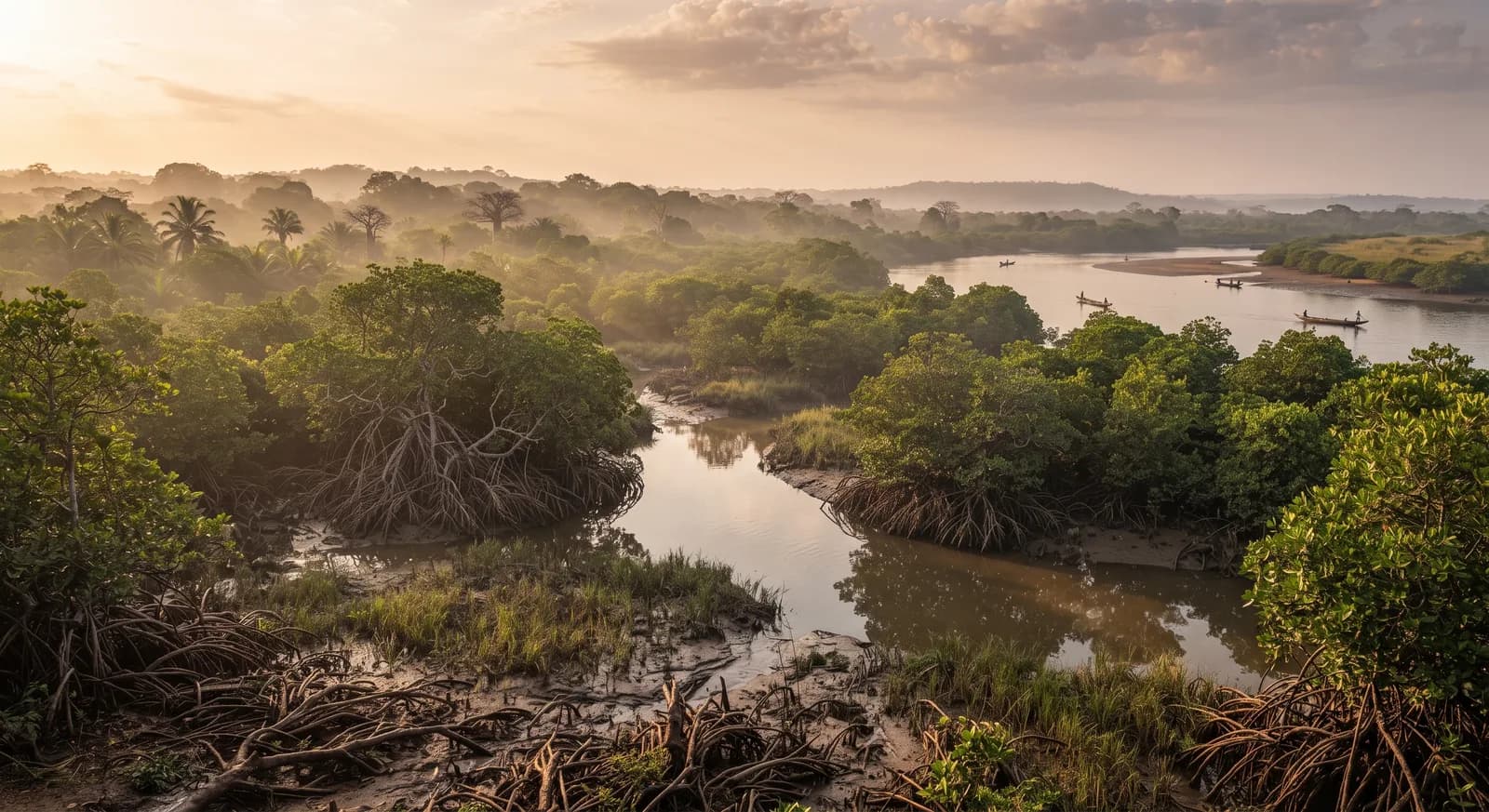
The landscape is a mosaic of lagoons, river arms, marshes and floodplains, whose functioning depends entirely on the water regime of the Senegal. That regime was precisely what changed with the building of the Diama and Manantali dams in the 1980s, and the park has twice been on the List of World Heritage in Danger: between 1984 and 1988 and again between 2000 and 2006, the latter because of the invasion of the aquatic plant Salvinia molesta, which came to cover the water surface and whose biological control by means of a specific weevil allowed the wetland to recover.
Ecosystems found in Senegal, where Djoudj lies.
Which other parks are like this one?
Same country: Senegal
Same country: Senegal
Same country: Senegal
Same type of protected area: National Park
Based on what we already know about this park.
Climate
Tropical
 Cuba