Skip to content
WAnimals
  • Map
  • Species
  • Parks
  • Diving
Log inCreate account
WAnimals

The guide for travellers and animal lovers: discover, plan and share your wild adventures around the world.

Discover wildlife

  • Species
  • Ecosystems
  • Glossary
  • Tags

Explore places

  • Map
  • Countries
  • Parks
  • Diving

Plan experiences

  • Guides

Learn

  • Blog

Resources

  • Help centre
  • Contact
  • Install the app

Follow us

Account

  • Log in
  • Create account

© 2026 WAnimals. All rights reserved.

About usHow we build our profilesTerms of servicePrivacyLegal notice
MapSpeciesParksDiving
  1. Home
  2. Species
  3. Antilopine Kangaroo

One of the 6 kangaroos on WAnimals

Antilopine Kangaroo (Osphranter antilopinus)

Mammals · Diprotodontia · Macropodidae

Antilopine Kangaroo

Osphranter antilopinus

Least Concern

The species is abundant and widely distributed; it faces no significant short-term risk.

Spotted something wrong?

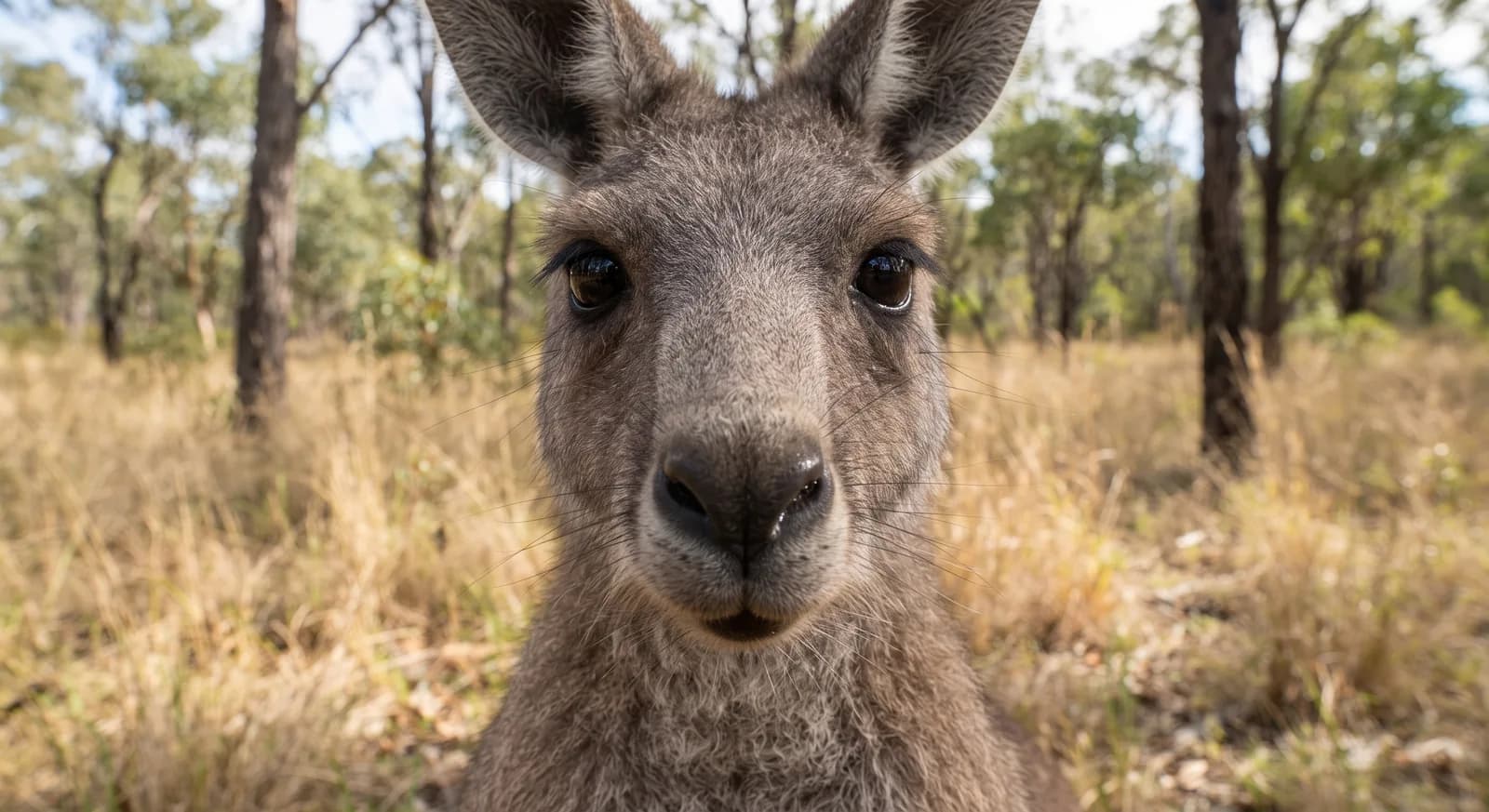
The antilopine kangaroo is the only large kangaroo that lives in the monsoonal tropical savannah of northern Australia. It is slender with a reddish coat, the males clearly larger than the females. It grazes in the cool hours of dawn and dusk, and during the day seeks the shade of the eucalypts. It lives in groups that scatter and regroup through the day. Its breeding cycle is closely tied to the monsoon: most births coincide with the wet season, when grazing is plentiful.

Weight

16 kg – 49 kg

Size

80 cm – 1.2 m

Life expectancy

16 years

Diet

Herbivore

Feeds mainly on plants.

Activity

Crepuscular

Active mainly at dawn and dusk.

Sighting difficulty

Easy

SavannaGrassland
1countries5parks15same family

AI-generated images: illustrations, not photographs.

Fun facts

  • GeneralThe kangaroo of the tropics; it licks its forearms to cool down.
  • It is named for the reddish coat and the musky smell of the male, which reminded the first European naturalists of an African antelope.
  • It is the only large kangaroo living in the tropical savannah of the north and the one that best tolerates the humid heat of the Australian monsoon.

Life cycle and biology

Skeleton type
Vertebrate - internal bony skeleton (mammal)
Habitat and environment
Tropical eucalypt savannah and grassy plains of northern Australia
Sexual maturity
16 months
Gestation / incubation
34 days
Litter / clutch size
1

Sources consulted: https://es.wikipedia.org/wiki/Osphranter_antilopinus

Where to find it

Loading map…

The pins mark the parks where its presence is documented.

Where to see it

Parks and dive sites where this species has been documented.

Related species

Other species in the catalogue with the most in common with Antilopine Kangaroo — same habitat, park, country, tags or family.

Same taxonomic family

Keep exploring

Based on what we already know about antilopine kangaroo.

Comments

Share an experience, a fun fact or a tip for seeing the antilopine kangaroo.

Be the first to comment.

See full glossary
This page in other languages: Español · Deutsch · Français · Português · Italiano
See its range on the interactive map→
KakaduAustralia
Purnululu (Bungle Bungle)Australia
Nitmiluk (Katherine Gorge)Australia
LitchfieldAustralia
Boodjamulla (Lawn Hill)Australia
Agile WallabyLeast Concern

Agile Wallaby

Notamacropus agilis

Least Concern

Red Kangaroo

Osphranter rufus

Eastern Grey KangarooLeast Concern

Eastern Grey Kangaroo

Macropus giganteus

Red-necked WallabyLeast Concern

Red-necked Wallaby

Notamacropus rufogriseus

Vulnerable

Bridled Nailtail Wallaby

Onychogalea fraenata

Western Gray KangarooLeast Concern

Western Gray Kangaroo

Macropus fuliginosus

CountriesAustralia
ParksKakaduAustralia
TagsHerbivore
Herbivore
Crepuscular
Savanna
Grassland
Mammal
Australia