One of the 6 kangaroos on WAnimals
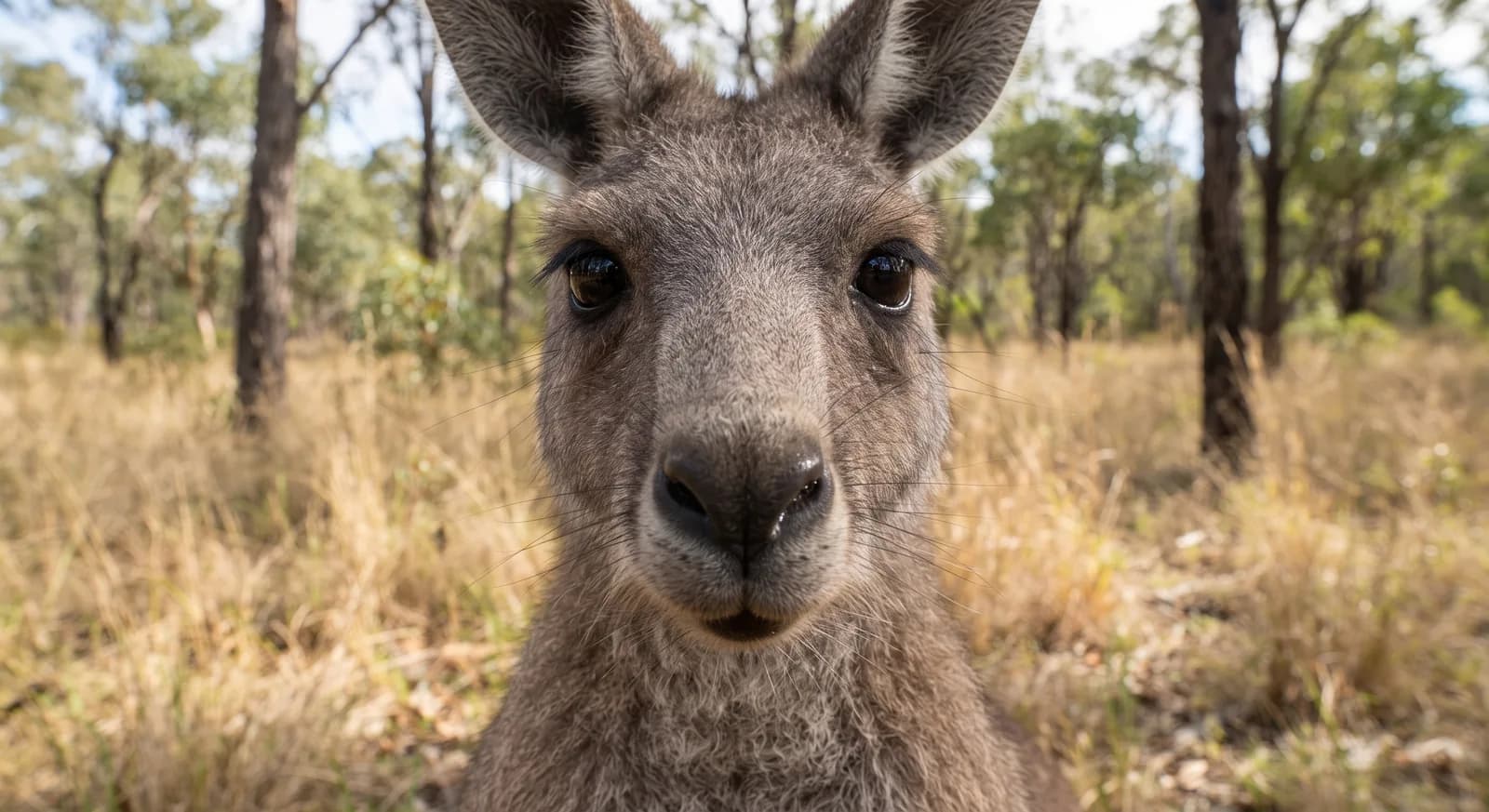
Mammals · Diprotodontia · Macropodidae
Macropus giganteus
The species is abundant and widely distributed; it faces no significant short-term risk.
It is the second largest and heaviest marsupial in Australia after the red kangaroo, and often stands as the emblem of Australian wildlife.
Weight
17 kg – 66 kg
Size
1.3 m – 2.1 m
Life expectancy
12 years
Diet
Herbivore
Feeds mainly on plants.
Activity
Crepuscular
Active mainly at dawn and dusk.
Social structure
Herd
Lives in large groups as a strategy against predators.
Sighting difficulty
Easy
AI-generated images: illustrations, not photographs.
Sources consulted: Animal Diversity Web; AnAge (genomics.senescence.info); Biology Insights; Natural World Life; Animalia.bio; Natural History on the Net; Lone Pine Koala Sanctuary; Wikipedia (Eastern grey kangaroo); ResearchGate (breeding study)
The pins mark the parks where its presence is documented.
Parks and dive sites where this species has been documented — showing 10 of 17.
Other species in the catalogue with the most in common with Eastern Grey Kangaroo — same habitat, park, country, tags or family.
Based on what we already know about eastern grey kangaroo.
Share an experience, a fun fact or a tip for seeing the eastern grey kangaroo.
Be the first to comment.