Skip to content
WAnimals
  • Map
  • Species
  • Parks
  • Diving
Log inCreate account
WAnimals

The guide for travellers and animal lovers: discover, plan and share your wild adventures around the world.

Discover wildlife

  • Species
  • Ecosystems
  • Glossary
  • Tags

Explore places

  • Map
  • Countries
  • Parks
  • Diving

Plan experiences

  • Guides

Learn

  • Blog

Resources

  • About us
  • How we build our profiles
  • Help centre
  • Contact
  • Install the app

Follow us

Account

  • Log in
  • Create account

© 2026 WAnimals. All rights reserved.

Terms of servicePrivacyCookiesLegal notice
MapSpeciesParksDiving
  1. Home
  2. Species
  3. Species groups
  4. Wombats

Species group · Mammals

Wombats

WAnimals has 3 species of wombat, in the family Vombatidae.

3 species
1 family
1 country
18 parks
Weight
19 kg – 40 kg
Length
77 cm – 1.2 m
Lifespan
15 – 25 years

Ranges calculated from the profiles that record the figure, not from all 3.

All 3 species of wombats on WAnimals

Each one has its own full profile. This group does not replace them: it brings them together.
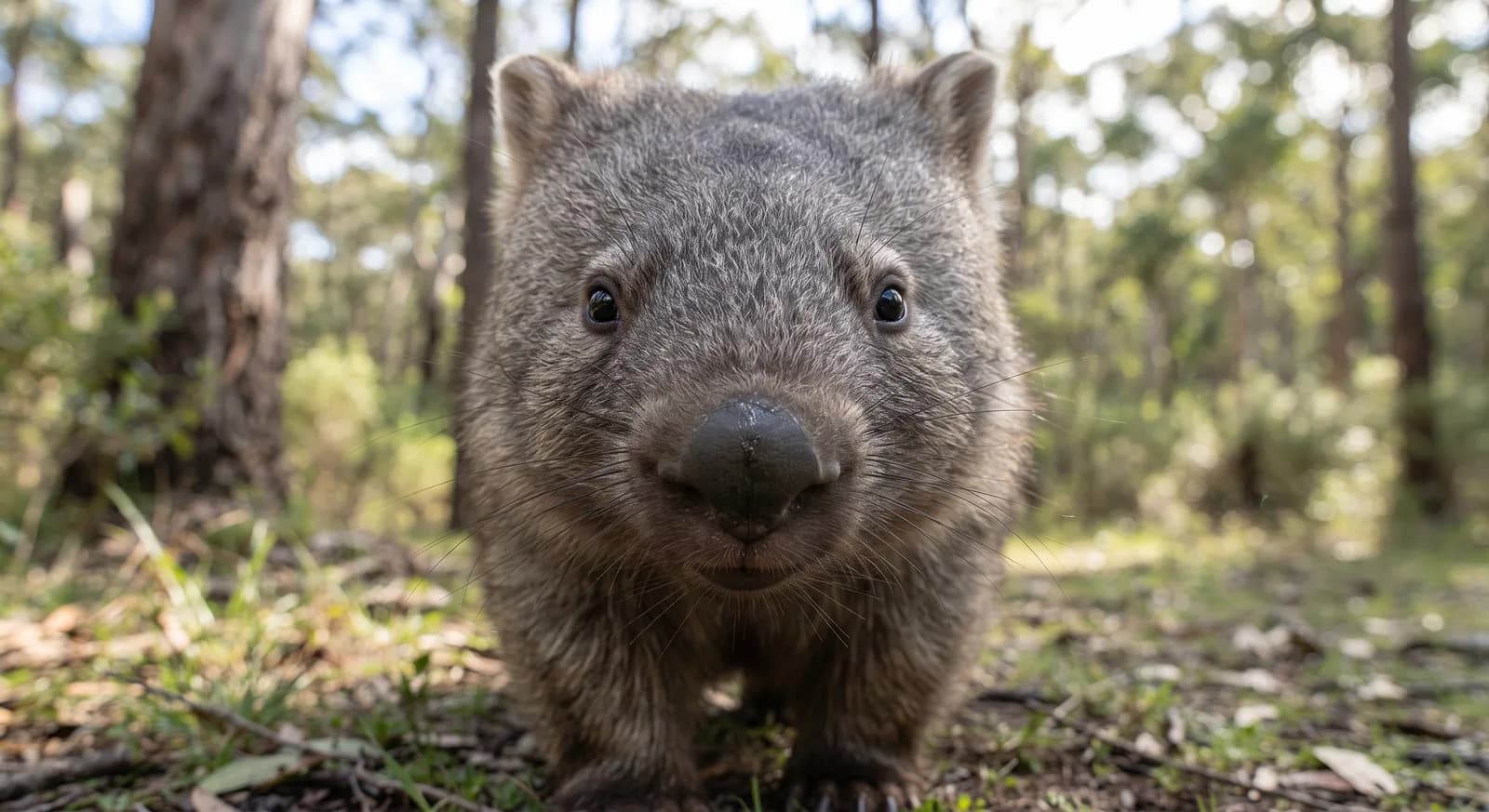
Bare-nosed WombatLeast Concern

Bare-nosed Wombat

Vombatus ursinus

1 country16 parks
Near Threatened

Southern Hairy-nosed Wombat

Lasiorhinus latifrons

1 country2 parks
Critically Endangered

Northern Hairy-nosed Wombat

Lasiorhinus krefftii

1 country

Conservation status

1 Least Concern1 Near Threatened1 Critically Endangered

1 species in this group is in a threatened category according to the IUCN.

Where they live

Recorded in one country.

  • Australia3

Where to see them

  • Barrington Tops1 species
  • Ben Lomond1 species
  • Blue Mountains1 species
  • Booderee1 species
  • Croajingolong1 species
  • Dhilba Guuranda-Innes1 species
  • Freycinet1 species
  • Girraween1 species
  • Grampians (Gariwerd)1 species
  • Ikara-Flinders Ranges1 species
  • Kosciuszko1 species
  • Mount Buffalo1 species

Did you know…?

  • Its pouch opens backwards, a unique adaptation that keeps soil out while it digs.

    From Bare-nosed Wombat

  • It eats grasses, roots and herbs, mostly at night.

    From Bare-nosed Wombat

  • It lives in forest, alpine grassland, coast and woodland of south-eastern Australia and Tasmania.

    From Bare-nosed Wombat

  • It is the official animal emblem of South Australia.

    From Southern Hairy-nosed Wombat

  • Its teeth grow continuously throughout its life.

    From Southern Hairy-nosed Wombat

  • It goes long spells without drinking, living on hardy grasses and shrubs.

    From Southern Hairy-nosed Wombat

  • It produces cube-shaped droppings, an oddity explained by the uneven elasticity of the walls of its gut, which stops them rolling off when it leaves them on rocks and logs to mark territory.

    From Northern Hairy-nosed Wombat

  • It came so close to the end that in the 1980s little more than thirty living animals were counted, all in a single park, and the whole species depended on there being no serious fire or drought.

    From Northern Hairy-nosed Wombat

Ecosystems

  • Grassland3
  • Desert2
  • Temperate forest1

See every species group · Explore the species one by one

This page in other languages: Español · Deutsch · Français · Português · Italiano