One of the 8 hornbills on WAnimals
Birds · Bucerotiformes · Bucerotidae
Indian Grey Hornbill
Ocyceros birostris
Least Concern
The species is abundant and widely distributed; it faces no significant short-term risk.
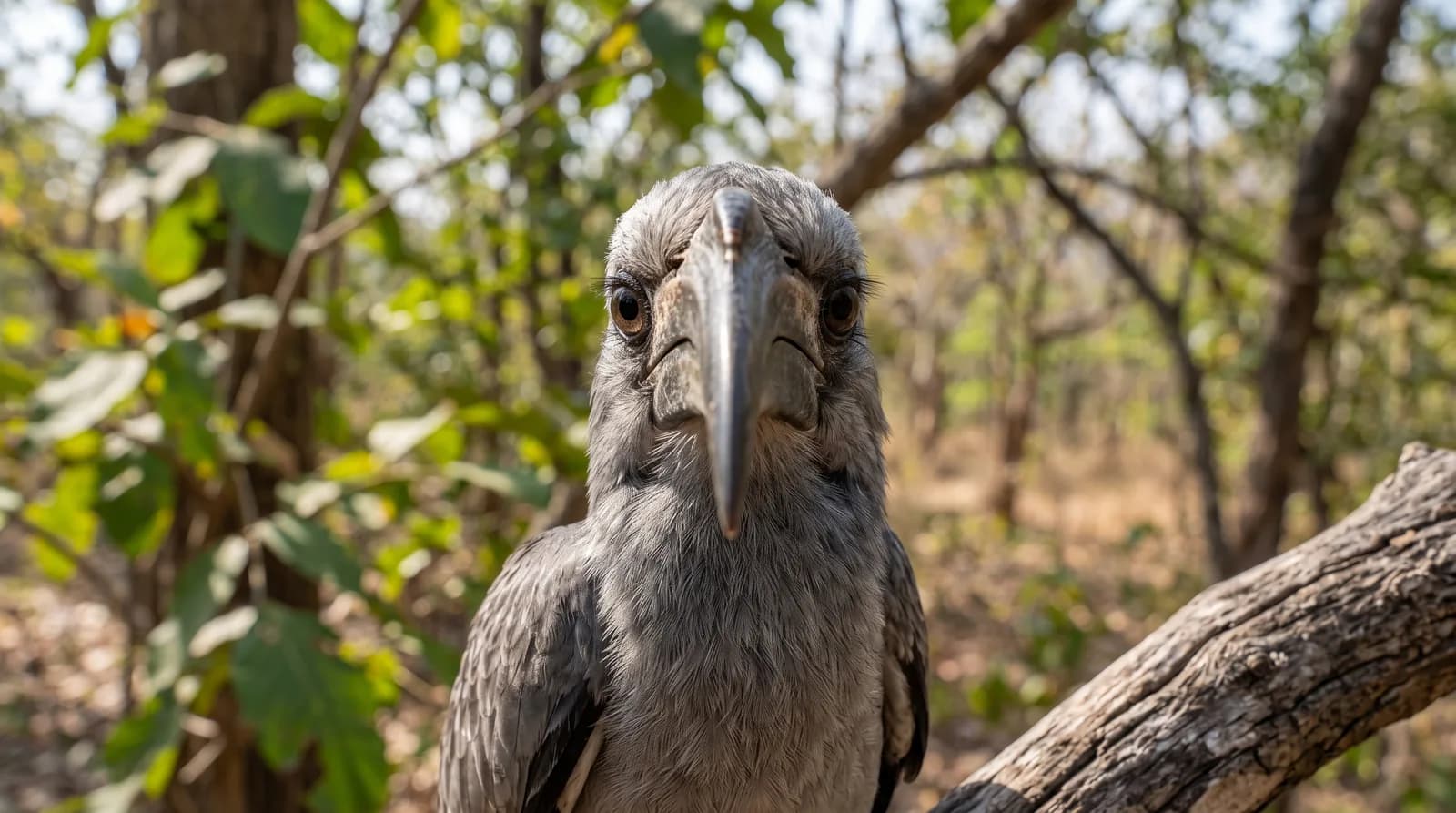
The Indian grey hornbill is the commonest and most urban hornbill of the Indian subcontinent: it is frequently seen along tree-lined avenues and in the parks and gardens of cities such as Delhi and Mumbai. It is brownish grey with an elongated casque above the bill and very conspicuous long black eyelashes. It eats mainly fruit, especially figs, along with insects and small reptiles. As in the rest of the hornbills, the female seals herself into the nest hole while raising the young.
Weight
350 g – 500 g
Size
50 cm – 60 cm
Life expectancy
20 years
