Skip to content
WAnimals
  • Map
  • Species
  • Parks
  • Diving
Log inCreate account
WAnimals

The guide for travellers and animal lovers: discover, plan and share your wild adventures around the world.

Discover wildlife

  • Species
  • Ecosystems
  • Glossary
  • Tags

Explore places

  • Map
  • Countries
  • Parks
  • Diving

Plan experiences

  • Guides

Learn

  • Blog

Resources

  • Help centre
  • Contact
  • Install the app

Follow us

Account

  • Log in
  • Create account

© 2026 WAnimals. All rights reserved.

About usHow we build our profilesTerms of servicePrivacyLegal notice
MapSpeciesParksDiving
  1. Home
  2. Species
  3. Indri
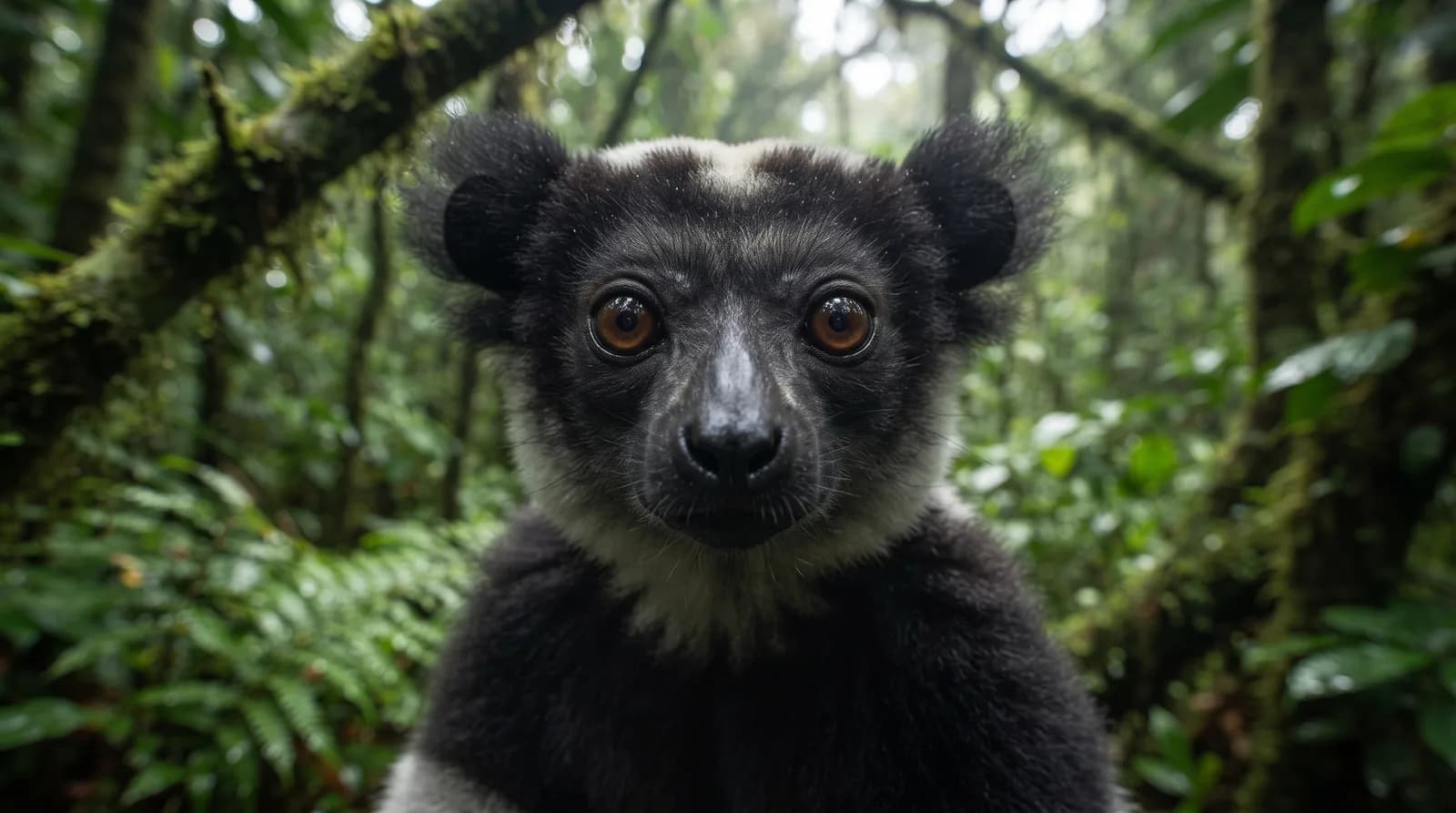
Indri (Indri indri)

Mammals · Primates · Indriidae

Indri

Indri indri

Critically Endangered

At extremely high risk of imminent extinction in the wild.

Spotted something wrong?

Its distinctive territorial songs, among the loudest calls in the animal kingdom, carry more than 2 kilometres through the Malagasy forest. It is revered in local mythology, which has traditionally helped protect it from hunting.

Weight

6 kg – 10 kg

Size

60 cm – 90 cm

Life expectancy

16 years

Diet

Herbivore

Feeds mainly on plants.

Activity

Diurnal

Active mainly during the day.

Social structure

Family group

Lives in small family groups with close bonds.

Sighting difficulty

Very hard

Rainforest
1countries4parks3same family1featured routes

AI-generated images: illustrations, not photographs.

Fun facts

  • comunicaciónIt is the largest living lemur and gives very powerful song-like calls that carry several kilometres through the forest.

Life cycle and biology

Skeleton type
Vertebrate - internal bony skeleton (mammal)
Habitat and environment
Tropical rainforest of eastern Madagascar
Birth weight
Exact weight at birth not found as a precise figure
Size at birth
Born entirely black, developing white patches between 4 and 6 months
Sexual maturity
7-9 years, among the slowest maturation of any primate
Gestation / incubation
120-150 days (~4-5 months)
Litter / clutch size
1 young, with an interval between births of 2-3 years

Sources consulted: JungleDragon; Creatures of the World Wiki; Animal Diversity Web; A-Z Animals; Wildlife Madagascar; Animal Spot; AQUA-FIRMA wildlife guides

Where to find it

Loading map…

The pins mark the parks where its presence is documented.

Where to see it

Parks and dive sites where this species has been documented.

Related species

Other species in the catalogue with the most in common with Indri — same habitat, park, country, tags or family.

Same taxonomic family
Shares a park
Same taxonomic family
Shares a park
Shares a park

How to help

The indri is classified as critically endangered. Organisations such as the IUCN, WWF and the Wildlife Conservation Society work specifically on its conservation and that of its habitat; looking into their programmes is a good starting point if you want to get involved.

It's documented in 4 protected areas — one reason why protecting these places matters for its conservation.

Keep exploring

Based on what we already know about indri.

Comments

Share an experience, a fun fact or a tip for seeing the indri.

Be the first to comment.

See full glossary
This page in other languages: Español · Deutsch · Français · Português · Italiano
See its range on the interactive map→
Andasibe-MantadiaMadagascar
MarojejyMadagascar
MasoalaMadagascar
ZahamenaMadagascar
Endangered

Milne-Edwards' Sifaka

Propithecus edwardsi

Critically Endangered

Black-and-white Ruffed Lemur

Varecia variegata

Endangered

Coquerel's Sifaka

Propithecus coquereli

Critically Endangered

Verreaux's Sifaka

Propithecus verreauxi

Critically Endangered

Golden Mantella

Mantella aurantiaca

Least Concern

Lowland Streaked Tenrec

Hemicentetes semispinosus

CountriesMadagascar
ParksAndasibe-MantadiaMadagascar
TagsHerbivore
Herbivore
Diurnal
Family group
Critically Endangered
Rainforest
Mammal
Madagascar