Skip to content
WAnimals
  • Map
  • Species
  • Parks
  • Diving
Log inCreate account
WAnimals

The guide for travellers and animal lovers: discover, plan and share your wild adventures around the world.

Discover wildlife

  • Species
  • Ecosystems
  • Glossary
  • Tags

Explore places

  • Map
  • Countries
  • Parks
  • Diving

Plan experiences

  • Guides

Learn

  • Blog

Resources

  • About us
  • How we build our profiles
  • Help centre
  • Contact
  • Install the app

Follow us

Account

  • Log in
  • Create account

© 2026 WAnimals. All rights reserved.

Terms of servicePrivacyCookiesLegal notice
MapSpeciesParksDiving
  1. Home
  2. Species
  3. Mongoose Lemur

One of the 6 lemurs on WAnimals

Mammals · Primates · Lemuridae

Mongoose Lemur

Eulemur mongoz

Critically Endangered

At extremely high risk of imminent extinction in the wild.

Spotted something wrong?

The mongoose lemur is a medium-sized primate, greyish brown, with the males wearing reddish cheek whiskers that are white in females. It lives in small family groups made up of a pair and their young. It feeds mainly on nectar, fruit and flowers, and is an important pollinator of the Madagascar baobab. Its populations have collapsed through logging and hunting, to the point that it is now among the most threatened lemurs.

Weight

1.1 kg – 1.6 kg

Size

30 cm – 35 cm

Life expectancy

26 years

Diet

Herbivore

Feeds mainly on plants.

Activity

Irregular activity

Active at irregular times, by day or night depending on circumstances.

Social structure

In pairs

Usually lives in pairs, sometimes for life.

RainforestTemperate forestIslands
2countries2parks3same family

Fun facts

  • GeneralIt shifts between day and night activity with the season.
  • It is one of only two lemurs living outside Madagascar: there are populations in the Comoros, probably taken there by people centuries ago.
  • It changes its timetable with the season: it is diurnal during the wet season and becomes nocturnal in the dry one, a flexibility that is exceptional among primates.

Life cycle and biology

Skeleton type
Vertebrate - internal bony skeleton (mammal)
Habitat and environment
Dry deciduous forest of north-western Madagascar and moist forest of the Comoros
Sexual maturity
21.4 months
Gestation / incubation
3.9 months
Litter / clutch size
1

Sources consulted: IUCN Red List · Animal Diversity Web · Wikipedia (es)

Where to find it

Loading map…

The pins mark the parks where its presence is documented.

Where to see it

Parks and dive sites where this species has been documented.

Related species

Other species in the catalogue with the most in common with Mongoose Lemur — same habitat, park, country, tags or family.

Same taxonomic family
Shares a park
Shares a park
Shares a park
Shares a park

How to help

The mongoose lemur is classified as critically endangered. Organisations such as the IUCN, WWF and the Wildlife Conservation Society work specifically on its conservation and that of its habitat; looking into their programmes is a good starting point if you want to get involved.

Keep exploring

Based on what we already know about mongoose lemur.
Share an experience, a fun fact or a tip for seeing the mongoose lemur.
See full glossary
This page in other languages: Español · Deutsch · Français · Português · Italiano
See its range on the interactive map→
Mohéli Marine National ParkComoros
AnkarafantsikaMadagascar
Near Threatened

Brown Lemur

Eulemur fulvus

Critically Endangered

Black-and-white Ruffed Lemur

Varecia variegata

Critically Endangered

Verreaux's Sifaka

Propithecus verreauxi

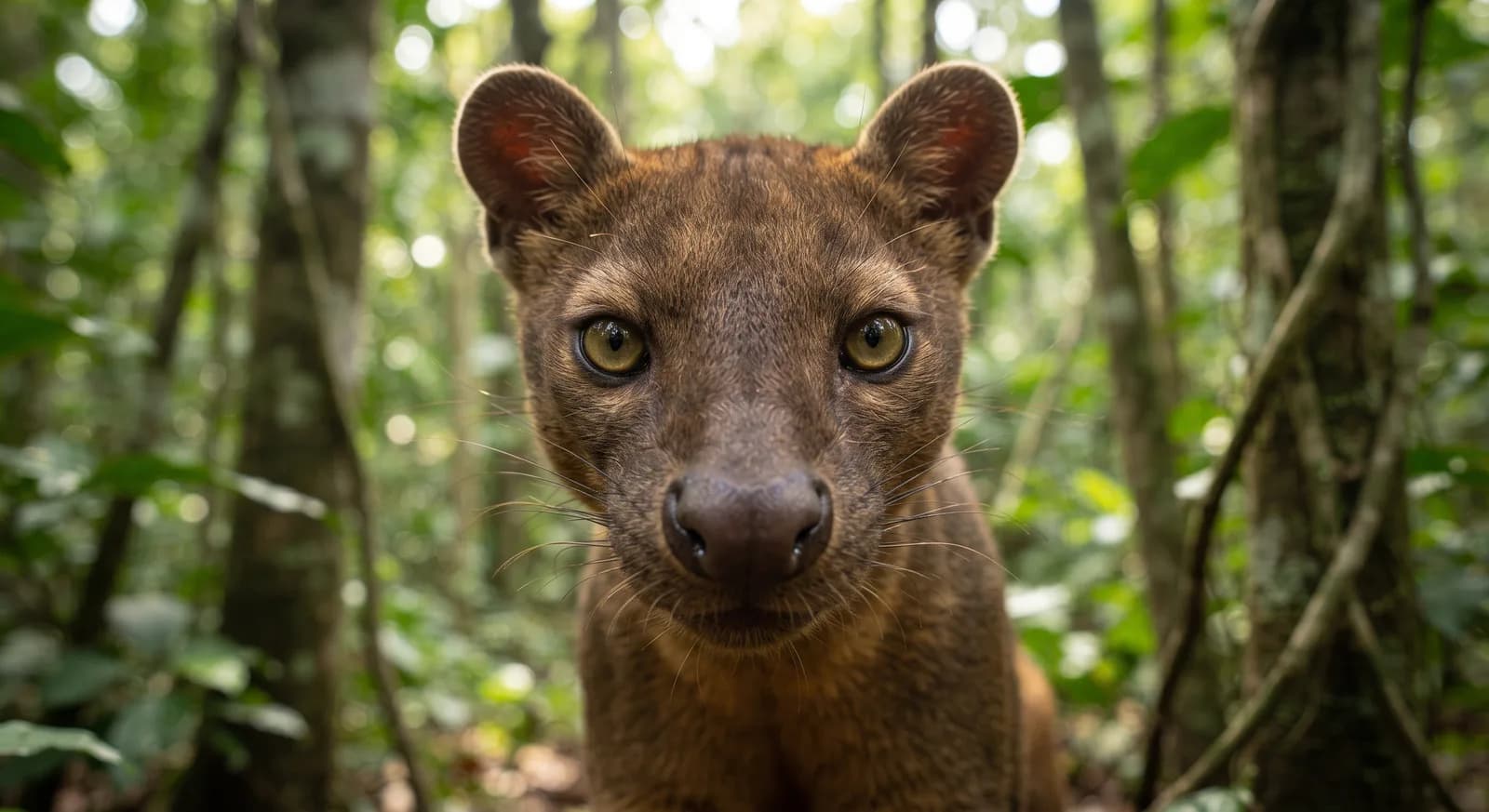
FossaVulnerable

Fossa

Cryptoprocta ferox

Endangered

Coquerel's Sifaka

Propithecus coquereli

Least Concern

Comoro Blue-Pigeon

Alectroenas sganzini

CountriesComoros
ParksMohéli Marine National ParkComoros
TagsHerbivore
Herbivore
Diurnal
Variable activity
In pairs
Critically Endangered
Rainforest
Temperate forest
Islands
Mammal
Comoros
Madagascar