Skip to content
WAnimals
  • Map
  • Species
  • Parks
  • Diving
Log inCreate account
WAnimals

The guide for travellers and animal lovers: discover, plan and share your wild adventures around the world.

Discover wildlife

  • Species
  • Ecosystems
  • Glossary
  • Tags

Explore places

  • Map
  • Countries
  • Parks
  • Diving

Plan experiences

  • Guides

Learn

  • Blog

Resources

  • About us
  • How we build our profiles
  • Help centre
  • Contact
  • Install the app

Follow us

Account

  • Log in
  • Create account

© 2026 WAnimals. All rights reserved.

Terms of servicePrivacyCookiesLegal notice
MapSpeciesParksDiving
  1. Home
  2. Species
  3. Orinoco Crocodile

One of the 6 crocodilians on WAnimals

Reptiles · Crocodilia · Crocodylidae

Orinoco Crocodile

Crocodylus intermedius

Critically Endangered

At extremely high risk of imminent extinction in the wild.

Spotted something wrong?

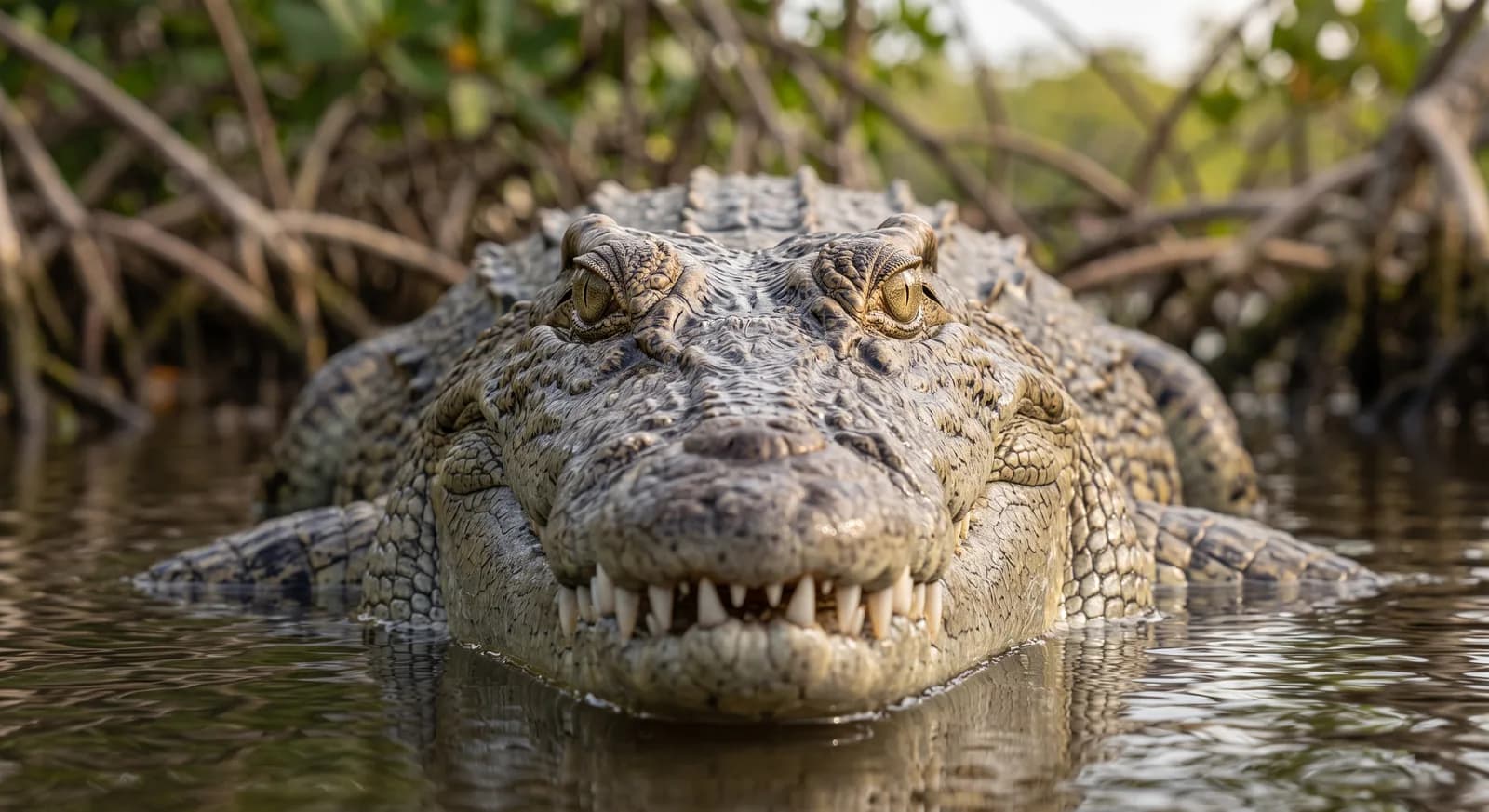
The Orinoco crocodile is a species of crocodile of the family Crocodylidae, endemic to the Orinoco basin. It is considered the largest predator in Latin America and one of the largest crocodile species: historical records give lengths of up to seven metres, but modern scientific measurements suggest a real maximum of about five and a half metres. The most important populations are found on the Cojedes and Capanaparo rivers. It has a slimmer snout than other crocodile species, apart from the gharial; its robust, flattened trunk is wider in the middle than at the ends, and its dorsal surface is covered with bony plates, while the sides and belly have no osteoderms.

Weight

180 kg – 400 kg

Size

4 m – 6 m

Life expectancy

60 years

Diet

Carnivore

Feeds mainly on other animals.

Activity

Nocturnal

Active mainly at night.

Social structure

Solitary

Lives and hunts alone, joining others only to breed.

Estimated population

Fewer than 1,500 mature individuals

FreshwaterGrassland
2countries3parks10same family

Fun facts

  • It is the largest predator in South America: the males exceed five metres and weigh more than three hundred kilos, beyond any jaguar or anaconda.
  • Commercial hunting for its skin between the 1930s and the 1960s wiped out more than ninety per cent of the population in barely three decades: hundreds of thousands of skins were exported from the Orinoco.
  • The female guards the nest and carries the hatchlings to the water in her mouth, and groups of young stay with her for months, answering her calls.

Life cycle and biology

Skeleton type
Vertebrate - internal bony skeleton (reptile)
Habitat and environment
Rivers, lagoons and floodplains of the Orinoco basin, in Venezuela and Colombia
Sexual maturity
7 years
Gestation / incubation
90 days of incubation
Litter / clutch size
40 eggs

Sources consulted: Wikipedia (es): Crocodylus intermedius

Where to find it

Loading map…

The pins mark the parks where its presence is documented.

Where to see it

Parks and dive sites where this species has been documented.

Related species

Other species in the catalogue with the most in common with Orinoco Crocodile — same habitat, park, country, tags or family.

Same taxonomic family
Shares a park
Shares a park
Shares a park
Shares a park
Shares a park

How to help

The orinoco crocodile is classified as critically endangered. Organisations such as the IUCN, WWF and the Wildlife Conservation Society work specifically on its conservation and that of its habitat; looking into their programmes is a good starting point if you want to get involved.

It's documented in 2 protected areas — one reason why protecting these places matters for its conservation.

Keep exploring

Based on what we already know about orinoco crocodile.
Share an experience, a fun fact or a tip for seeing the orinoco crocodile.
See full glossary
This page in other languages: Español · Deutsch · Français · Português · Italiano
See its range on the interactive map→
CanaimaVenezuela
El TuparroColombia
Serranía de la MacarenaColombia
American CrocodileVulnerable

American Crocodile

Crocodylus acutus

Least Concern

Water Opossum

Chironectes minimus

Critically Endangered

Giant South American River Turtle

Podocnemis expansa

Spectacled CaimanLeast Concern

Spectacled Caiman

Caiman crocodilus

Least Concern

Dwarf Caiman

Paleosuchus palpebrosus

Green AnacondaLeast Concern

Green Anaconda

Eunectes murinus

CountriesColombia
ParksCanaimaVenezuela
TagsCarnivore
Carnivore
Nocturnal
Solitary
Critically Endangered
Reptile
Freshwater
Grassland
Colombia
Venezuela