Skip to content
WAnimals
  • Map
  • Species
  • Parks
  • Diving
Log inCreate account
WAnimals

The guide for travellers and animal lovers: discover, plan and share your wild adventures around the world.

Discover wildlife

  • Species
  • Ecosystems
  • Glossary
  • Tags

Explore places

  • Map
  • Countries
  • Parks
  • Diving

Plan experiences

  • Guides

Learn

  • Blog

Resources

  • Help centre
  • Contact
  • Install the app

Follow us

Account

  • Log in
  • Create account

© 2026 WAnimals. All rights reserved.

About usHow we build our profilesTerms of servicePrivacyLegal notice
MapSpeciesParksDiving
  1. Home
  2. Species
  3. Parson's Chameleon

One of the 6 chameleons on WAnimals
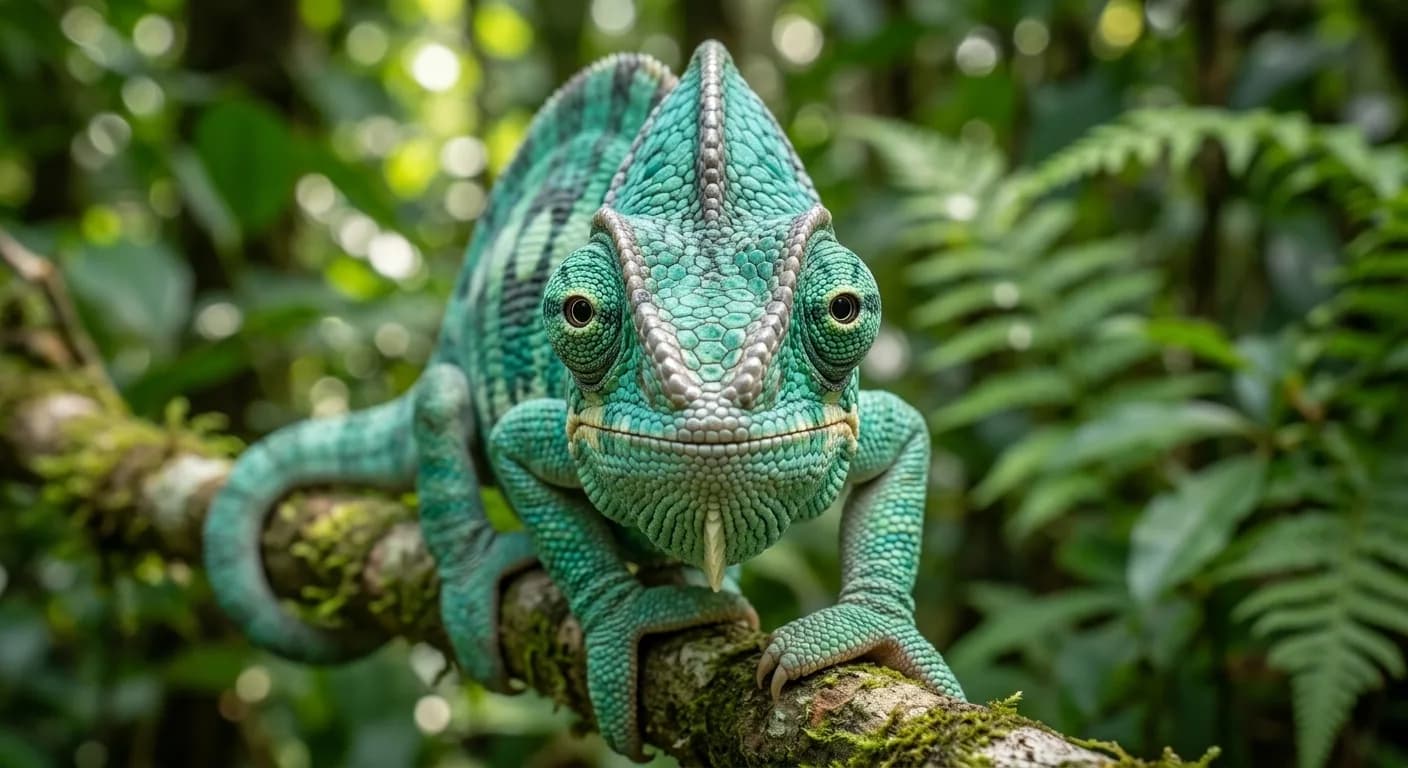
Parson's Chameleon (Calumma parsonii)

Reptiles · Squamata · Chamaeleonidae

Parson's Chameleon

Calumma parsonii

Near Threatened

It could become threatened in the near future if current threats go unchecked.

Spotted something wrong?

Parson's chameleon is the bulkiest chameleon in the world: males exceed sixty centimetres and weigh more than half a kilo, with two nasal protuberances that give them a helmeted look. It is endemic to the humid forests of Madagascar. Its incubation is one of the longest of any reptile: the eggs can take more than a year and a half to hatch.

Weight

500 g – 700 g

Size

50 cm – 68 cm

Life expectancy

12 years

Diet

Insectivore

Feeds mainly on insects and other invertebrates.

Activity

Diurnal

Active mainly during the day.

Social structure

Solitary

Lives and hunts alone, joining others only to breed.

Sighting difficulty

Moderate

RainforestIslands
1countries6parks5same family1featured routes

AI-generated images: illustrations, not photographs.

Fun facts

  • anatomíaIt is one of the largest chameleons in the world and can take several years to reach full sexual maturity.
  • Its eggs take between one and two years to hatch, one of the longest incubations documented in a reptile: the female buries them and the young emerge from the ground after more than a full seasonal cycle has passed.
  • Its eyes move completely independently, each with a field of view of almost 180 degrees, and the animal processes two different images at once until it spots prey and both converge.
  • Its tongue shoots out at more than twenty times the acceleration of gravity and reaches its prey in a hundredth of a second, one of the fastest movements in the animal kingdom.

Life cycle and biology

Skeleton type
Vertebrate - internal bony skeleton (reptile)
Habitat and environment
Primary humid forest of eastern and northern Madagascar
Sexual maturity
3 years
Gestation / incubation
500 days of incubation
Litter / clutch size
40 eggs

Sources consulted: https://www.iucnredlist.org/ | https://animaldiversity.org/ | https://es.wikipedia.org/

Where to find it

Loading map…

The pins mark the parks where its presence is documented.

Where to see it

Parks and dive sites where this species has been documented.

Related species

Other species in the catalogue with the most in common with Parson's Chameleon — same habitat, park, country, tags or family.

Same taxonomic family
Shares a park
Shares a park
Shares a park
Shares a park

Keep exploring

Based on what we already know about parson's chameleon.

Comments

Share an experience, a fun fact or a tip for seeing the parson's chameleon.

Be the first to comment.

See full glossary
This page in other languages: Español · Deutsch · Français · Português · Italiano
See its range on the interactive map→
Andasibe-MantadiaMadagascar
RanomafanaMadagascar
MarojejyMadagascar
MasoalaMadagascar
Montagne d'AmbreMadagascar
ZahamenaMadagascar
Near Threatened

Leaf Chameleon

Brookesia micra

Least Concern

Panther Chameleon

Furcifer pardalis

Near Threatened

Giraffe-necked Weevil

Trachelophorus giraffa

Least Concern

Madagascar Day Gecko

Phelsuma madagascariensis

Critically Endangered

Golden Mantella

Mantella aurantiaca

Least Concern

Common Flat-tail Gecko

Uroplatus fimbriatus

CountriesMadagascar
ParksAndasibe-MantadiaMadagascar
TagsInsectivore
Insectivore
Diurnal
Solitary
Near Threatened
Reptile
Rainforest
Islands
Madagascar