Least Concern
Putty-nosed Monkey
Cercopithecus nictitans
One of the 2 mangabeys on WAnimals
Mammals · Primates · Cercopithecidae
Cercocebus torquatus
At very high risk of extinction in the wild in the near future.
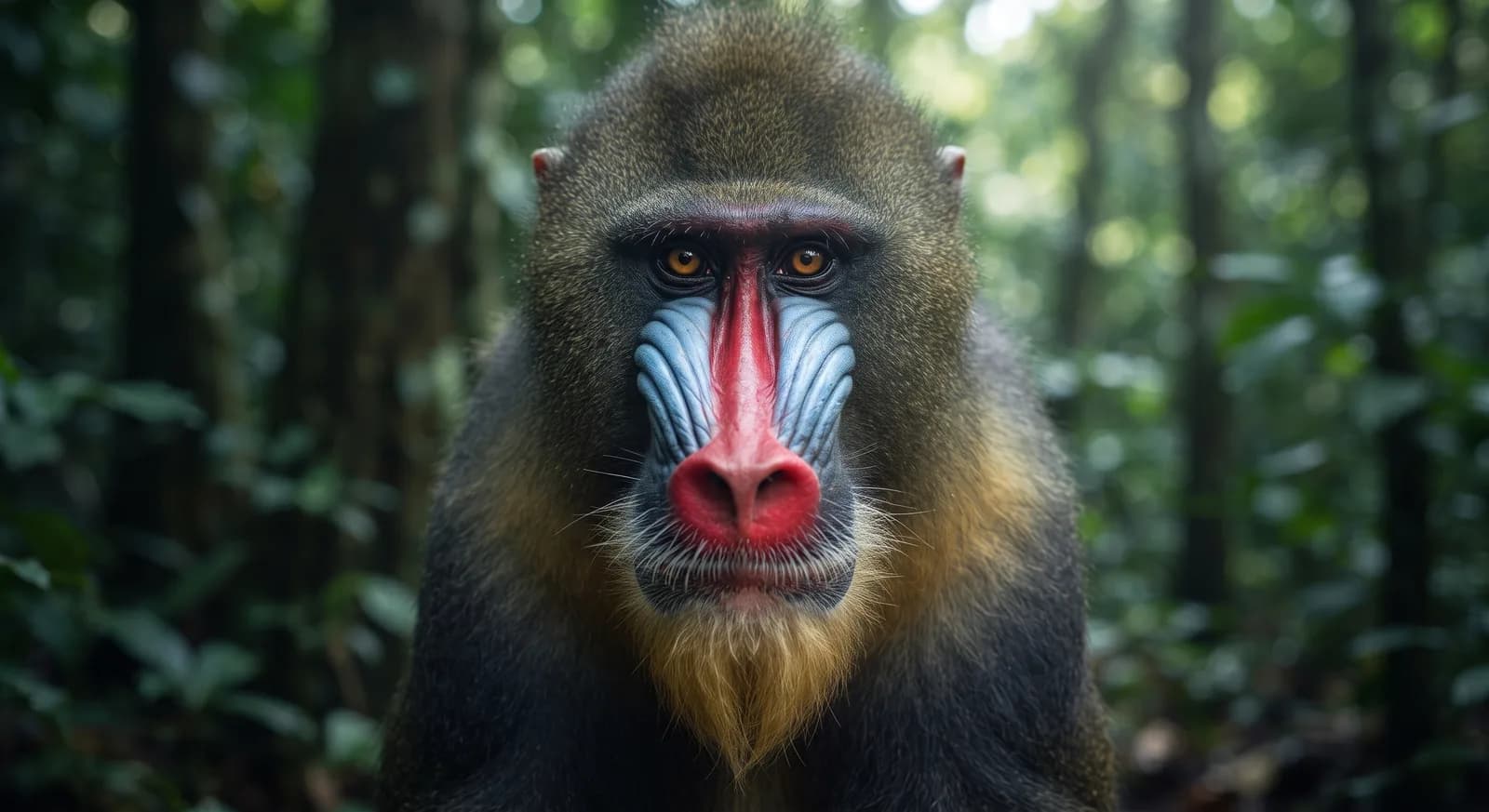
The red-capped mangabey is a primate of the coastal forests of the Gulf of Guinea, with a striking cap of chestnut-red hair on a grey body and a white collar around the neck. It spends a great deal of time on the ground, where it looks for hard seeds and fallen fruit that it opens with especially robust molars and incisors. Coastal deforestation and hunting for bushmeat have reduced it to fragmented populations between Nigeria, Cameroon and Equatorial Guinea.
Weight
5 kg – 11 kg
Size
45 cm – 67 cm
Life expectancy
27 years
Diet
Omnivore
Combines animal and plant food depending on availability.
Activity
Diurnal
Active mainly during the day.
Social structure
Herd
Lives in large groups as a strategy against predators.
Sighting difficulty
Hard
Sources consulted: https://es.wikipedia.org/wiki/Cercocebus_torquatus
Best time: All year round in the coastal forests and mangroves of the Gulf of Guinea, by day; it is noisy and far easier to detect by ear than by sight.
The pins mark the parks where its presence is documented.
Parks and dive sites where this species has been documented.
Other species in the catalogue with the most in common with Red-capped Mangabey — same habitat, park, country, tags or family.
The red-capped mangabey is classified as endangered. Organisations such as the IUCN, WWF and the Wildlife Conservation Society work specifically on its conservation and that of its habitat; looking into their programmes is a good starting point if you want to get involved.
It's documented in 3 protected areas — one reason why protecting these places matters for its conservation.
Based on what we already know about red-capped mangabey.
Share an experience, a fun fact or a tip for seeing the red-capped mangabey.
Be the first to comment.