One of the 4 dragons on WAnimals
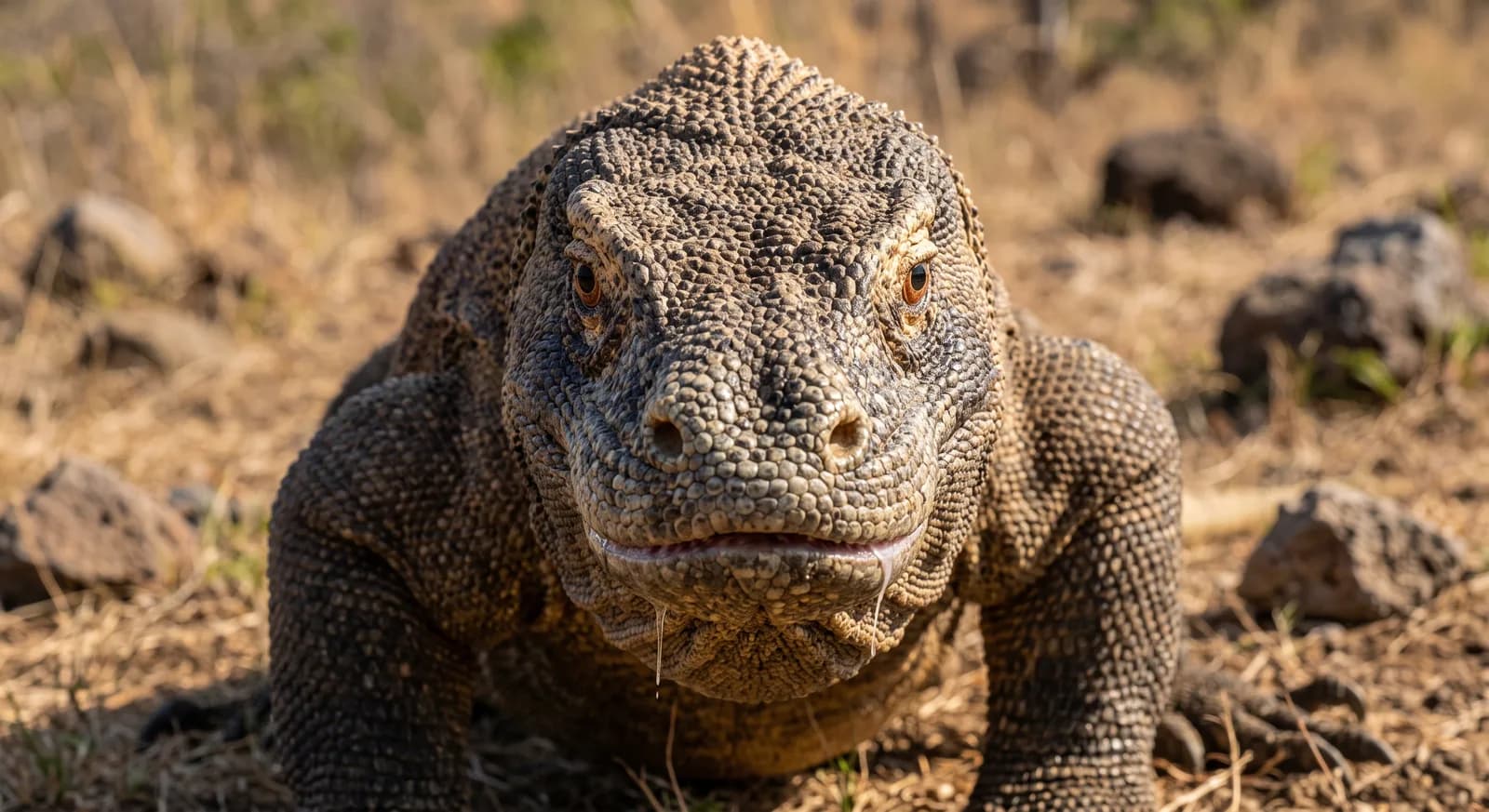
Reptiles · Squamata · Varanidae
Komodo Dragon
Varanus komodoensis
It faces a very high risk of extinction in the wild in the near future. See full glossary
The largest lizard in the world, with saliva loaded with bacteria and venom that weakens its prey after the initial attack.
Weight
70 kg – 90 kg
Size
2 m – 3 m
Lifespan
30 years
Diet
Carnivore
Feeds mainly on other animals.
Activity
Diurnal
Active mainly during the day.
Social structure
Solitary
Lives and hunts alone, joining others only to breed.
Sighting difficulty
Hard
Estimated population
Some 3,500 animals counting adults and juveniles, of which roughly 1,400 are mature individuals and around 400 breeding females, spread across eight subpopulations; none exceeds 500 animals
Fun facts
- It can smell carrion over 8 km away.
- It lives on only a handful of Indonesian islands.
- Females can reproduce without a male, through parthenogenesis.
Life cycle & biology
- Skeleton type
- Vertebrate - internal bony skeleton (reptile)
- Habitat & environment
- Tropical savanna, open woodland and coastal country on the Indonesian islands of Komodo, Rinca, Flores and Gili Motang
- Birth weight
- 80 - 105 grams, 37-46.5 cm long at hatching
- Size at birth
- 37 - 46.5 cm long at hatching
- Sexual maturity
- Female: ~7-9 years | Male: ~7-10 years
- Gestation / incubation
- ~7-8.5 months (incubation of the buried eggs)
- Litter / clutch size
- Up to 30 eggs per clutch (average ~18)
- Lifespan in captivity
- 20-25 years documented in captivity
Sources consulted: Animal Diversity Web; AnAge (genomics.senescence.info); SDZWA Library Fact Sheet; ResearchGate (longevity note); Eco-savvy.blog; Fox News (differential female lifespan study); Jessop et al. 2021, IUCN Red List e.T22884A123633058: los modelos climáticos proyectan un declive superior al 30 % en 40 años desde 2010 || Jessop et al. 2021, IUCN Red List; San Diego Zoo Wildlife Alliance Library
Where to watch it
Parks and dive sites where this species has been documented.
Related species
Other species in the catalogue with the most in common with Komodo Dragon — same habitat, park, country, tags or family.
Common Water Monitor
Varanus salvator
Yellow-lipped Sea Krait
Laticauda colubrina
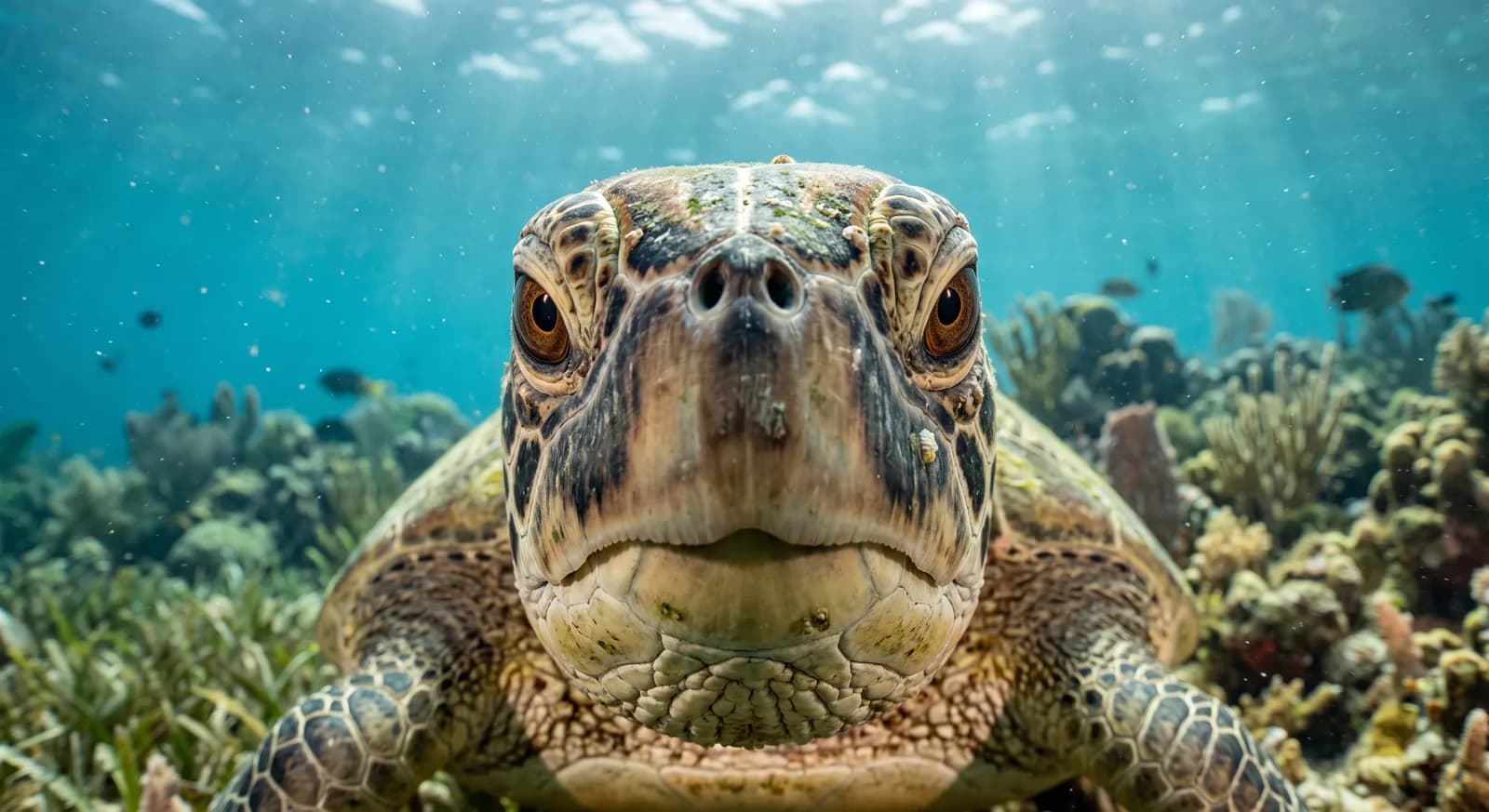 Endangered
Green Turtle
Chelonia mydas
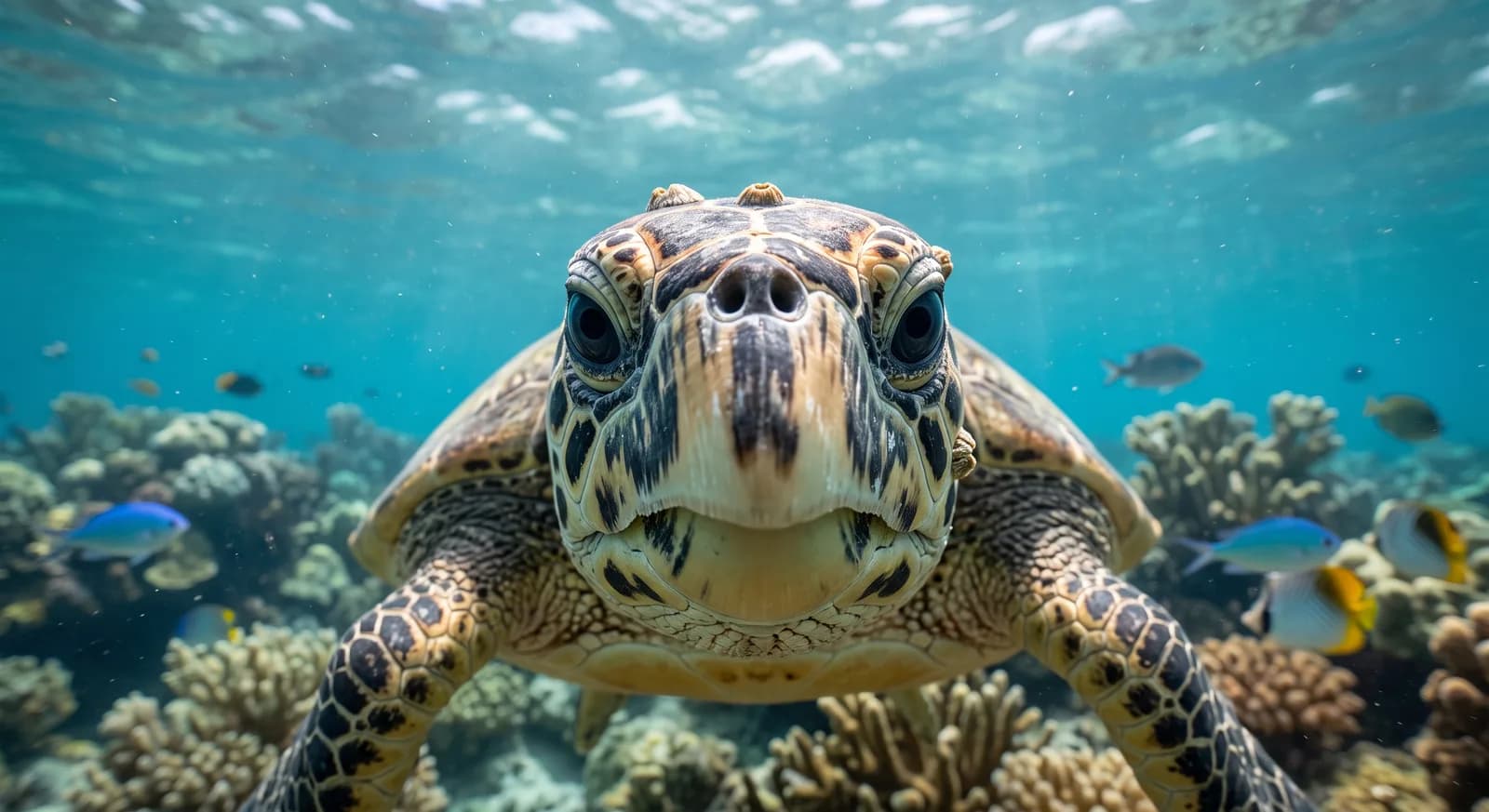 Critically Endangered
Hawksbill Turtle
Eretmochelys imbricata
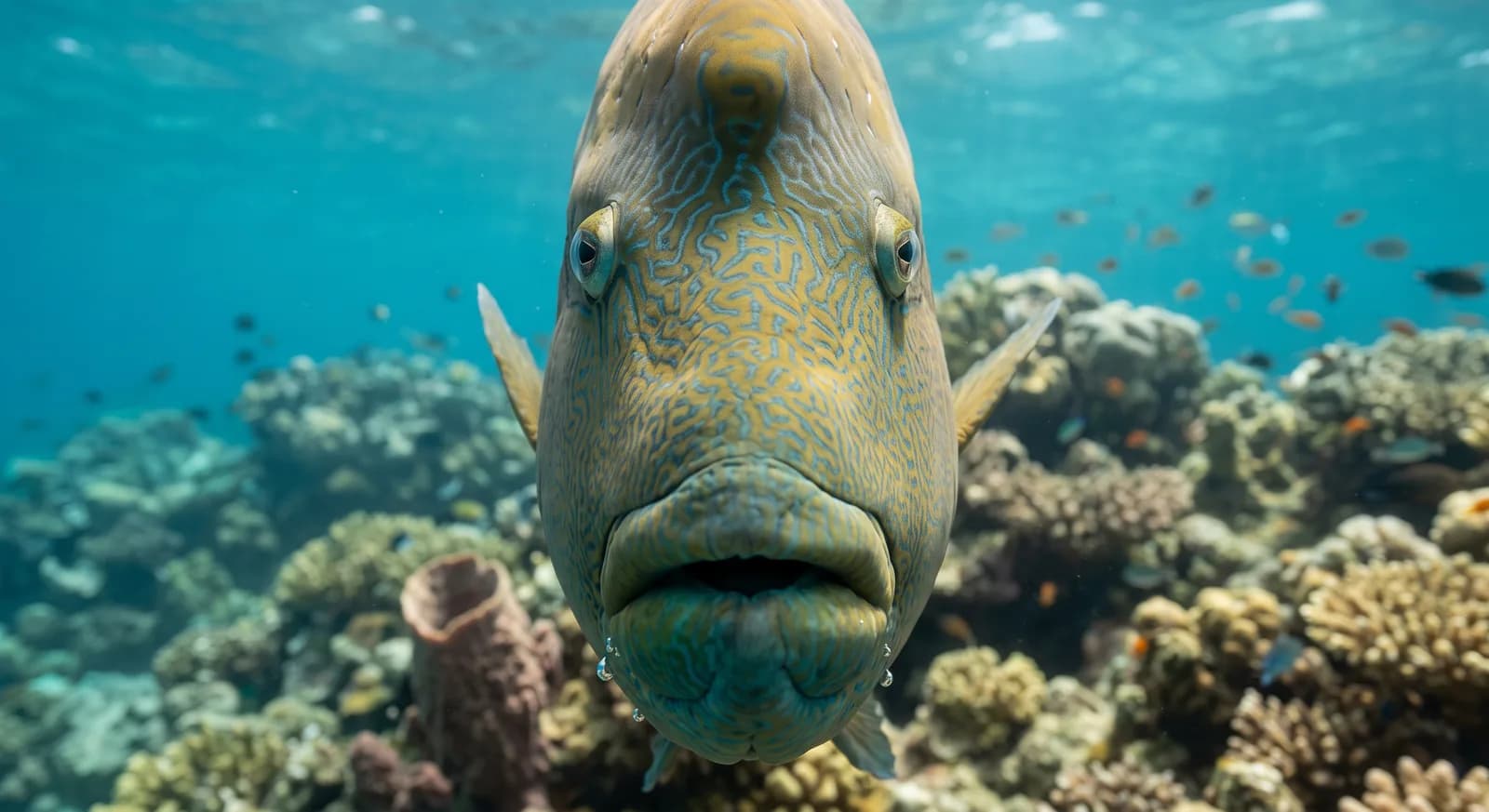 Endangered
Humphead Wrasse
Cheilinus undulatus
Yellow-bellied Sea Snake
Hydrophis platurus
How to help
The komodo dragon is classified as endangered. Organizations such as Komodo Survival Program work specifically on its conservation and that of its habitat; looking into their programs is a good starting point if you want to get involved.
It's documented in 2 real protected areas — part of why protecting these places matters for its conservation.
Keep exploring
Based on what we already know about komodo dragon.
Comments
Share an experience, a fun fact or a tip for seeing the komodo dragon.
Be the first to comment.