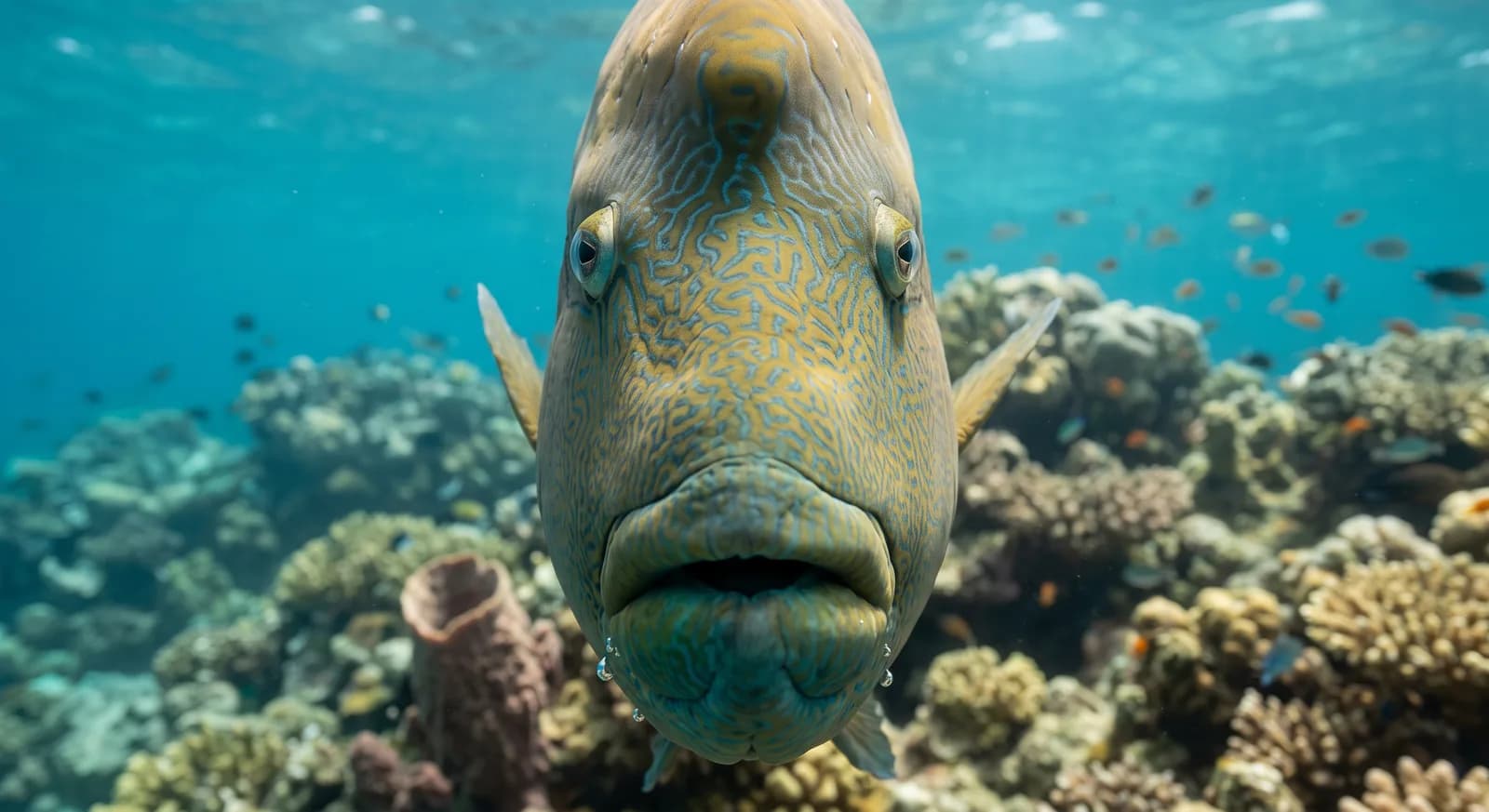
Bony fish · Perciformes · Labridae
Humphead Wrasse
Cheilinus undulatus
It faces a very high risk of extinction in the wild in the near future. See full glossary
The Napoleon fish, also called the humphead or Maori wrasse, is the largest member of the wrasse family, able to exceed two metres in length and 200 kg in weight. They live on reefs and feed mainly on crustaceans. Their population is currently endangered by overfishing. The species is listed on the IUCN Red List.
Weight
up to 191 kg
Size
up to 2.3 m
Lifespan
32 years
Diet
Carnivore
Feeds mainly on other animals.
Social structure
Solitary
Lives and hunts alone, joining others only to breed.
Sighting difficulty
Hard
Fun facts
- It is the largest living wrasse: there are records of 229 cm and 191 kg.
- It changes sex over the course of its life: almost all small adults are female and almost all individuals over a metre long are male.
- Its fidelity to a single spot on the reef and its lack of fear of divers make it very easy to catch, and it is among the most sought-after species in the live reef fish trade.
- It is scarce even where populations are healthy: densities rarely exceed 20 adults per hectare of reef.
Life cycle & biology
- Skeleton type
- Vertebrate - internal bony skeleton (bony fish)
- Habitat & environment
- Indo-Pacific coral reefs between 0 and 100 m; juveniles among dense branching coral and adults on outer reefs, steep drop-offs and channels
- Sexual maturity
- From 35-50 cm and under 5 years old; males usually exceed a metre
Sources consulted: https://en.wikipedia.org/wiki/Humphead_wrasse
Where to find it
See its range on the interactive mapWhere to watch it
Parques y spots de buceo donde se ha documentado esta especie — se muestran 20 de 151 documentados.
Related species
Other species in the catalogue with the most in common with Humphead Wrasse — same habitat, park, country, tags or family.
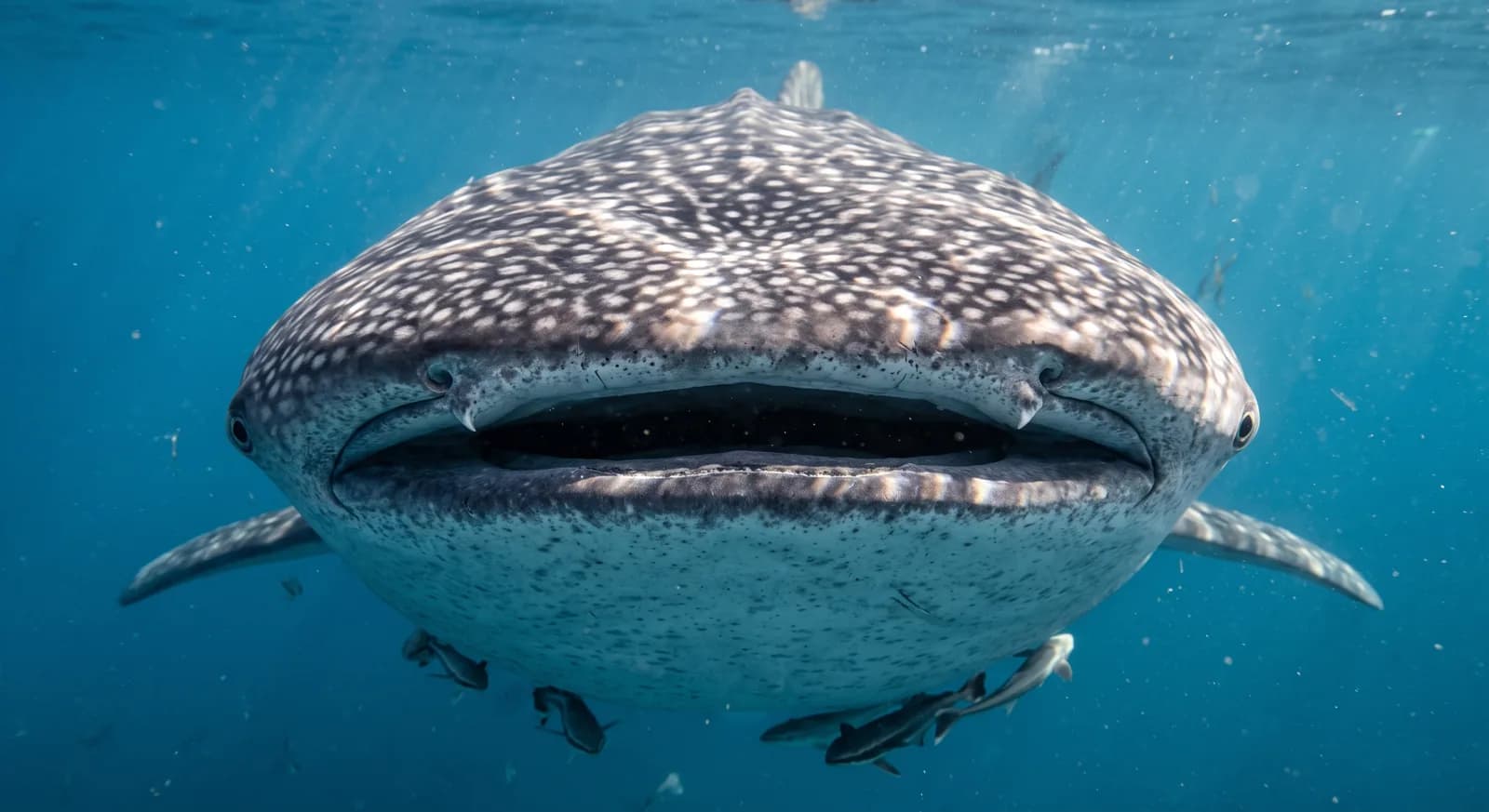 Endangered
Whale Shark
Rhincodon typus
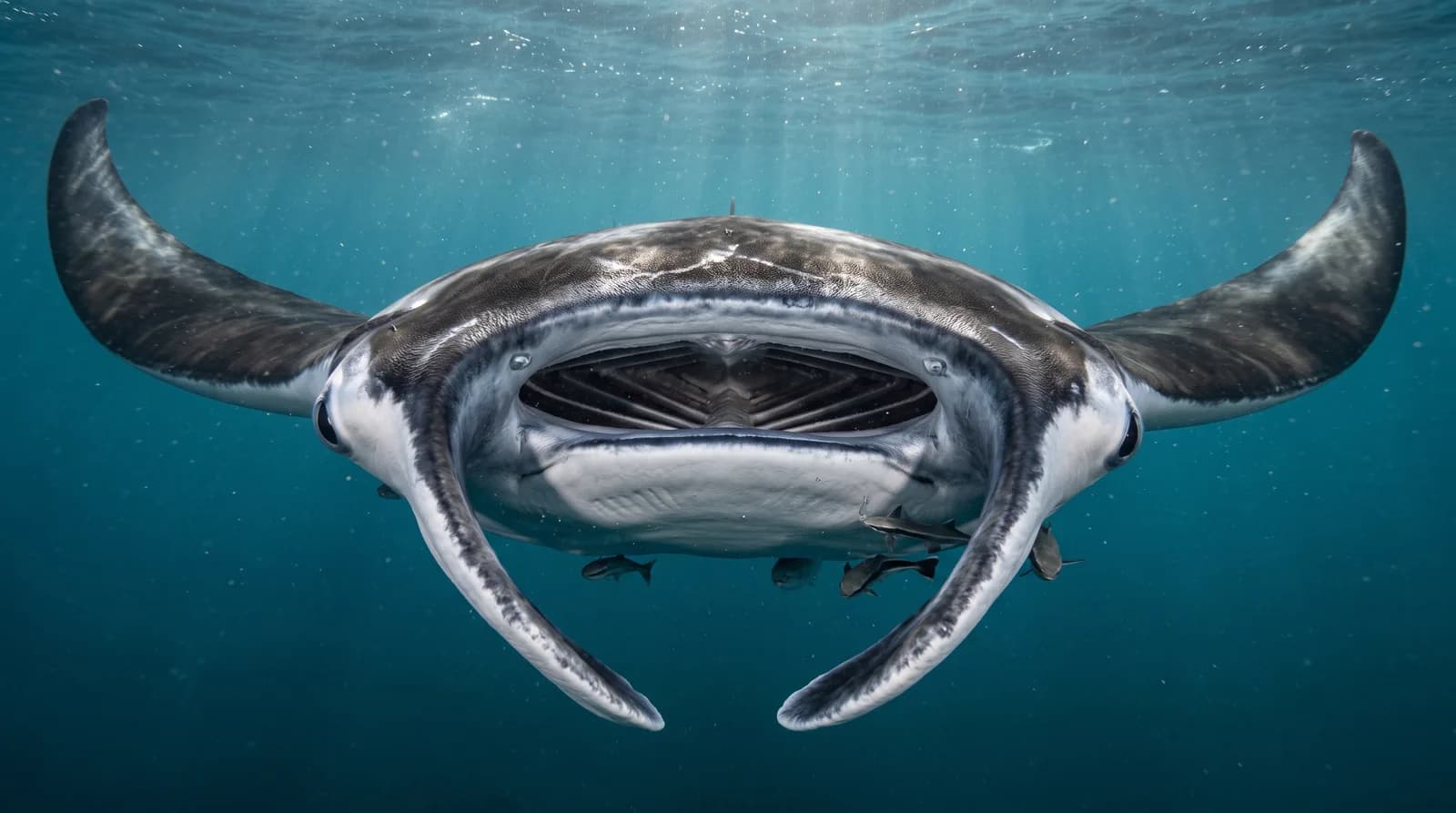 Endangered
Giant Manta
Mobula birostris
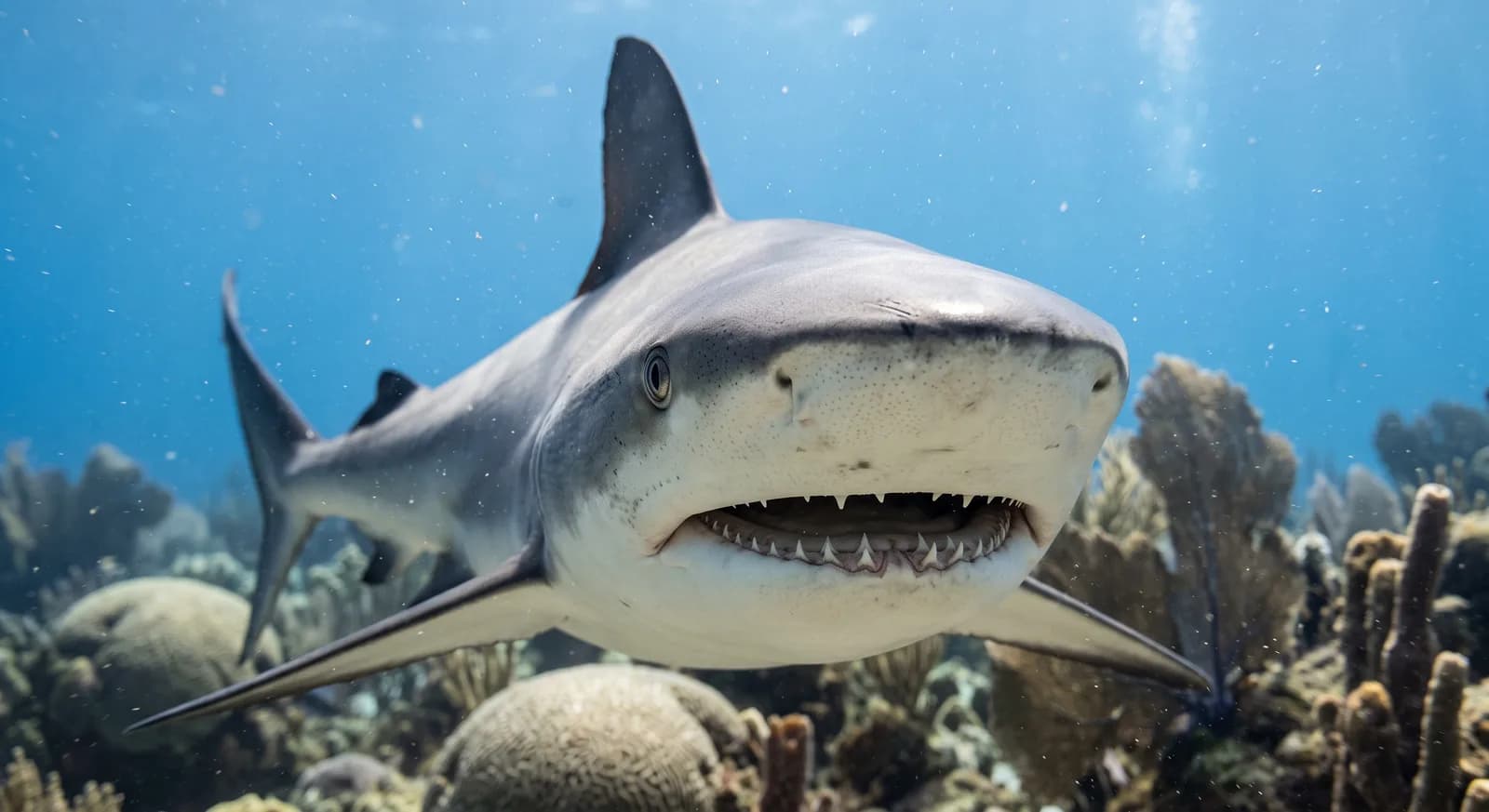 Endangered
Grey Reef Shark
Carcharhinus amblyrhynchos
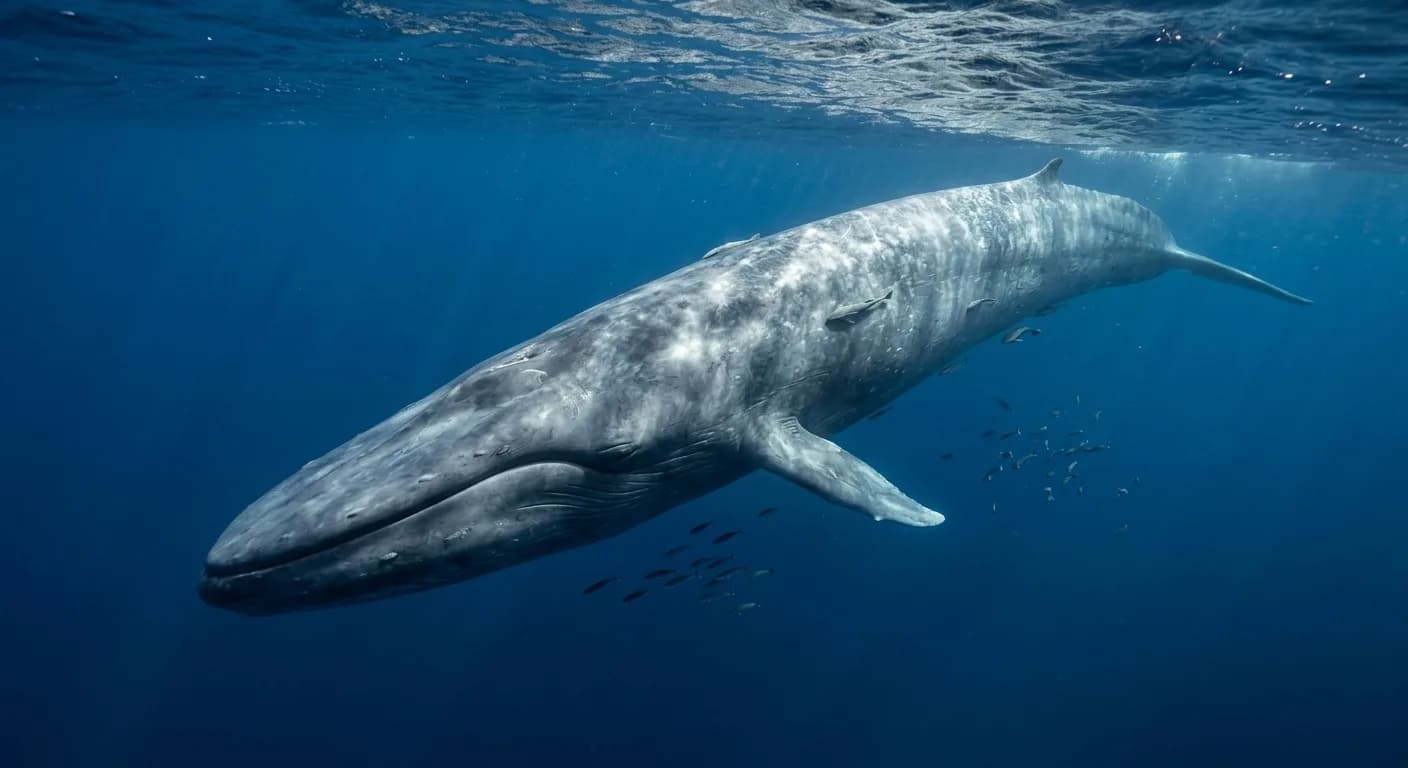 Endangered
Blue Whale
Balaenoptera musculus
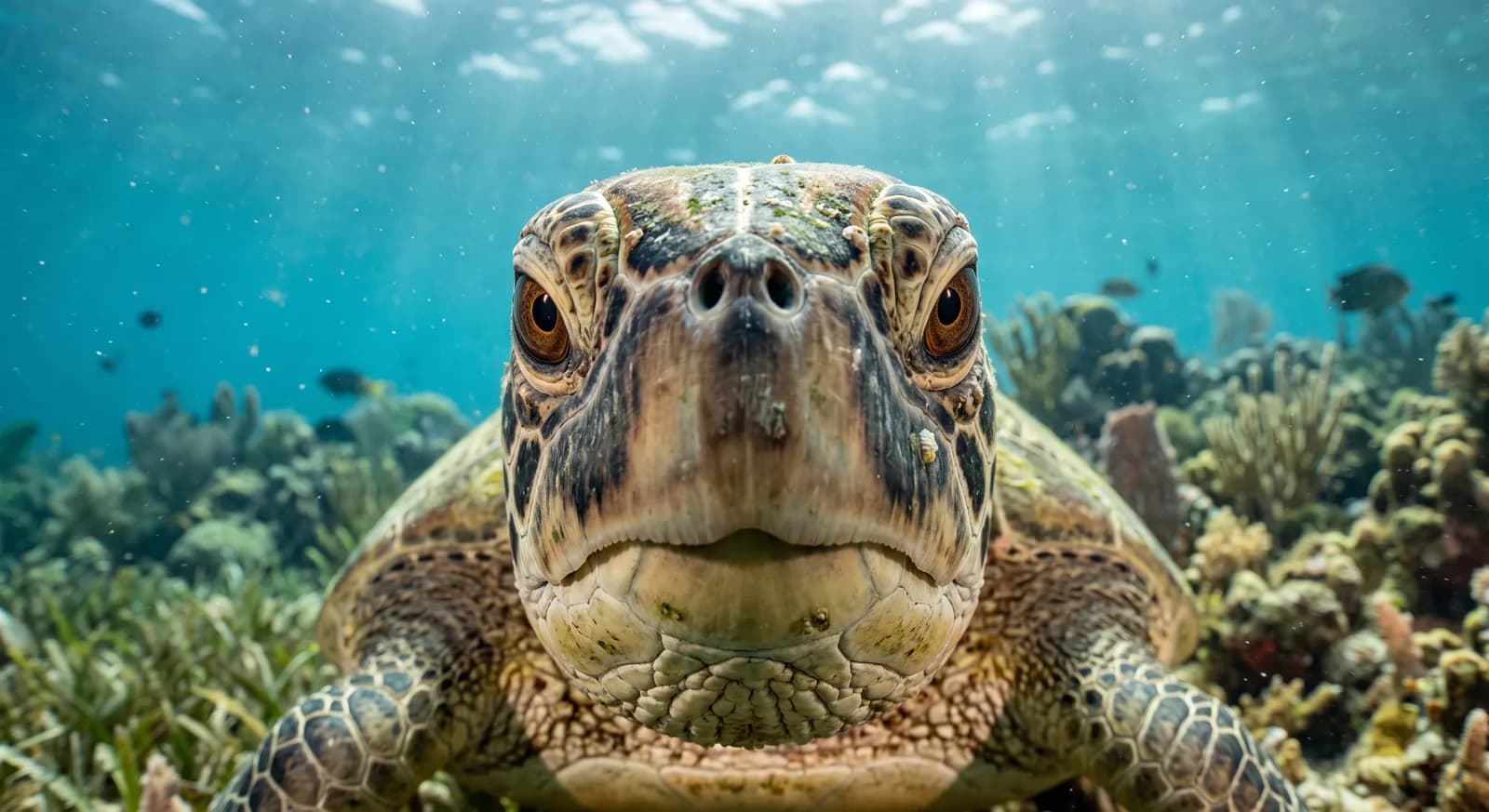 Endangered
Green Turtle
Chelonia mydas
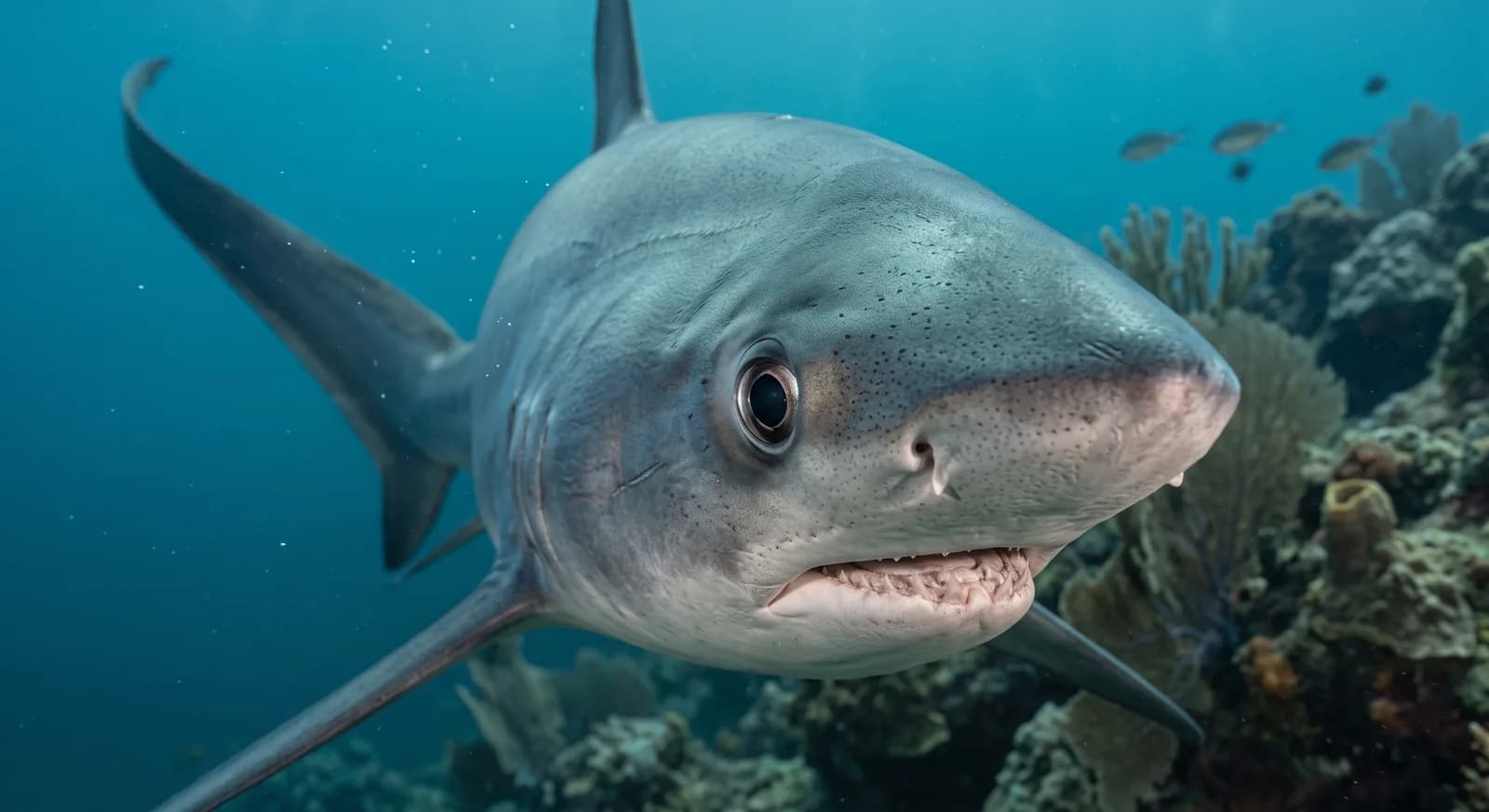 Vulnerable
Grayfish
Alopias vulpinus
How to help
The humphead wrasse is classified as endangered. Organizations such as UICN, WWF y Wildlife Conservation Society work specifically on its conservation and that of its habitat; looking into their programs is a good starting point if you want to get involved.
It's documented in 15 real protected areas — part of why protecting these places matters for its conservation.
Keep exploring
Based on what we already know about humphead wrasse.
Comments
Share an experience, a fun fact or a tip for seeing the humphead wrasse.
Be the first to comment.