One of the 41 turtles and tortoises on WAnimals
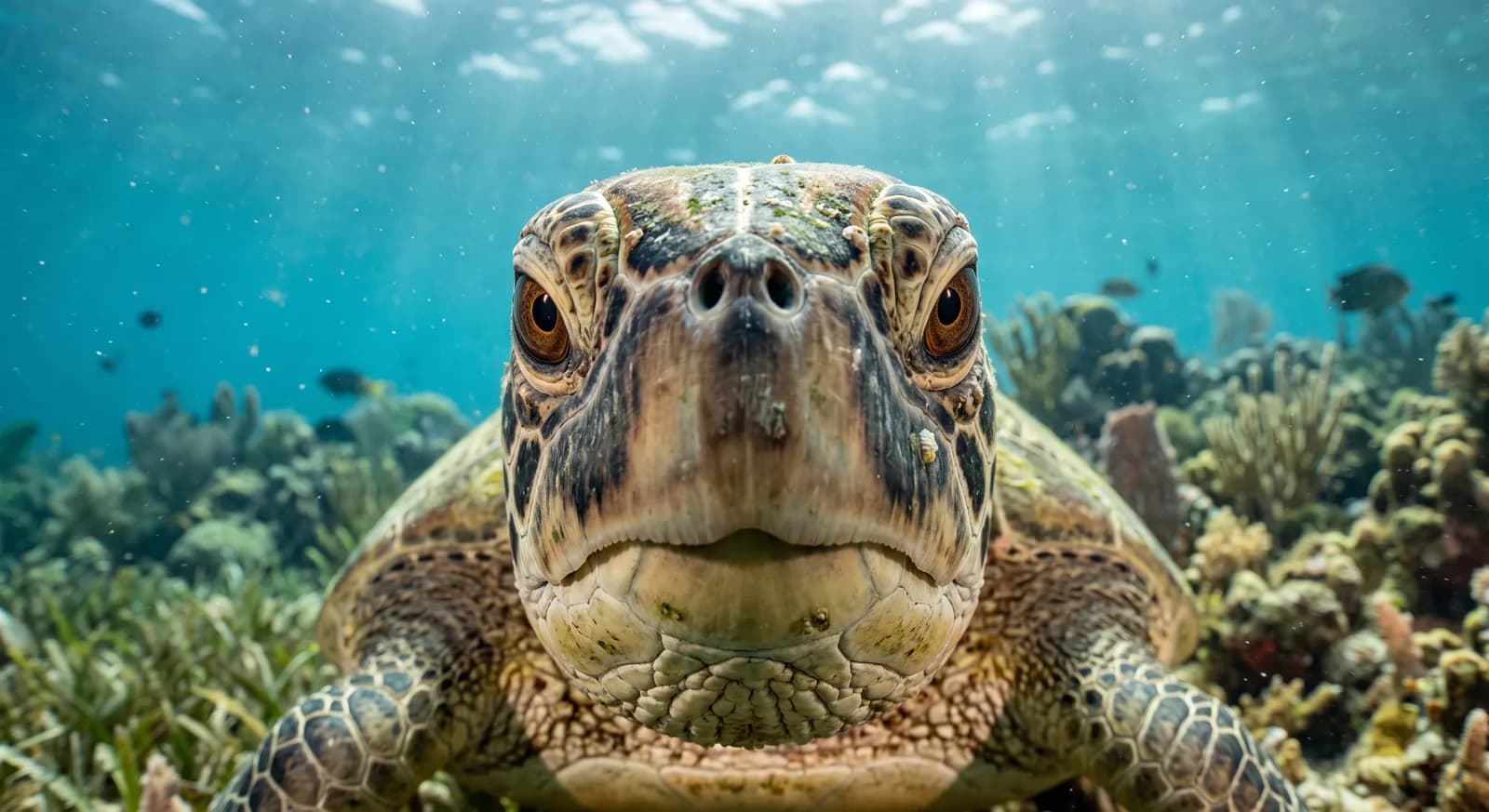
Reptiles · Testudines · Cheloniidae
Green Turtle
Chelonia mydas
It faces a very high risk of extinction in the wild in the near future. See full glossary
As an adult it feeds mainly on seagrass and algae, after an omnivorous juvenile phase. Females return to nest on the very beach where they hatched, sometimes after migrations of thousands of kilometres.
Weight
65 kg – 160 kg
Size
1 m – 1.5 m
Lifespan
70 years
Diet
Herbivore
Feeds mainly on plants.
Activity
Irregular activity
Active at irregular times, by day or night depending on circumstances.
Social structure
Solitary
Lives and hunts alone, joining others only to breed.
Sighting difficulty
Hard
Fun facts
- Fewer than 1 in 1,000 hatchlings reaches adulthood.
- A female can lay between 75 and 200 eggs per clutch, with up to 9 clutches in a season.
- It returns to nest on the very beach where it hatched, a phenomenon known as natal philopatry.
- comportamientoFemales return to lay their eggs on the same beach where they hatched decades earlier, guided by a magnetic sense that detects the Earth's geomagnetic field.
Life cycle & biology
- Skeleton type
- Vertebrate - bony skeleton with a shell fused to the spine and ribs (reptile)
- Habitat & environment
- Tropical and subtropical coastal waters worldwide; nests on sandy beaches
- Birth weight
- ~25 - 26 grams at hatching
- Size at birth
- ~5 cm of carapace length at hatching
- Sexual maturity
- Extremely variable: between 20 and 50 years depending on the population (some recent studies suggest 25-35 years in females)
- Gestation / incubation
- 45 - 75 days of incubation
- Litter / clutch size
- 75 to 200 eggs per clutch; 1 to 9 clutches per nesting season
Sources consulted: NOAA Fisheries; Animal Diversity Web; Upwell.org; CMS (Convention on Migratory Species); National Park Service; NatureServe/USFWS ECOS
Where to find it
See its range on the interactive mapWhere to watch it
Parques y spots de buceo donde se ha documentado esta especie — se muestran 20 de 470 documentados.
Related species
Other species in the catalogue with the most in common with Green Turtle — same habitat, park, country, tags or family.
Flatback
Natator depressus
Kemp's Ridley
Lepidochelys kempii
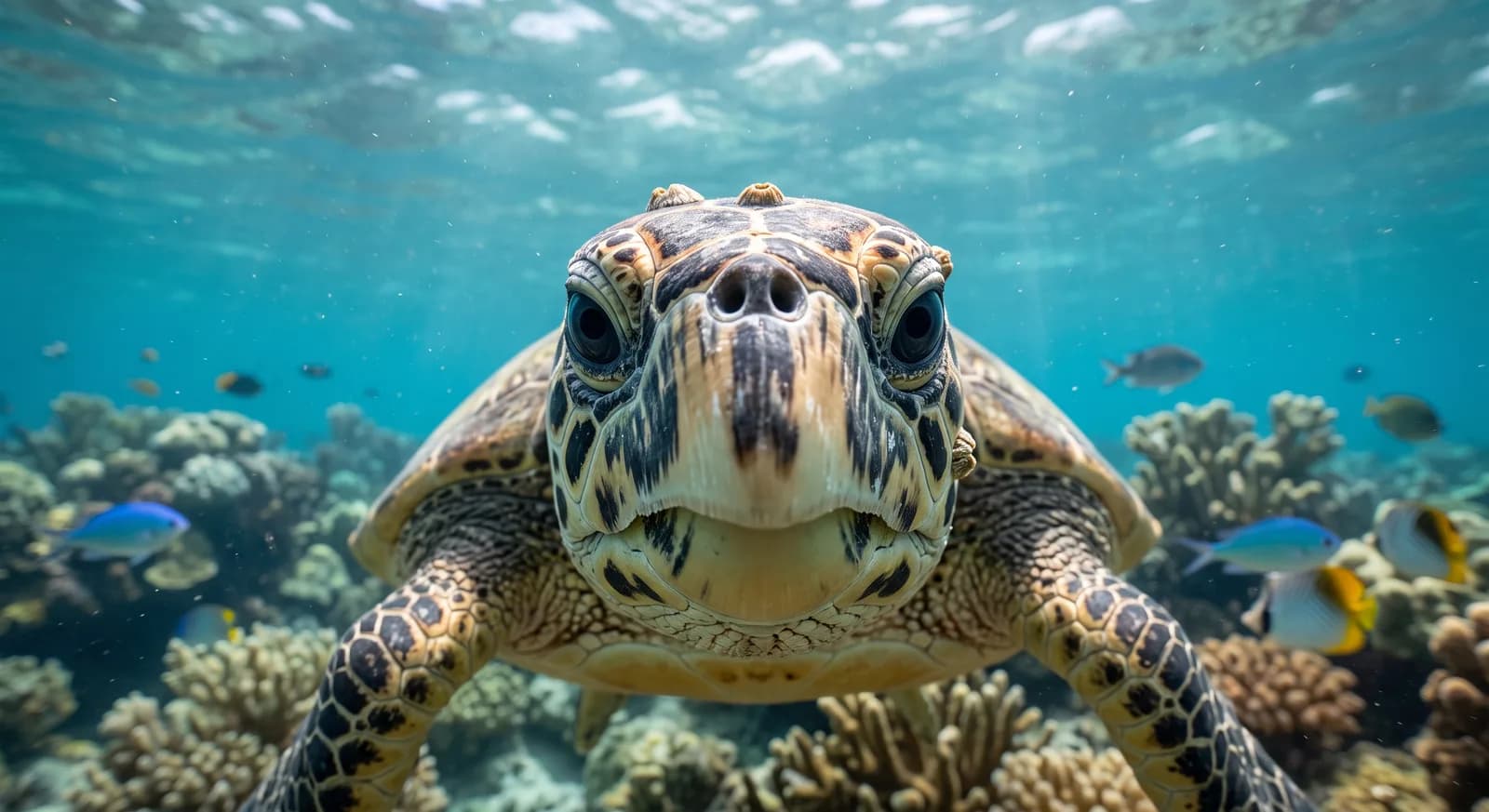 Critically Endangered
Hawksbill Turtle
Eretmochelys imbricata
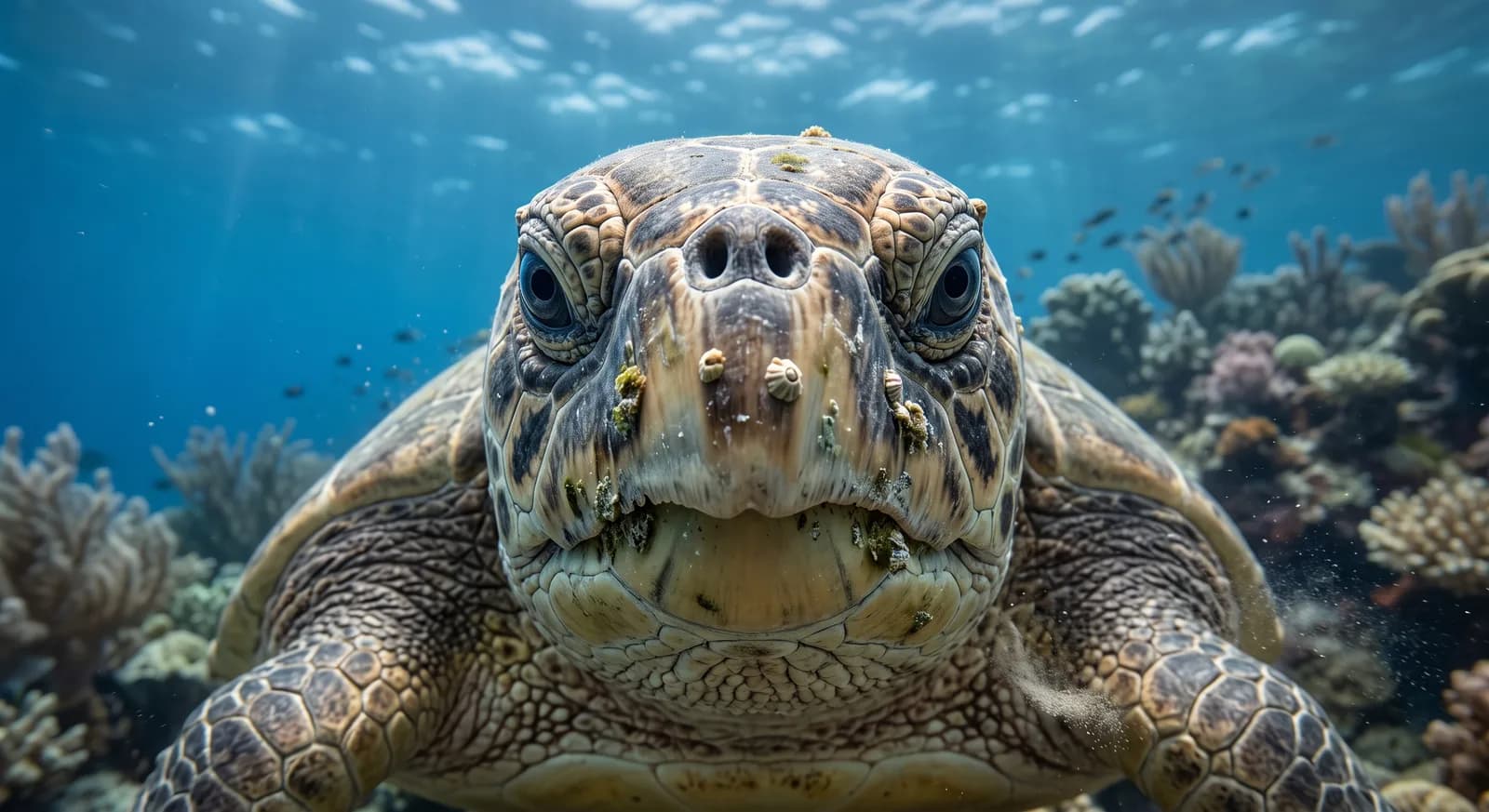 Vulnerable
Loggerhead Turtle
Caretta caretta
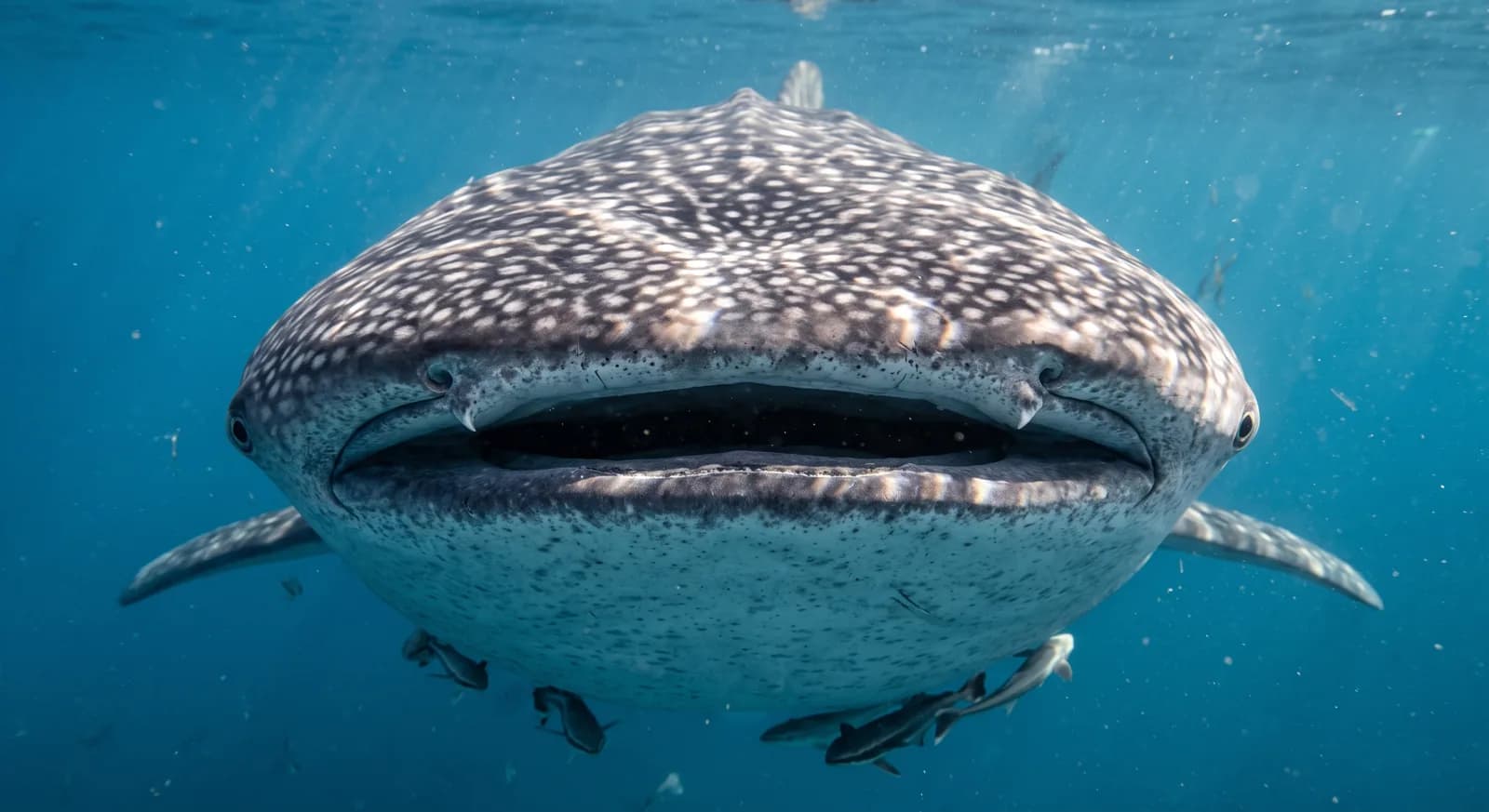 Endangered
Whale Shark
Rhincodon typus
 Endangered
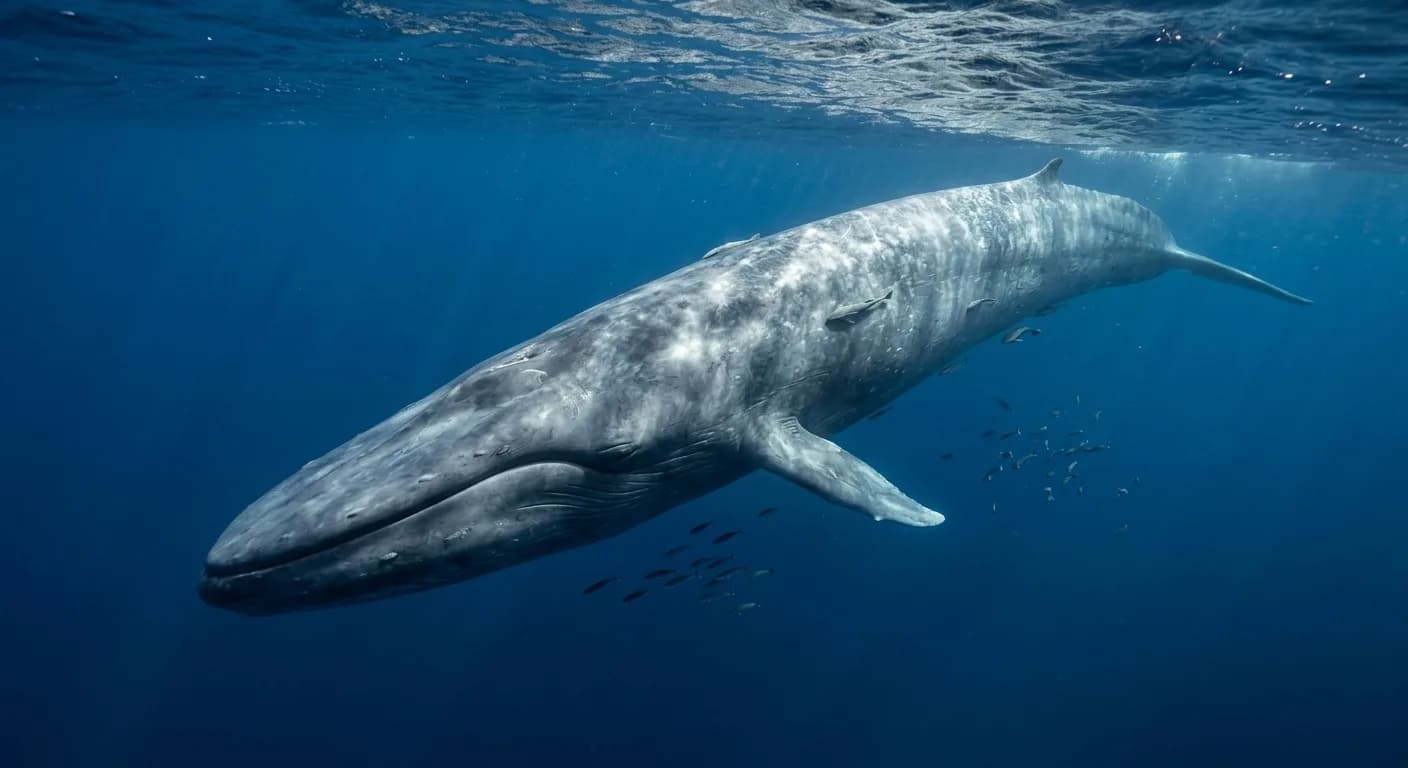
Blue Whale
Balaenoptera musculus
How to help
The green turtle is classified as endangered. Organizations such as UICN, WWF y Wildlife Conservation Society work specifically on its conservation and that of its habitat; looking into their programs is a good starting point if you want to get involved.
It's documented in 14 real protected areas — part of why protecting these places matters for its conservation.
Keep exploring
Based on what we already know about green turtle.
Comments
Share an experience, a fun fact or a tip for seeing the green turtle.
Be the first to comment.