One of the 41 turtles and tortoises on WAnimals
Reptiles · Testudines · Cheloniidae
Flatback
Natator depressus
There is not enough information to assess its risk of extinction. See full glossary
The flatback is the only sea turtle that makes no oceanic migrations: it lives and nests exclusively on the Australian continental shelf, without crossing deep water. Its shell is notably flattened with thin edges. Its hatchlings are the largest of any sea turtle and skip the pelagic phase altogether.
Weight
70 kg – 100 kg
Size
76 cm – 99 cm
Lifespan
50 years
Diet
Carnivore
Feeds mainly on other animals.
Activity
Nocturnal
Active mainly at night.
Social structure
Solitary
Lives and hunts alone, joining others only to breed.
Sighting difficulty
Unknown
Fun facts
- It is the only sea turtle in the world that does not cross the ocean: it hatches, grows and nests within the Australian continental shelf, without the oceanic phase the others spend adrift for years.
- Its hatchlings are far larger than those of any other sea turtle, and can therefore swim and dive from the first day rather than drifting among the weed of the open sea.
- It nests exclusively on Australian beaches, which makes it the only sea turtle whose conservation depends entirely on a single country.
Life cycle & biology
- Skeleton type
- Vertebrate - internal bony skeleton with a shell (reptile)
- Habitat & environment
- Shallow waters of the continental shelf off northern Australia; it nests on Australian beaches
- Birth weight
- About 6 cm of carapace on hatching
- Size at birth
- About 6 cm of carapace: it is the largest hatchling of any sea turtle
- Sexual maturity
- 15 years
- Gestation / incubation
- 55 days of incubation
- Litter / clutch size
- 50 eggs
Sources consulted: https://es.wikipedia.org/wiki/Natator_depressus
Where to find it
See its range on the interactive mapBest time: From November to January on the beaches of northern Australia, during the nesting season; it is the only sea turtle that never leaves the Australian shelf.
Where to watch it
Parks and dive sites where this species has been documented.
Related species
Other species in the catalogue with the most in common with Flatback — same habitat, park, country, tags or family.
 Endangered
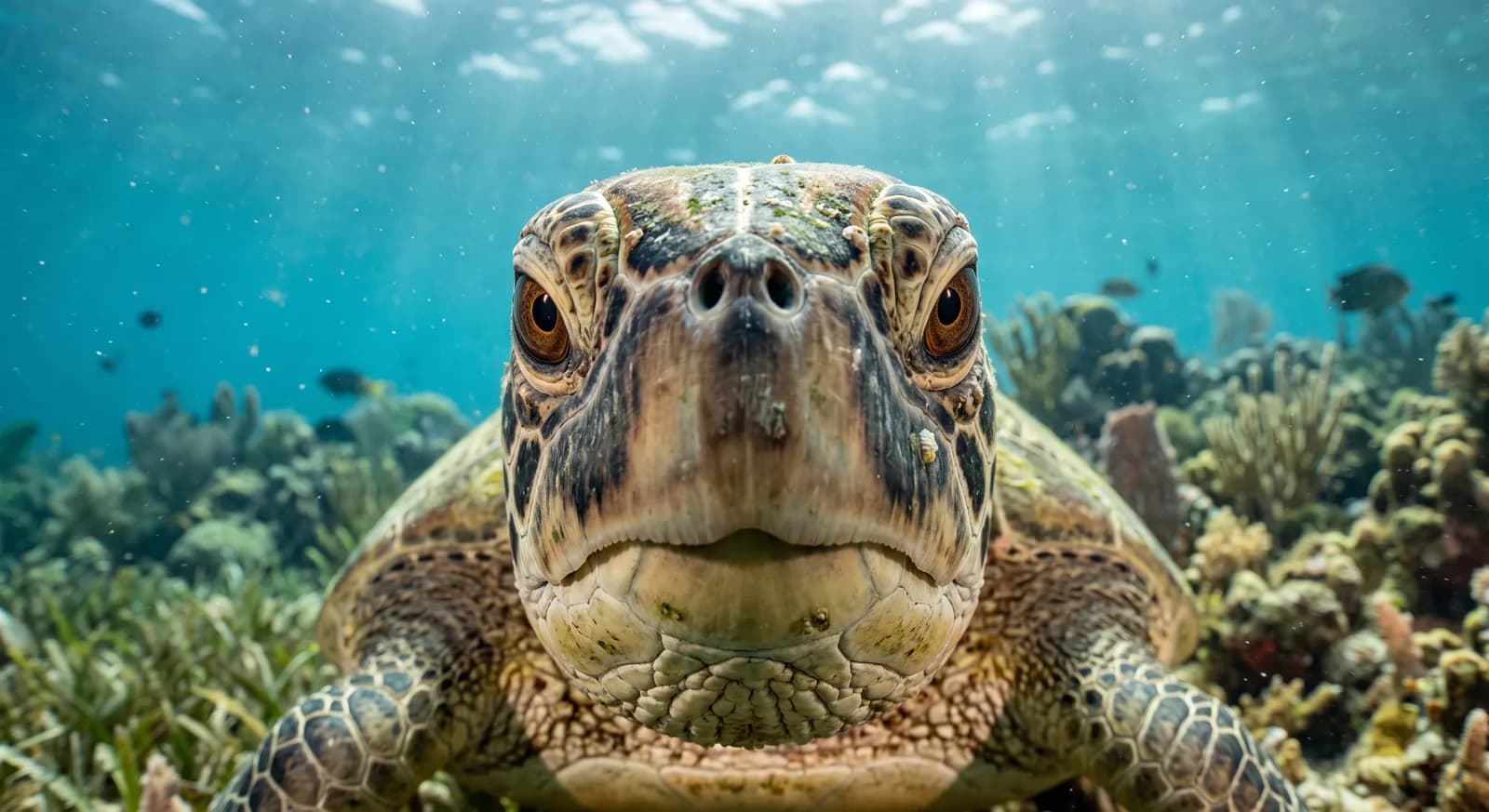
Green Turtle
Chelonia mydas
 Critically Endangered
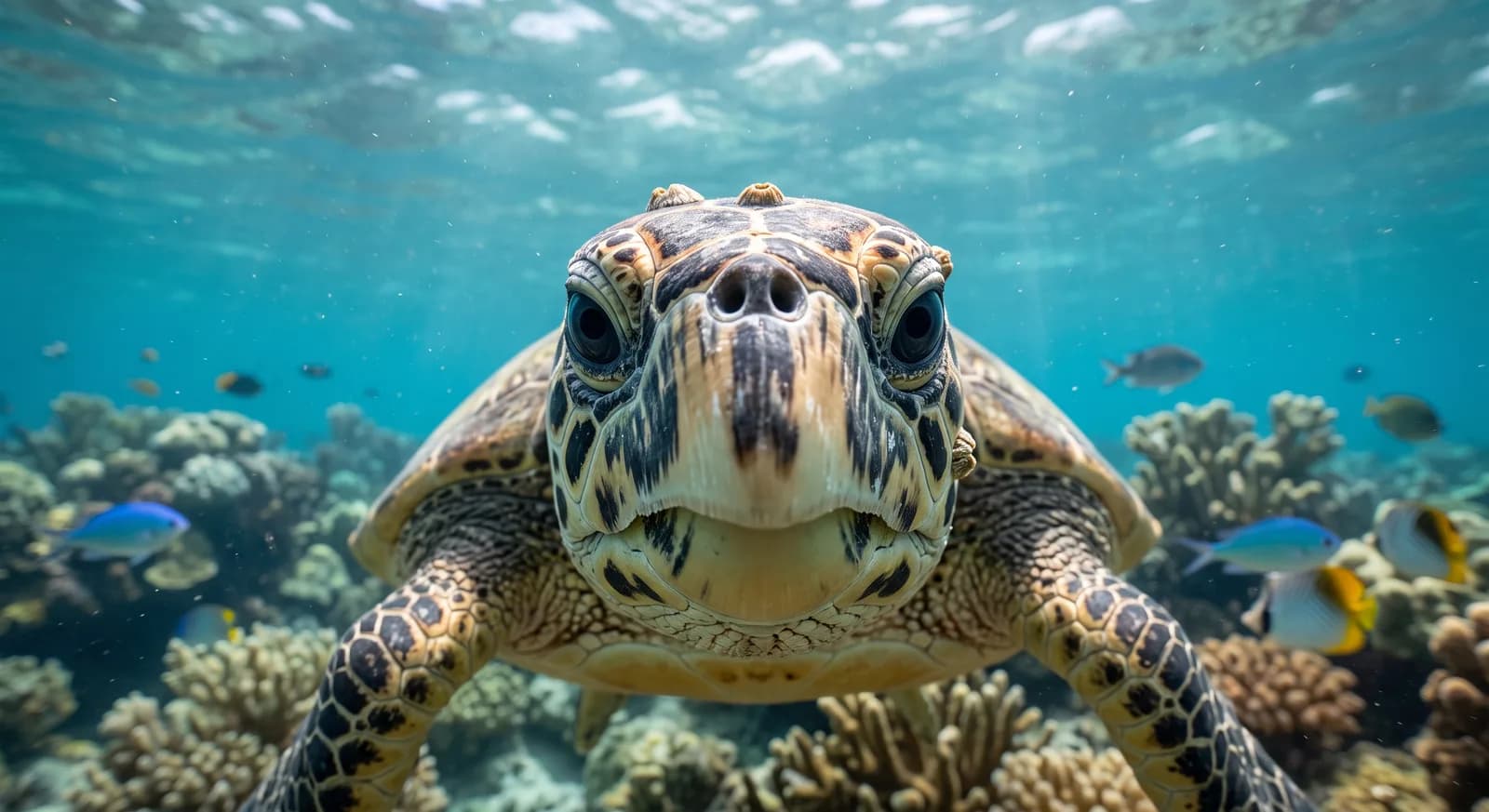
Hawksbill Turtle
Eretmochelys imbricata
Red Lionfish
Pterois volitans
Geography Cone
Conus geographus
Crown-of-thorns
Acanthaster planci
Persian Carpet Flatworm
Pseudobiceros bedfordi
Keep exploring
Based on what we already know about flatback.
Comments
Share an experience, a fun fact or a tip for seeing the flatback.
Be the first to comment.