Bony fish · Scorpaeniformes · Scorpaenidae
Red Lionfish
Pterois volitans
The species is abundant and widely distributed; it faces no significant short-term risk. See full glossary
Its extraordinary reproductive capacity — up to 2 million eggs per female a year — has been central to its explosive spread as an invasive species in the western Atlantic and the Caribbean.
Weight
up to 1.4 kg
Size
up to 47 cm
Lifespan
10 years
Diet
Carnivore
Feeds mainly on other animals.
Activity
Nocturnal
Active mainly at night.
Social structure
Solitary
Lives and hunts alone, joining others only to breed.
Sighting difficulty
Easy
Fun facts
- It can swallow prey up to half its own body length.
- Its venomous dorsal spines are an effective defence against predators.
- It lives on the coral reefs, lagoons and rocky outcrops of the Indo-Pacific.
- ecologíaIt is an invasive species in the Caribbean and western Atlantic, where it has no natural predators and its venomous spines are a threat to local reefs.
- It is the first fish species to have established itself as an invader in the western Atlantic. The first specimen was caught at Dania Beach, Florida, in 1985, and there were no further sightings until 1992.
- Genetic studies indicate that the entire Atlantic population descends from a handful of individuals, a bottleneck consistent with aquarium releases.
- The story of Hurricane Andrew in 1992, said to have freed six specimens from an aquarium, does not explain the origin: a fish had already been caught seven years earlier.
- In less than three decades it occupied some 7.3 million square kilometres of the western Atlantic and the Caribbean.
- Its success comes down to a combination that is hard to counter: prey that do not recognise it as a predator, almost no natural controls, continuous reproduction and a long larval phase that disperses the young fish on the currents.
- Its dorsal, pelvic and anal spines are venomous and cause intense pain, though they are rarely fatal.
Life cycle & biology
- Skeleton type
- Vertebrate - bony skeleton (fish)
- Habitat & environment
- Coral reefs, lagoons and rocky outcrops of the Indo-Pacific; an established invasive species in the Caribbean and western Atlantic
- Birth weight
- An egg inside a floating gelatinous mass
- Sexual maturity
- Under 1 year (by size: female ~18 cm, male ~10 cm)
- Gestation / incubation
- ~25 days of the gelatinous egg mass drifting before hatching
- Litter / clutch size
- 12,000 to 15,000 eggs per mass, with two masses released per spawning every 4 days in warm water
Sources consulted: USM Aquila Thesis (life history study); Dimensions.com; Planet Zoo 2 Zoopedia; FishBase; Animalia.bio; FWC; The Animal Facts; PMC (Barbados invasion study)
Where to find it
See its range on the interactive mapWhere to watch it
Parques y spots de buceo donde se ha documentado esta especie — se muestran 20 de 395 documentados.
Related species
Other species in the catalogue with the most in common with Red Lionfish — same habitat, park, country, tags or family.
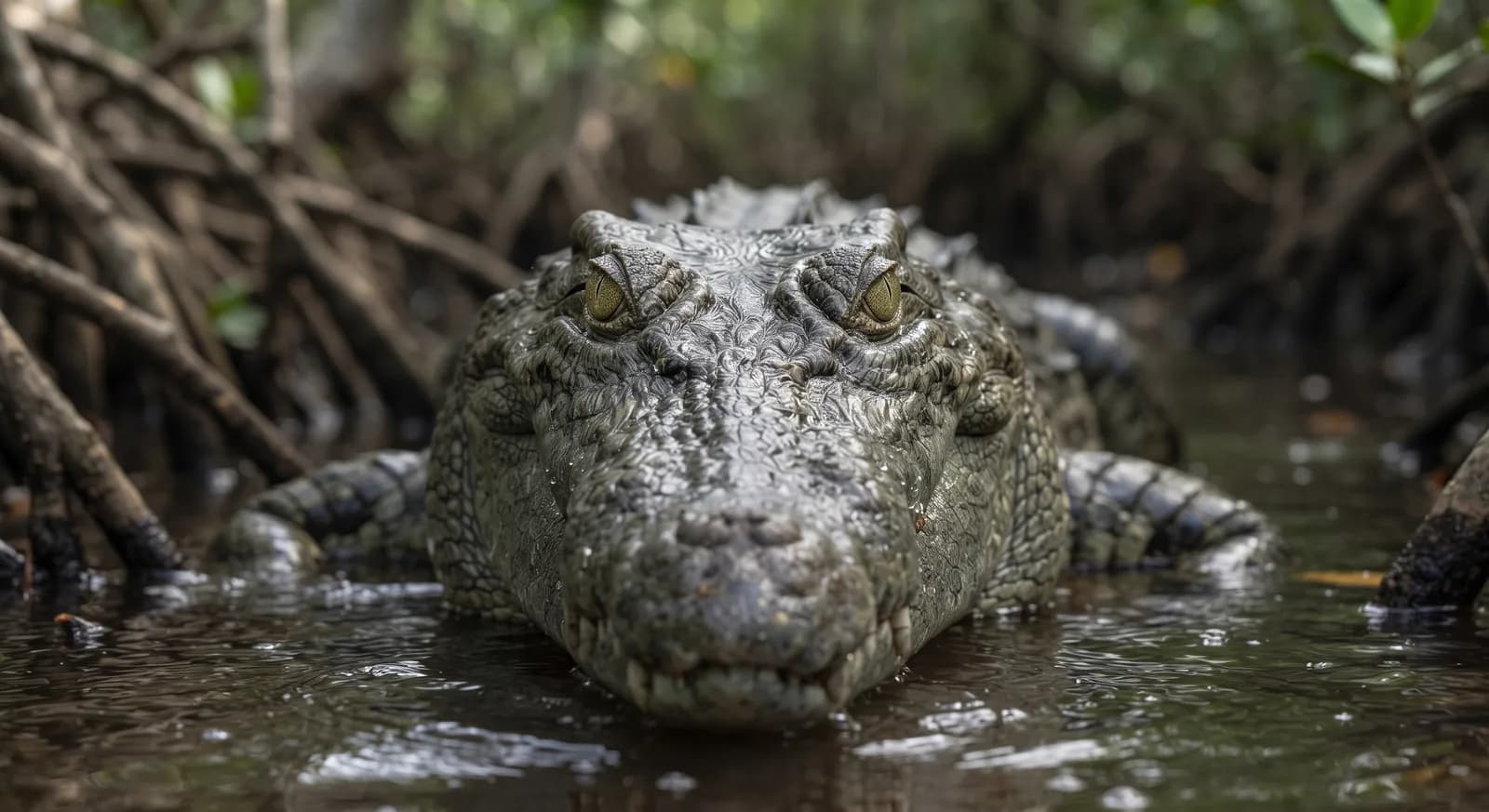 Least Concern
Saltwater Crocodile
Crocodylus porosus
Yellow-bellied Sea Snake
Hydrophis platurus
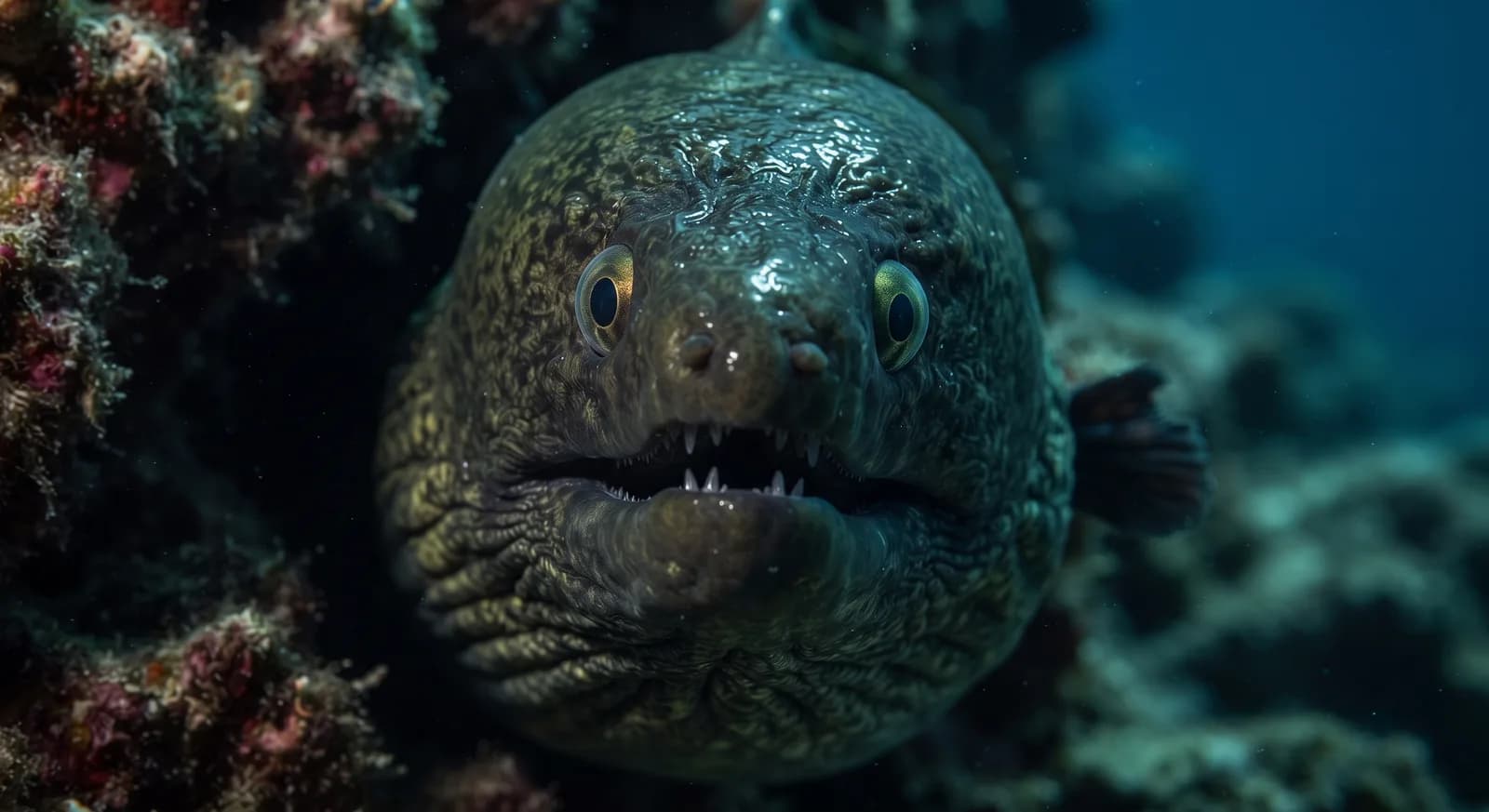 Least Concern
Green Moray
Gymnothorax funebris
Blackbar Soldierfish
Myripristis jacobus
White-spotted Puffer
Arothron hispidus
Spot-fin Porcupinefish
Diodon hystrix
Keep exploring
Based on what we already know about red lionfish.
Comments
Share an experience, a fun fact or a tip for seeing the red lionfish.
Be the first to comment.