One of the 10 crocodiles on WAnimals
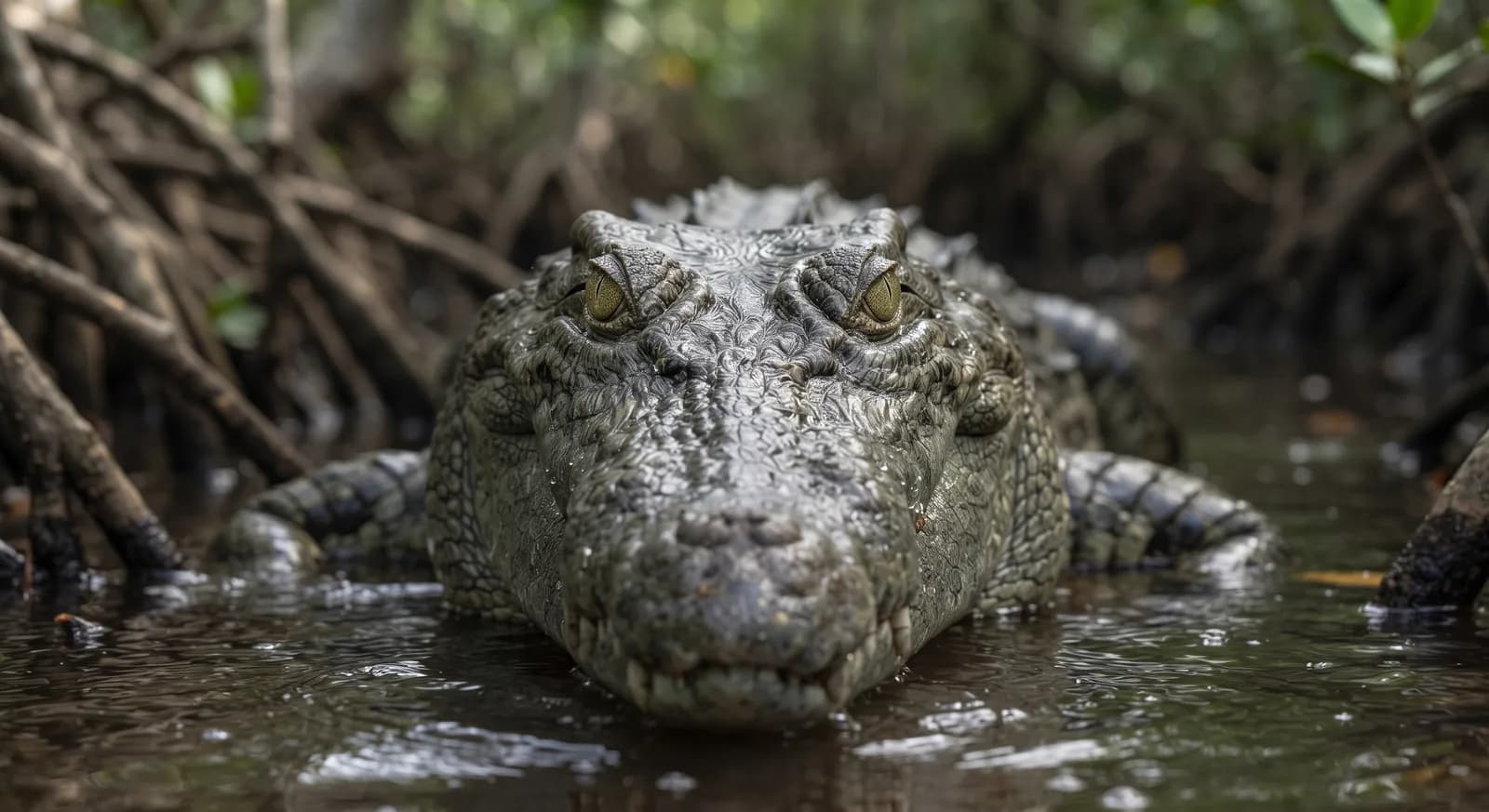
Reptiles · Crocodilia · Crocodylidae
Saltwater Crocodile
Crocodylus porosus
The species is abundant and widely distributed; it faces no significant short-term risk. See full glossary
It is the largest living reptile in the world and one of the most dangerous predators to people within its range.
Weight
400 kg – 1 t
Size
3 m – 7 m
Lifespan
70 years
Diet
Carnivore
Feeds mainly on other animals.
Activity
Nocturnal
Active mainly at night.
Social structure
Solitary
Lives and hunts alone, joining others only to breed.
Sighting difficulty
Easy
Fun facts
- Males can reach 6 to 7 metres long, while females rarely exceed 3 metres.
- It can cover long distances in the open sea by riding ocean currents.
- It hunts from ambush, taking fish, reptiles, birds, mammals and even other crocodiles.
- récordIt is the largest living reptile in the world, and can cross long stretches of open sea by riding ocean currents to colonise new islands.
Life cycle & biology
- Skeleton type
- Vertebrate - internal bony skeleton (reptile)
- Habitat & environment
- Estuaries, mangroves, coastal rivers and open ocean of the Indo-Pacific, capable of long sea crossings
- Birth weight
- ~70 grams; 25-30 cm long
- Size at birth
- 25 - 30 cm long at hatching
- Sexual maturity
- 8-10 years
- Gestation / incubation
- ~90 days (some sources give 80-90 days)
- Litter / clutch size
- 20 to 80 eggs per clutch
- Lifespan in captivity
- A documented record of 57 confirmed years, with anecdotal estimates of over 100
Sources consulted: DinoAnimals; Dimensions.com; MarineBio; The Animal Facts; AnAge (genomics.senescence.info); Ocean Info; PMC (hatchling growth study)
Where to find it
See its range on the interactive mapWhere to watch it
Parques y spots de buceo donde se ha documentado esta especie — se muestran 20 de 24 documentados.
Related species
Other species in the catalogue with the most in common with Saltwater Crocodile — same habitat, park, country, tags or family.
Freshwater Crocodile
Crocodylus johnstoni
Yellow-bellied Sea Snake
Hydrophis platurus
Red Lionfish
Pterois volitans
Geography Cone
Conus geographus
Harlequin Snake Eel
Myrichthys colubrinus
Mugger
Crocodylus palustris
Keep exploring
Based on what we already know about saltwater crocodile.
Comments
Share an experience, a fun fact or a tip for seeing the saltwater crocodile.
Be the first to comment.