One of the 11 snails on WAnimals
Gastropods · Neogastropoda · Conidae
Geography Cone
Conus geographus
The species is abundant and widely distributed; it faces no significant short-term risk. See full glossary
It has the deadliest venom of any cone snail, a complex mixture of hundreds of different toxins able to kill a healthy adult within hours.
Size
10 cm – 15 cm
Lifespan
10 years
Diet
Carnivore
Feeds mainly on other animals.
Activity
Nocturnal
Active mainly at night.
Social structure
Solitary
Lives and hunts alone, joining others only to breed.
Sighting difficulty
Easy
Fun facts
- At least 36 documented human deaths over 300 years are attributed to it.
- Paradoxically, some components of its venom have been used to develop painkillers.
- It takes small and medium-sized fish with a venomous harpoon, lying half-buried in the sediment of shallow reefs.
- fisiologíaIts venom contains hundreds of different compounds (conotoxins), some of which have been studied for painkillers several times more potent than morphine.
- It is the most dangerous cone snail in the world and the only one with confirmed human deaths: its venom has no antidote and takes effect within minutes.
- It hunts with a net, not a harpoon. Unlike other cone snails, which spear their prey, this one releases toxins into the water to sedate an entire school of fish and then engulfs them with a distended false mouth. That cocktail is called the nirvana cabal, because the fish are left as if drugged.
- And therein lies its most sophisticated weapon: it uses insulin as venom. It manufactures an insulin more similar to that of fish than to its own, and by releasing it triggers a hypoglycaemic shock that leaves the school unable to flee.
- A 2024 study completed the picture of the mechanism: alongside the insulin it produces a mimic of fish somatostatin, which blocks the release of glucagon and prevents the prey from counteracting the drop in blood sugar. It is a pharmacological manipulation of another animal's metabolism.
- Real medicines have come out of cone snail venoms: ziconotide, marketed as Prialt, is a painkiller a thousand times more potent than morphine, derived from a toxin of Conus magus.
- Its shell is beautiful, and that is precisely what causes the accidents: almost all of them happen when someone picks a live specimen up from the sand.
Life cycle & biology
- Skeleton type
- Invertebrate - external calcareous skeleton (shell)
- Habitat & environment
- Shallow coral reefs of the tropical Indo-Pacific, partly buried in the sediment
- Birth weight
- A microscopic larva once the egg capsule hatches
- Size at birth
- Microscopic larva after hatching
- Gestation / incubation
- 10-15 days of incubation inside the egg capsule
- Litter / clutch size
- ~40 eggs per capsule, in clusters stuck to hard surfaces
Sources consulted: National Geographic; Animal Diversity Web; Facts and Details; Uchicago Penelope (geography cone history); Animal Database (Fandom); Animalia.bio; Wikipedia (Conus geographus); PMC (venom transcriptome study)
Where to find it
See its range on the interactive mapWhere to watch it
Parques y spots de buceo donde se ha documentado esta especie — se muestran 20 de 270 documentados.
Related species
Other species in the catalogue with the most in common with Geography Cone — same habitat, park, country, tags or family.
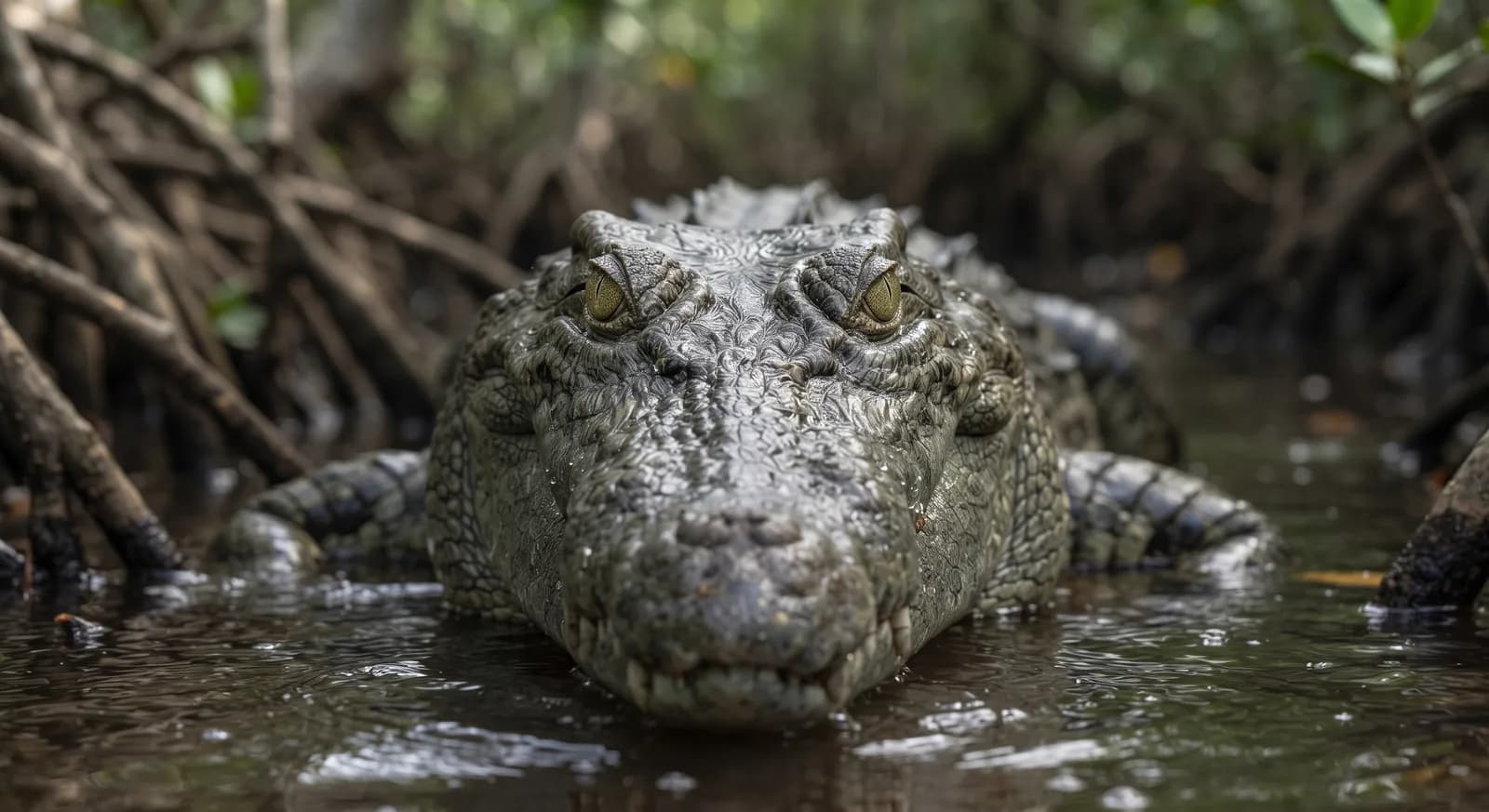 Least Concern
Saltwater Crocodile
Crocodylus porosus
Yellow-bellied Sea Snake
Hydrophis platurus
Red Lionfish
Pterois volitans
Spot-fin Porcupinefish
Diodon hystrix
Harlequin Snake Eel
Myrichthys colubrinus
Yellow-lipped Sea Krait
Laticauda colubrina
Keep exploring
Based on what we already know about geography cone.
Comments
Share an experience, a fun fact or a tip for seeing the geography cone.
Be the first to comment.