Mammals · Carnivora · Eupleridae
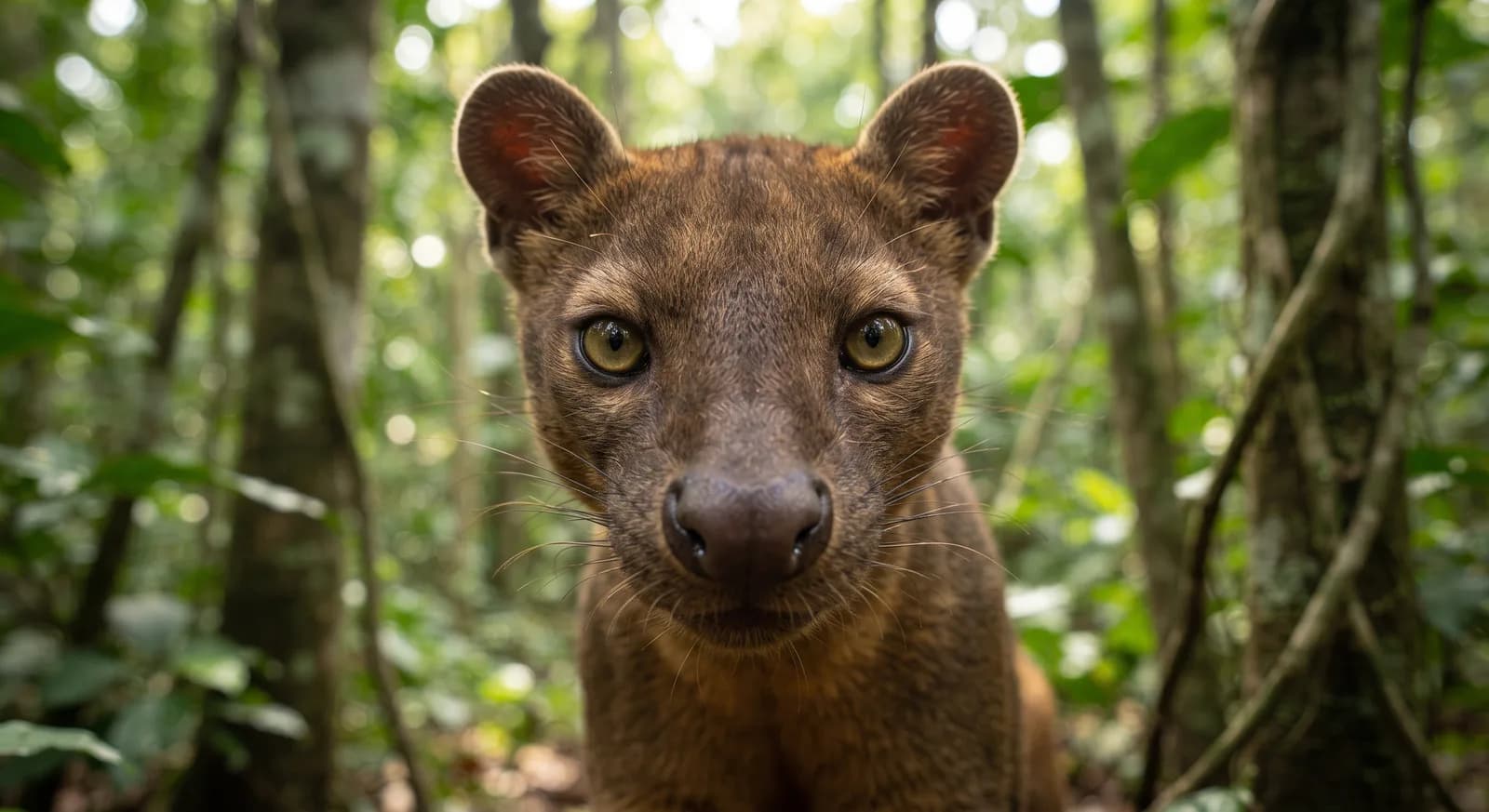
Spotted Fanaloka
Fossa fossana
It faces a high risk of extinction in the wild over the medium term. See full glossary
Its Malagasy name, fanaloka, comes from a Malay word meaning 'mouse deer', after its outline. It stores fat in its bushy tail, a reserve it draws on when food runs short in the forests of Madagascar.
Weight
1.5 kg – 2 kg
Size
40 cm – 47 cm
Lifespan
11 years
Diet
Carnivore
Feeds mainly on other animals.
Activity
Nocturnal
Active mainly at night.
Social structure
Solitary
Lives and hunts alone, joining others only to breed.
Sighting difficulty
Moderate
Fun facts
- It stores fat in its bushy tail as a reserve for the lean months.
- Its Malagasy name means 'mouse deer', after its outline.
- It is endemic to the rainforests of eastern Madagascar.
Life cycle & biology
- Skeleton type
- Vertebrate - internal bony skeleton (mammal)
- Habitat & environment
- Lowland and mid-altitude tropical rainforest of eastern Madagascar
- Birth weight
- Exact weight at birth not found as a precise figure
- Size at birth
- Well developed at birth, its eyes already open
- Sexual maturity
- ~1 year
- Gestation / incubation
- 70-90 days (~3 months)
- Litter / clutch size
- 1 young (rarely 2)
- Lifespan in captivity
- Documented record of up to 11 years in captivity
Sources consulted: Fandom; Encyclopedia of Life; Wikipedia; Animalia.bio; Animal Diversity Web; Wildlife Madagascar
Where to find it
See its range on the interactive mapBest time: All year round in the rainforests of eastern Madagascar, at night; at Ranomafana and Andasibe it is the easiest Malagasy civet to find.
Where to watch it
Parks and dive sites where this species has been documented.
Related species
Other species in the catalogue with the most in common with Spotted Fanaloka — same habitat, park, country, tags or family.
 Vulnerable
Fossa
Cryptoprocta ferox
Rufous Mouse Lemur
Microcebus rufus
Greater Hedgehog Tenrec
Setifer setosus
Aye-aye
Daubentonia madagascariensis
Grey Mouse Lemur
Microcebus murinus
Madagascar Tree Boa
Sanzinia madagascariensis
How to help
The spotted fanaloka is classified as vulnerable. Organizations such as UICN, WWF y Wildlife Conservation Society work specifically on its conservation and that of its habitat; looking into their programs is a good starting point if you want to get involved.
It's documented in 7 real protected areas — part of why protecting these places matters for its conservation.
Keep exploring
Based on what we already know about spotted fanaloka.
Comments
Share an experience, a fun fact or a tip for seeing the spotted fanaloka.
Be the first to comment.