One of the 6 geckos on WAnimals
Reptiles · Squamata · Diplodactylidae
Rough Knob-tail
Nephrurus asper
The species is abundant and widely distributed; it faces no significant short-term risk. See full glossary
The rough knob-tailed gecko is a ground-dwelling Australian gecko whose skin is covered in spiny tubercles, with a short, bulbous tail tipped by a knob. When threatened it rises up on all four legs, arches its back, gapes and rocks its body, a display that makes it look far larger than it is.
Size
10 cm – 14 cm
Lifespan
10 years
Diet
Insectivore
Feeds mainly on insects and other invertebrates.
Activity
Nocturnal
Active mainly at night.
Social structure
Solitary
Lives and hunts alone, joining others only to breed.
Sighting difficulty
Easy
Fun facts
- Its defence is pure theatre: it rises up on all four legs fully extended, arches its back, gapes and rocks from side to side giving high-pitched barks, a display out of all proportion for an animal twelve centimetres long.
- Its bulbous tail stores fat and ends in a small spherical knob; if it loses it, the one it grows back is shorter and a different shape.
- It is a ground-dwelling gecko: it lacks the adhesive toe pads that allow climbing on smooth surfaces, and lives on the ground among the stones of the Australian desert.
Life cycle & biology
- Skeleton type
- Vertebrate - internal bony skeleton (reptile)
- Habitat & environment
- Stony ground, dry scrub and rocky outcrops of the arid Australian interior
- Sexual maturity
- 18 months
- Gestation / incubation
- 70 days of incubation
- Litter / clutch size
- 2 eggs
Sources consulted: https://www.iucnredlist.org/ | https://animaldiversity.org/ | https://es.wikipedia.org/
Where to watch it
Parks and dive sites where this species has been documented.
Related species
Other species in the catalogue with the most in common with Rough Knob-tail — same habitat, park, country, tags or family.
Thorny Devil
Moloch horridus
Fat-tailed Dunnart
Sminthopsis crassicaudata
 Least Concern
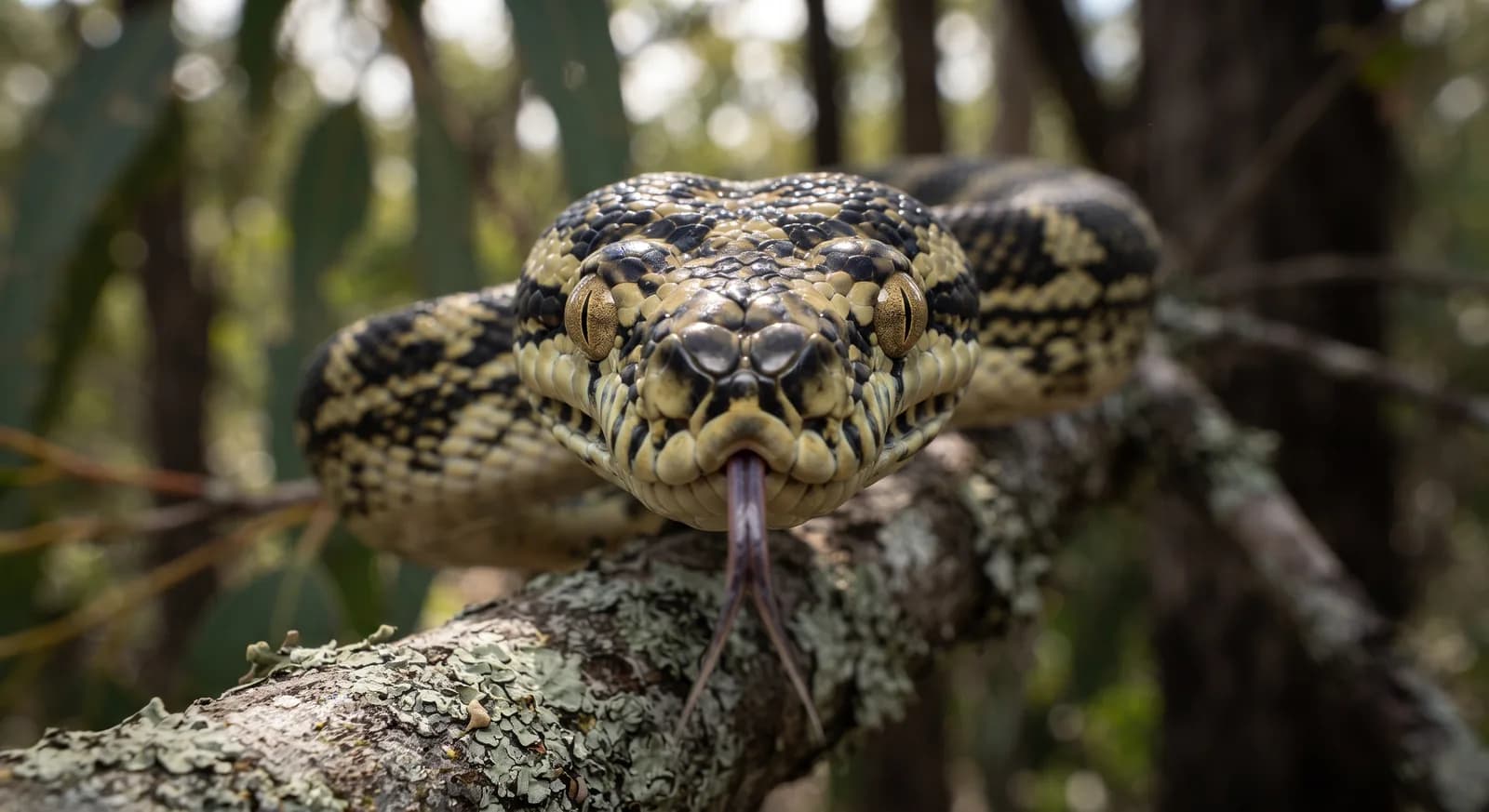
Carpet Python
Morelia spilota
Short-beaked Echidna
Tachyglossus aculeatus
Itjaritjari
Notoryctes typhlops
Eastern Brown Snake
Pseudonaja textilis
Keep exploring
Based on what we already know about rough knob-tail.
Comments
Share an experience, a fun fact or a tip for seeing the rough knob-tail.
Be the first to comment.