One of the 4 spiny lobsters on WAnimals
Malacostracans · Decapoda · Palinuridae
Juan Fernandez Rock Lobster
Jasus frontalis
There is not enough information to assess its risk of extinction. See full glossary
A clawless lobster endemic to the Juan Fernández archipelago and the Desventuradas Islands, off Chile. It lives among the volcanic rocks of these oceanic islands and comes out at night to feed. It is the main source of income for the people of Robinson Crusoe island, and its fishery — with traps, a minimum size and a closed season — is a much-cited case of community management of a resource.
Size
20 cm – 50 cm
Diet
Omnivore
Combines animal and plant food depending on availability.
Activity
Nocturnal
Active mainly at night.
Social structure
Solitary
Lives and hunts alone, joining others only to breed.
Sighting difficulty
Unknown
Fun facts
- The fishery has been managed by the islanders themselves for more than a century, with closed seasons, minimum sizes and the compulsory return of egg-bearing females.
- It is endemic to a tiny archipelago in the middle of the Pacific, which makes it extremely vulnerable to any failure of management.
- It is a strict endemic of the Juan Fernández archipelago and the Desventuradas Islands, and lives nowhere else in the world.
- It is the economic backbone of Robinson Crusoe Island: practically the entire population depends on its fishery, which is exported live to Asia and Europe.
- And that fishery has been managed for more than a century under a remarkable community system: the fishers themselves established a closed season, a minimum size, protection for berried females and an informal system of rights over trap grounds that is respected by local agreement, with no need for outside enforcement.
- That model is cited internationally as an example of sustainable artisanal fisheries management maintained by the community itself.
- It has no claws: like all spiny lobsters, it defends itself with its spiny antennae and with its backward dash.
- Its larval phase is extremely long, more than a year in the open sea, which makes recruitment depend on the currents and vary greatly from year to year.
Life cycle & biology
- Skeleton type
- Invertebrate - chitin exoskeleton (crustacean)
- Habitat & environment
- Volcanic rocky bottoms of oceanic islands in the south-eastern Pacific, from 0 to 200 m
Sources consulted: https://es.wikipedia.org/wiki/Jasus_frontalis
Where to watch it
Parks and dive sites where this species has been documented.
Related species
Other species in the catalogue with the most in common with Juan Fernandez Rock Lobster — same habitat, park, country, tags or family.
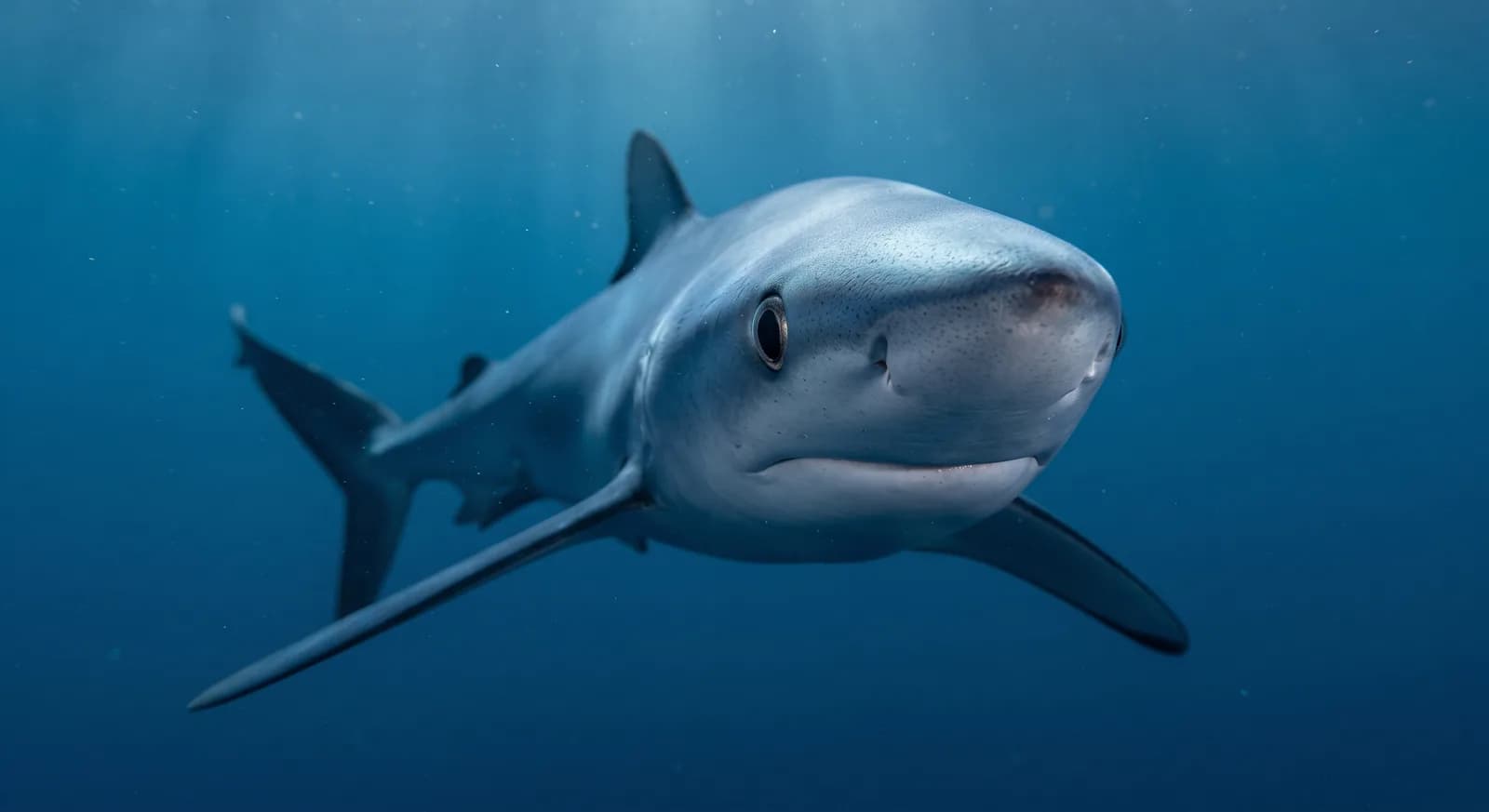 Near Threatened
Blue Shark
Prionace glauca
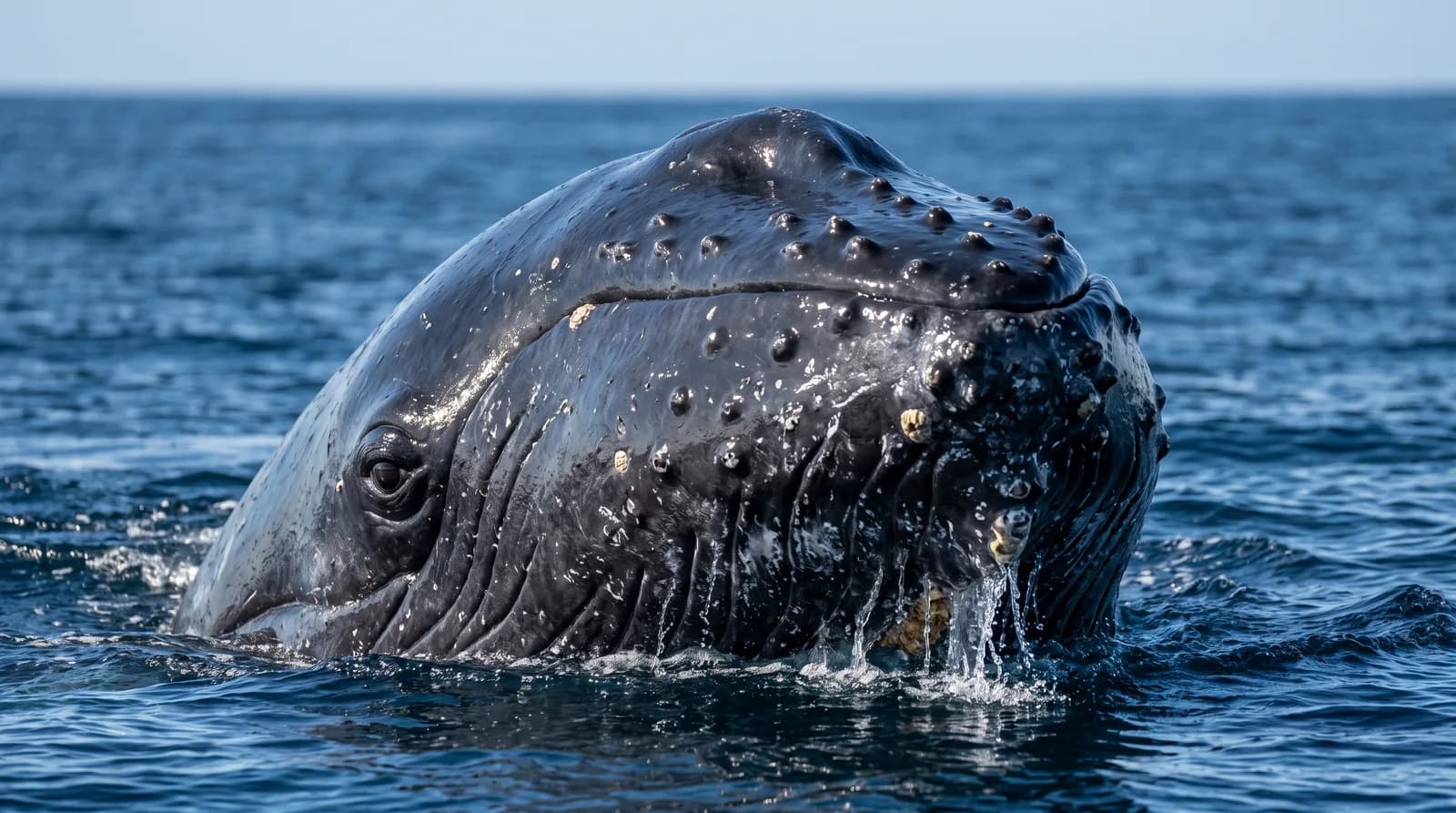 Least Concern
Humpback Whale
Megaptera novaeangliae
Common Spiny Lobster
Palinurus elephas
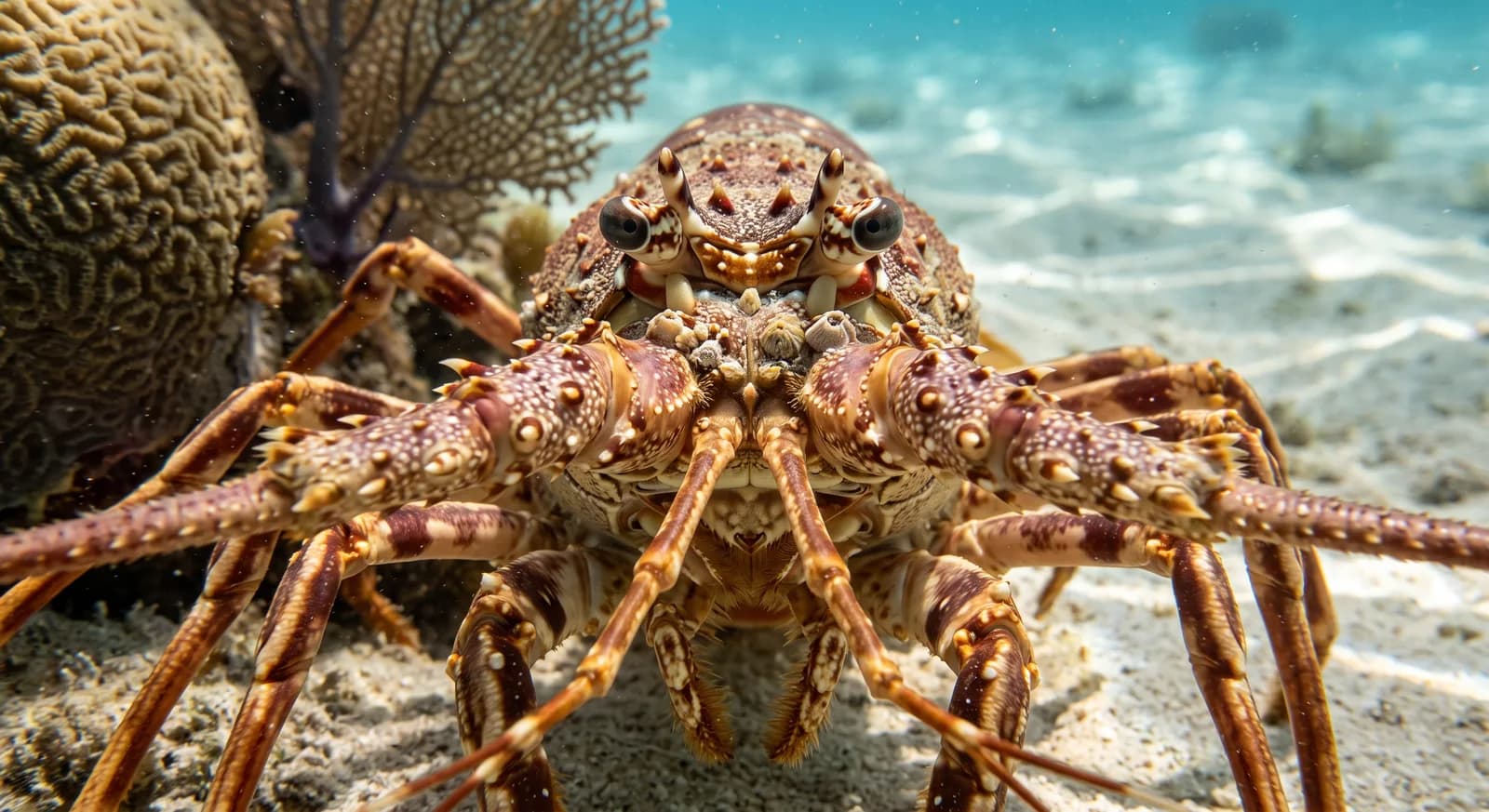 Data Deficient
Caribbean Spiny Lobster
Panulirus argus
Shortfin Mako
Isurus oxyrinchus
Humboldt Squid
Dosidicus gigas
Keep exploring
Based on what we already know about juan fernandez rock lobster.
Comments
Share an experience, a fun fact or a tip for seeing the juan fernandez rock lobster.
Be the first to comment.