One of the 6 parrots on WAnimals
Birds · Psittaciformes · Psittacidae
Seychelles Parrot
Coracopsis barklyi
It faces a high risk of extinction in the wild over the medium term. See full glossary
The Seychelles parrot is the national bird of the archipelago and is essentially confined to the island of Praslin, where it depends on the coco de mer palm forest of the Vallée de Mai, a World Heritage site. It is a small, unobtrusive parrot with greyish-brown plumage, not truly black. It nests in the hollows of dead palms, a scarce resource, and its population numbers a few hundred birds. It was recognised as a species in its own right, separate from the Madagascar black parrot, in 2015.
Weight
130 g – 180 g
Size
30 cm – 35 cm
Lifespan
25 years
Diet
Herbivore
Feeds mainly on plants.
Activity
Diurnal
Active mainly during the day.
Social structure
In pairs
Usually lives in pairs, sometimes for life.
Sighting difficulty
Moderate
Estimated population
Around 500-900 individuals
Fun facts
- It is the national bird of the Seychelles, and practically the whole world population lives on a single island, dependent on a palm forest covering a few dozen hectares.
- It was recognised as a species in its own right in 2015 after genetic analyses separated it from the Madagascar black parrot, going at a stroke from island subspecies to threatened endemic species.
Life cycle & biology
- Skeleton type
- Vertebrate - internal bony skeleton (bird)
- Habitat & environment
- Coco de mer palm forest and native woodland on the island of Praslin, in the Seychelles
- Sexual maturity
- 2 years
- Gestation / incubation
- 25 days of incubation
- Litter / clutch size
- 3 eggs
Sources consulted: https://www.iucnredlist.org/ | https://animaldiversity.org/ | https://es.wikipedia.org/
Where to watch it
Parks and dive sites where this species has been documented.
Related species
Other species in the catalogue with the most in common with Seychelles Parrot — same habitat, park, country, tags or family.
Yellow-eared Parrot
Ognorhynchus icterotis
Tucuman Amazon
Amazona tucumana
Saint Lucia Amazon
Amazona versicolor
Military Macaw
Ara militaris
Hispaniolan Amazon
Amazona ventralis
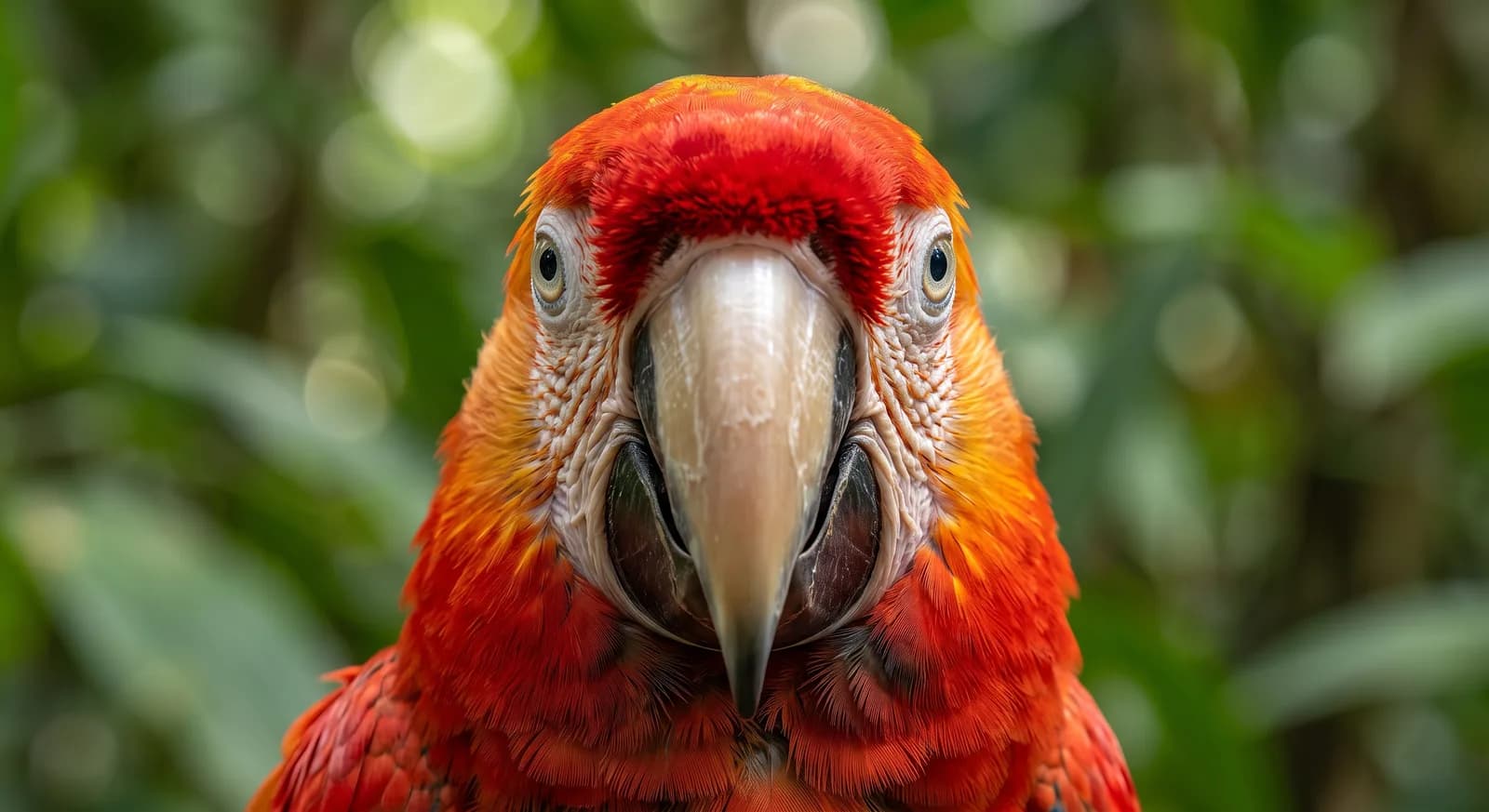 Least Concern
Scarlet Macaw
Ara macao
How to help
The seychelles parrot is classified as vulnerable. Organizations such as UICN, WWF y Wildlife Conservation Society work specifically on its conservation and that of its habitat; looking into their programs is a good starting point if you want to get involved.
It's documented in 1 real protected area — part of why protecting these places matters for its conservation.
Keep exploring
Based on what we already know about seychelles parrot.
Comments
Share an experience, a fun fact or a tip for seeing the seychelles parrot.
Be the first to comment.