One of the 10 ducks on WAnimals
Birds · Anseriformes · Anatidae
Domestic Duck (Pekin Duck)
Anas platyrhynchos domesticus
It has not yet been assessed against the IUCN criteria. See full glossary
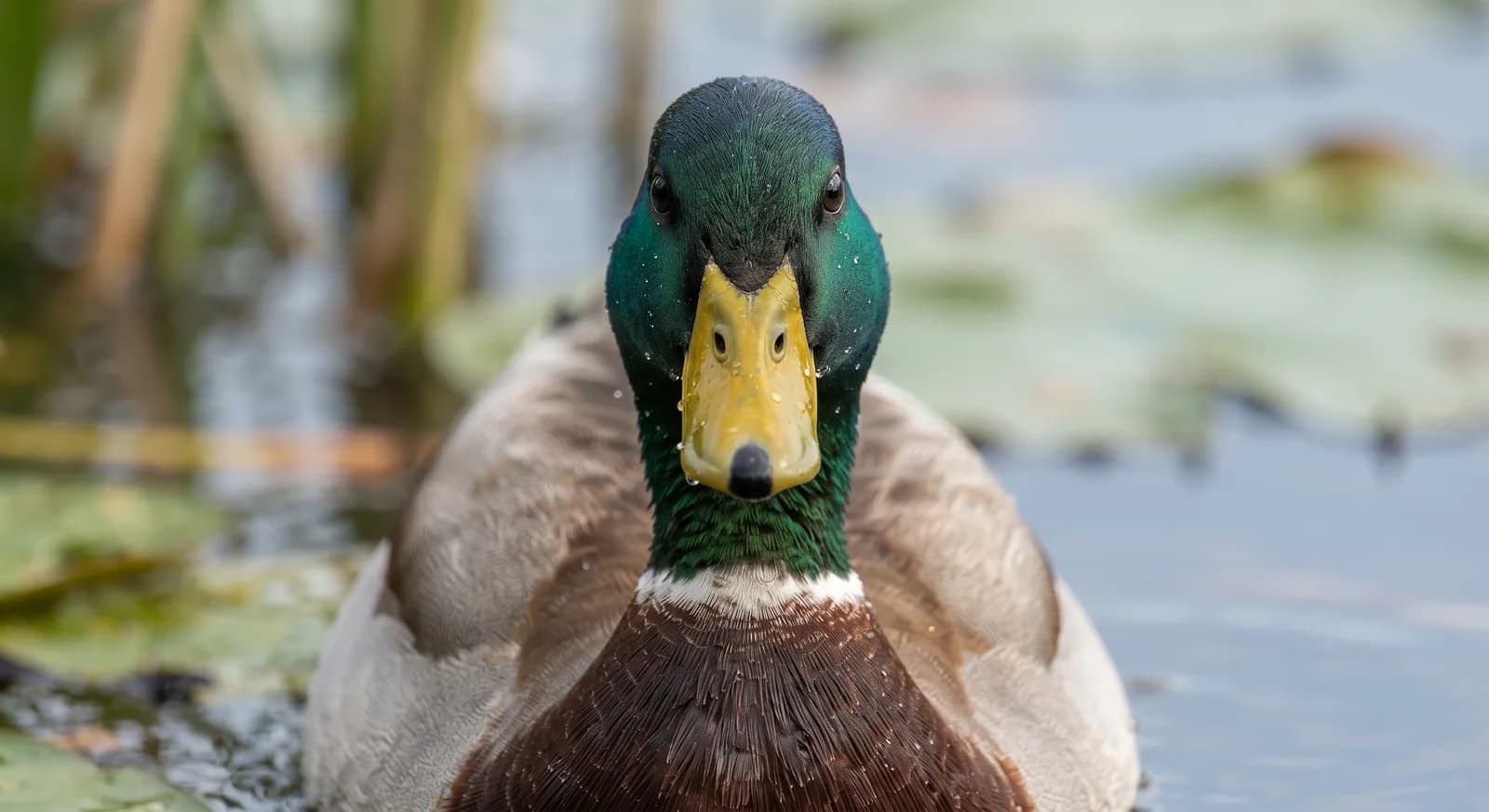
The domestic duck descends from the mallard and was domesticated independently in several places, with the Pekin duck as the most widespread breed in the world: white, with an orange bill and an upright body, selected in China centuries ago and exported to the West in 1873. It is kept for its meat and eggs, and in South East Asia it is integrated into rice growing, where it controls pests and weeds.
Weight
2 kg – 5 kg
Size
50 cm – 65 cm
Lifespan
10 years
Diet
Omnivore
Combines animal and plant food depending on availability.
Activity
Diurnal
Active mainly during the day.
Sighting difficulty
Unknown
Fun facts
- GeneralIt descends from the mallard; the Pekin variety reached the United States in 1873 and dominates the industry today.
- Whole-genome sequencing indicates that every domestic duck except the Muscovy comes from a single domestication event of the mallard during the Neolithic, followed by rapid selection towards meat or laying lineages.
- It was probably domesticated in South East Asia, very possibly in southern China, by the rice-farming ancestors of today's South East Asian peoples.
- The oldest written records are Chinese texts from the centre of the country dating from around 500 BC; there is hardly any archaeological record, so the exact date of domestication is unknown.
- Almost every Pekin duck in the Western world descends from nine birds taken from China to New York in 1873.
- The feathers stay dry thanks to the preen gland, and the duck preens by spreading that wax over the whole plumage several times a day: a duck that cannot preen loses its waterproofing within days.
- In South East Asia integrated rice-duck farming is practised: the flocks work the paddies eating insects and weeds and fertilising the water, replacing herbicides and insecticides.
Life cycle & biology
- Skeleton type
- Vertebrate - internal bony skeleton (bird)
- Habitat & environment
- Farms, ponds and poultry units
- Sexual maturity
- 6 months
- Gestation / incubation
- 28 days of incubation
- Litter / clutch size
- 10 eggs
Sources consulted: EFSA 2023, Welfare of ducks, geese and quail on farm (Scientific Opinion); secuenciación de genoma completo de anátidas domésticas; Wikipedia (Domestic duck, Domestic Muscovy duck, Mulard); Universidad de Córdoba (Colombia), caracterización morfométrica de Cairina moschata domestica
Related species
Other species in the catalogue with the most in common with Domestic Duck (Pekin Duck) — same habitat, park, country, tags or family.
Northern Shoveler
Spatula clypeata
Tufted Duck
Aythya fuligula
 Least Concern
Mallard
Anas platyrhynchos
Canada Goose
Branta canadensis
Knob-billed Duck
Sarkidiornis melanotos
Mandarin Duck
Aix galericulata
Keep exploring
Based on what we already know about domestic duck (pekin duck).
Comments
Share an experience, a fun fact or a tip for seeing the domestic duck (pekin duck).
Be the first to comment.