One of the 3 dabbling ducks on WAnimals
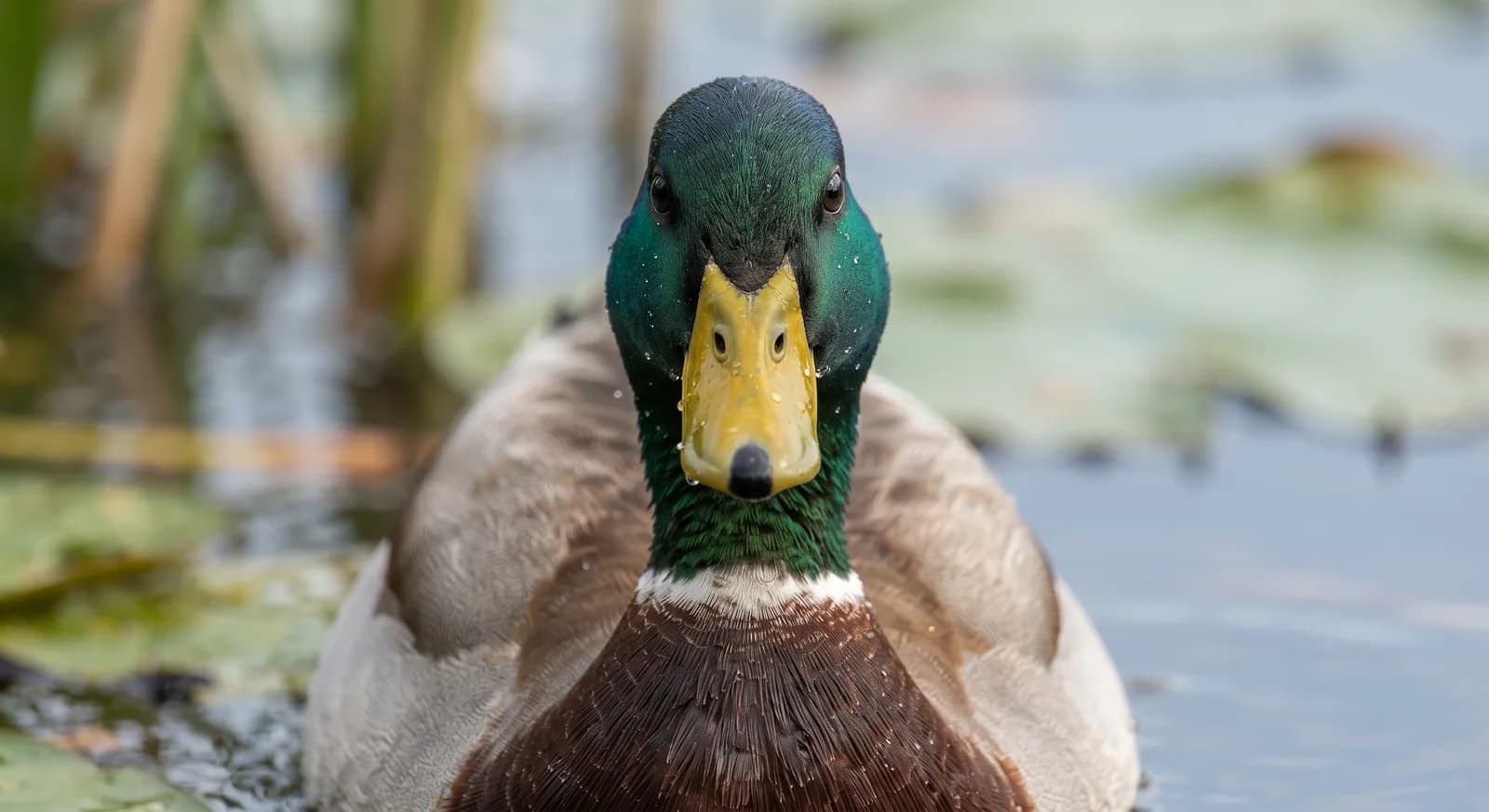
Birds · Anseriformes · Anatidae
Mallard
Anas platyrhynchos
The species is abundant and widely distributed; it faces no significant short-term risk. See full glossary
It is the wild ancestor of almost every domestic duck breed in the world. Its readiness to hybridise with other species is a conservation worry, because of the genetic dilution it causes.
Weight
800 g – 1.4 kg
Size
50 cm – 65 cm
Lifespan
7 years
Diet
Omnivore
Combines animal and plant food depending on availability.
Activity
Diurnal
Active mainly during the day.
Social structure
Colony
Lives in large concentrations, often for breeding reasons.
Sighting difficulty
Easy
Fun facts
- It is the wild ancestor of almost every domestic duck breed in the world.
- It can swim the day it hatches, led to the water by its mother.
- Its readiness to hybridise with other ducks is a worry because of the genetic dilution of related species.
- comportamientoSleeping at the edge of a group, it can keep one eye open and half its brain awake to watch for predators.
- anatomíaThe feathers on its head throw off an iridescent green that shifts with the angle of the light — an optical effect rather than a pigment.
Life cycle & biology
- Skeleton type
- Vertebrate - pneumatised bony skeleton (bird)
- Habitat & environment
- Marshes, lakes, rivers, ponds and wetlands of the temperate and subtropical Northern Hemisphere; introduced in the Southern Hemisphere
- Birth weight
- ~32.4 grams at hatching (34% less than the weight of the fresh egg)
- Size at birth
- Precocial: able to swim the day it hatches, led to the water by its mother
- Sexual maturity
- 1 year
- Gestation / incubation
- 26-28 days
- Litter / clutch size
- 8 to 13 eggs per clutch
- Lifespan in captivity
- Documented ringing record of over 27 years
Sources consulted: NHPBS NatureWorks; USDA Forest Service; A-Z Animals; U.S. Fish & Wildlife Service; AnAge (genomics.senescence.info); USGS (duckling weight study)
Where to find it
See its range on the interactive mapWhere to watch it
Parques y spots de buceo donde se ha documentado esta especie — se muestran 10 de 207 documentados.
Related species
Other species in the catalogue with the most in common with Mallard — same habitat, park, country, tags or family.
Northern Shoveler
Spatula clypeata
Tufted Duck
Aythya fuligula
Red-crested Pochard
Netta rufina
Ruddy Shelduck
Tadorna ferruginea
Common Shelduck
Tadorna tadorna
Northern Pintail
Anas acuta
Keep exploring
Based on what we already know about mallard.
Comments
Share an experience, a fun fact or a tip for seeing the mallard.
Be the first to comment.