When people think of wildlife, few images are as representative as the vast plains of the African savanna teeming with animals. This ecosystem, found across much of sub-Saharan Africa, is characterised by wide grasslands, scattered trees and a marked alternation between wet and dry seasons. The combination of these factors has produced an extraordinary biodiversity in which every species plays a fundamental part. Among the hundreds of animals that live in the savanna, ten stand out for their ecological importance, their influence on their surroundings and their role in how the whole ecosystem works.
The African lion takes first place on this list as one of the savanna's principal predators. Known as the king of the jungle, though it in fact lives mainly in grassland and savanna, this big cat regulates the populations of herbivores such as zebras, wildebeest and buffalo. Its presence helps prevent overgrazing and keeps the balance between wildlife and vegetation. Lions also frequently remove weak or sick individuals, favouring healthier and more resilient populations.
If the savanna has a true architect, it is the African elephant. Reckoned the largest land mammal on the planet, it can weigh more than six tonnes. Its influence on the landscape is enormous. By pushing over trees to feed or to move through, it opens up spaces that favour the growth of grassland. It also disperses seeds over great distances in its dung, helping numerous plant species to regenerate. Many scientists hold that the present structure of many African savannas would be entirely different without elephants.
The giraffe, the tallest land animal in the world, is another of this ecosystem's great protagonists. Its long neck lets it reach leaves more than five metres up, especially in acacia trees. That ability reduces competition with other herbivores and helps control the growth of certain plant species. Its movements also favour seed dispersal and help maintain the savanna's plant diversity.
Among the most abundant herbivores are the blue wildebeest and the plains zebra. These two species are the stars of the annual Great Migration, reckoned one of the greatest natural spectacles on the planet. More than a million wildebeest and hundreds of thousands of zebras travel thousands of kilometres between Tanzania and Kenya following the rains and the new grass. This gigantic movement of animals distributes nutrients across wide regions, keeps the grasslands in good condition and provides food for numerous predators and scavengers.
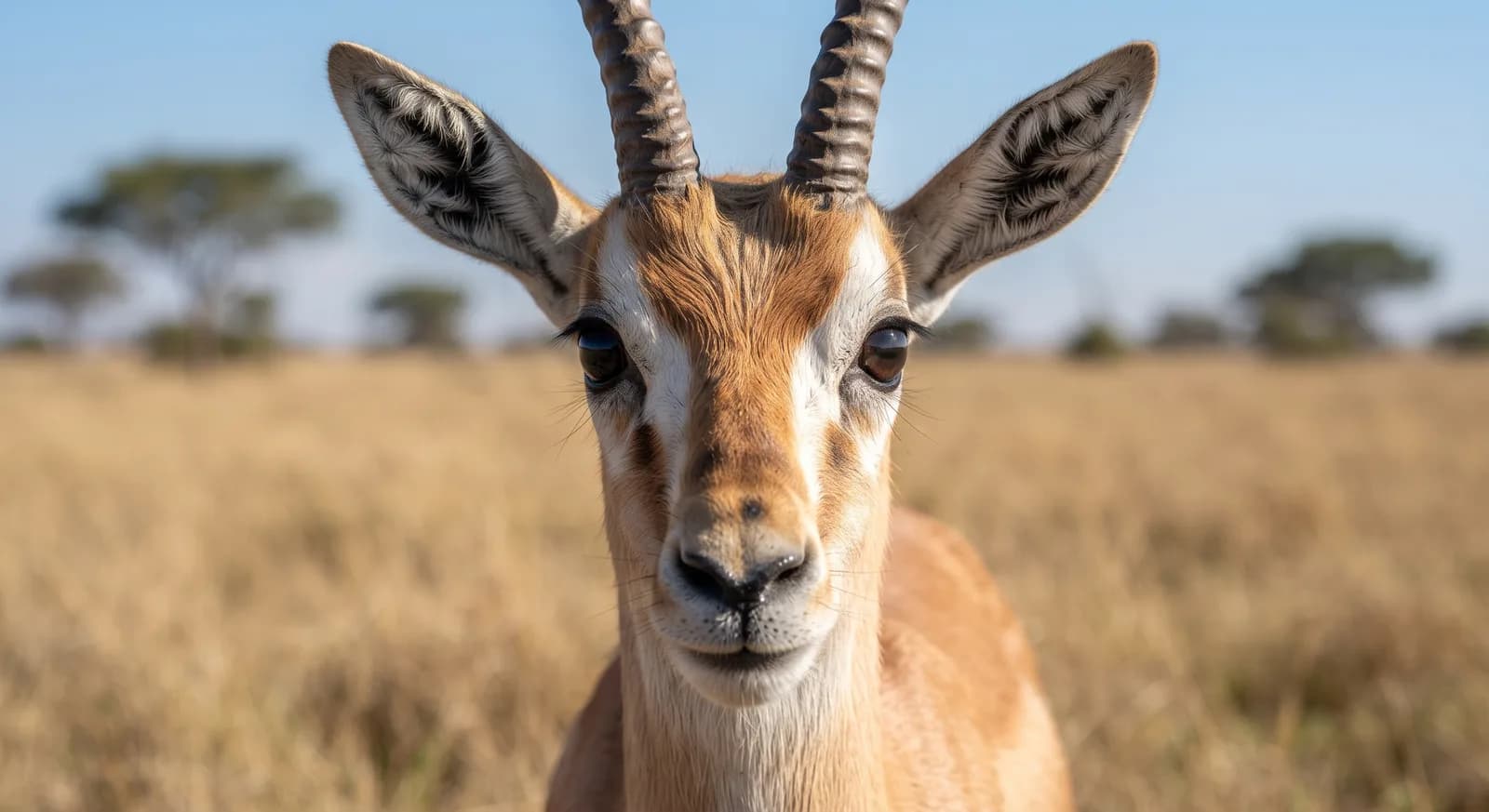
The cheetah represents the ultimate specialisation in speed. Able to reach more than 100 kilometres per hour in short bursts, it is the fastest land animal on the planet. Its light body, long legs and extremely flexible spine allow spectacular acceleration to catch gazelles and other fast prey. Though it lacks the strength of other big cats, its ability to exploit open ground makes it one of the most efficient hunters in the savanna.
The spotted hyena is one of the most misunderstood species in Africa. For a long time it was regarded purely as a scavenger, but it is now known to be a highly effective hunter that catches much of its own prey. Its powerful jaws let it consume bones and tissue that other animals cannot use. Because of this it performs an essential role in recycling nutrients and in reducing potential disease reservoirs associated with abandoned carcasses.
Another key animal is the African buffalo. These powerful herbivores form enormous herds that can gather hundreds or even thousands of individuals. Their grazing directly influences the composition of the grassland and the availability of food for other species. They also make up one of the principal prey species for lions, playing a fundamental part in the food chain. Despite being herbivores, buffalo are reckoned among the most dangerous animals in Africa because of their defensive behaviour and their ability to take on large predators.
The hippopotamus is usually associated with rivers and lakes, but its influence reaches far beyond aquatic environments. At night it leaves the water to feed on nearby grassland, carrying nutrients between land and water ecosystems. Its dung enriches the rivers and supports numerous forms of life. Though it appears placid, the hippopotamus is responsible for more attacks on people in Africa than many large predators, because it is extremely territorial.
Rhinoceroses, both white and black, also perform fundamental roles in the savanna. The white rhinoceros is mainly a grazer and helps keep the grassland short, while the black rhinoceros eats branches and shrubs, influencing the structure of the vegetation. Both species are threatened by poaching driven by the illegal trade in their horns, which has made their conservation an international priority.
The list is completed by the African wild dog, one of the most effective predators on the continent. Though less well known than lions or leopards, this canid has one of the highest hunting success rates in the animal kingdom. It lives in highly organised packs where cooperation is fundamental to survival. Its complex hunting strategies and strong social structure make it one of the most fascinating species in African wildlife. It is also, however, one of the most threatened large carnivores, through habitat loss and conflict with human activity.
The importance of these ten animals goes far beyond their popularity with safari visitors. Each performs essential ecological functions that contribute to how the African savanna works. Predators regulate prey populations, herbivores shape the vegetation, scavengers recycle nutrients and ecosystem engineers transform the landscape, creating opportunities for hundreds of organisms. Together they form a complex web of interactions that has evolved over millions of years.
The conservation of the African savanna depends largely on protecting these key species. Agricultural expansion, habitat fragmentation, climate change and poaching are growing threats to many of them. Numerous conservation projects, nature reserves and national parks are nonetheless helping to preserve this unique natural heritage. Protecting the most important animals of the savanna also means protecting one of the most extraordinary and valuable ecosystems on our planet.