One of the 2 new world vultures on WAnimals
Birds · Cathartiformes · Cathartidae
Black Vulture
Coragyps atratus
The species is abundant and widely distributed; it faces no significant short-term risk. See full glossary
The American black vulture, also called in Spanish sucha, zopilote, chulo, chula, golero, chombo, gallinazo, gallinazo común, gallinazo de cabeza negra, gallinazo negro, jote cabeza negra, gallote, jote de cabeza negra, zamuro or zopilote negro, is the only species in the genus Coragyps. It is a Cathartiformes bird — although some classifications place it in the order Ciconiiformes — and one of the most abundant members of the family Cathartidae. The National Commission for the Knowledge and Use of Biodiversity (CONABIO) uses the order Cathartiformes and the family Cathartidae for the taxonomic classification of the species. Despite its similar appearance and names, this species is not closely related to Aegypius monachus. That species belongs to the subfamily of the Old World vultures (Aegypiinae), which is in turn part of the family Accipitridae, which includes the eagles, kites, hawks and harriers, while the American species is part of the family of the New World vultures (Cathartidae).
Weight
1.6 kg – 2.8 kg
Size
56 cm – 74 cm
Lifespan
25 years
Diet
Carnivore
Feeds mainly on other animals.
Activity
Diurnal
Active mainly during the day.
Social structure
Colony
Lives in large concentrations, often for breeding reasons.
Sighting difficulty
Easy
Fun facts
- sentidosUnlike the turkey vulture it has a poor sense of smell, and often follows vultures that can smell out carrion in order to find food.
- It cannot smell carrion: it follows the turkey vulture, which can, and once the carcass has been located it arrives in a group and drives the turkey vulture off by weight of numbers, a parasitism between scavengers documented right across the Americas.
- It urinates on its legs: the evaporation cools it and the acidity of the urine disinfects the skin after walking over carcasses, a behaviour called urohidrosis.
- Its spread into the northern United States in recent decades is put down to a warming climate and to the abundance of roadkill.
Life cycle & biology
- Skeleton type
- Vertebrate - internal bony skeleton (bird)
- Habitat & environment
- Open country, landfills, roads, cities and forest edges of the Americas
- Sexual maturity
- 8 years
- Gestation / incubation
- 35 days
- Litter / clutch size
- 2
Sources consulted: https://es.wikipedia.org/wiki/Coragyps_atratus
Where to find it
See its range on the interactive mapWhere to watch it
Parques y spots de buceo donde se ha documentado esta especie — se muestran 10 de 26 documentados.
Related species
Other species in the catalogue with the most in common with Black Vulture — same habitat, park, country, tags or family.
Turkey Vulture
Cathartes aura
 Least Concern
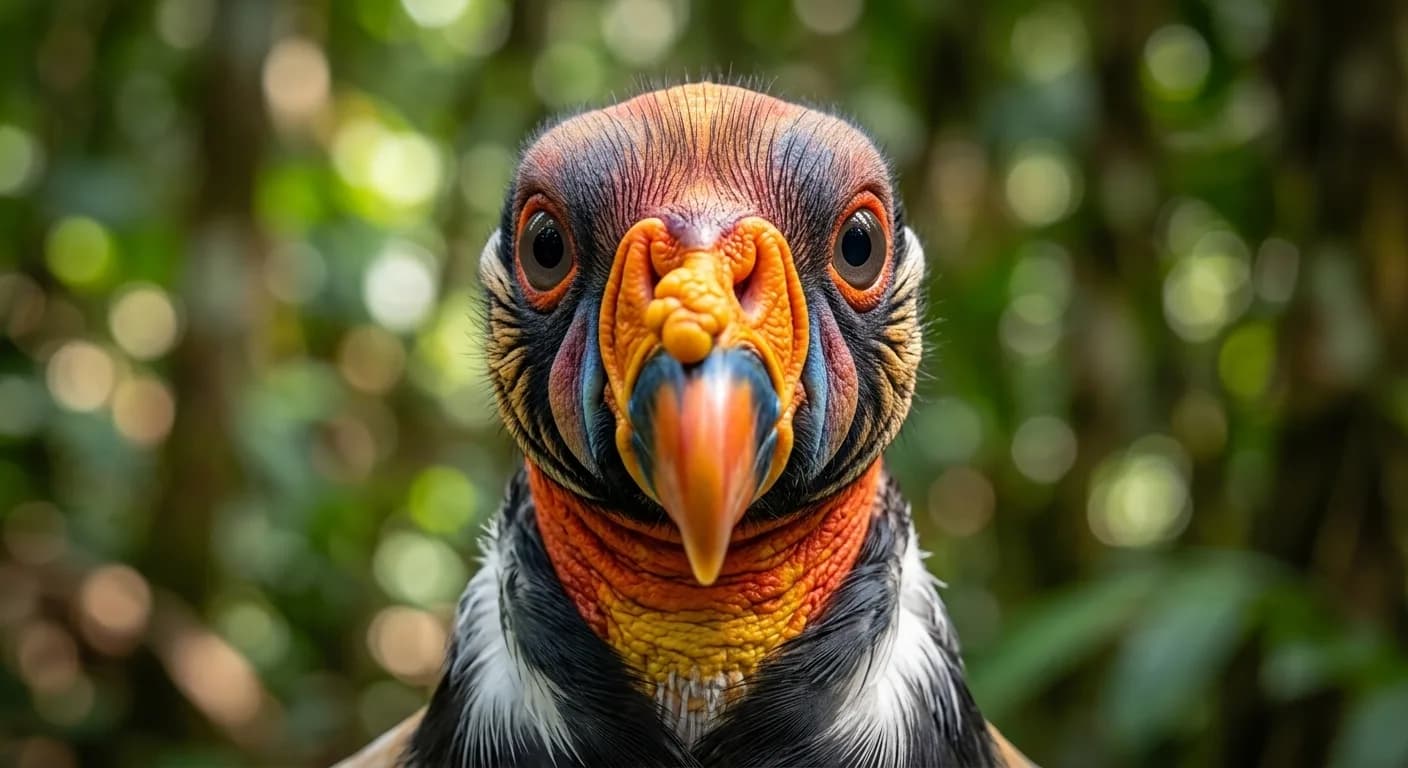
King Vulture
Sarcoramphus papa
Pallas's Mastiff Bat
Molossus molossus
Greater Roadrunner
Geococcyx californianus
Smooth-billed Ani
Crotophaga ani
Baltimore Oriole
Icterus galbula
Keep exploring
Based on what we already know about black vulture.
Comments
Share an experience, a fun fact or a tip for seeing the black vulture.
Be the first to comment.