Species group · Birds
New World Vultures
WAnimals has 2 species of new world vulture, all in the family Cathartidae.
- 2 species
- 1 family
- 21 countries
- 28 parks
- Weight
- 1.6 kg – 4.5 kg
- Length
- 56 cm – 81 cm
- Lifespan
- 25 – 30 years
Ranges calculated from the entries that record the figure, not from all 2.
All 2 species of new world vultures on WAnimals
Each one has its own full entry. This group does not replace them: it brings them together.
Conservation status
No species documented in this group is genuinely at risk according to the IUCN, with the data available today.
See the global conservation statusWhere they live
Recorded in 21 countries. The ones with the most species in the group:
Where to see them
Did you know…
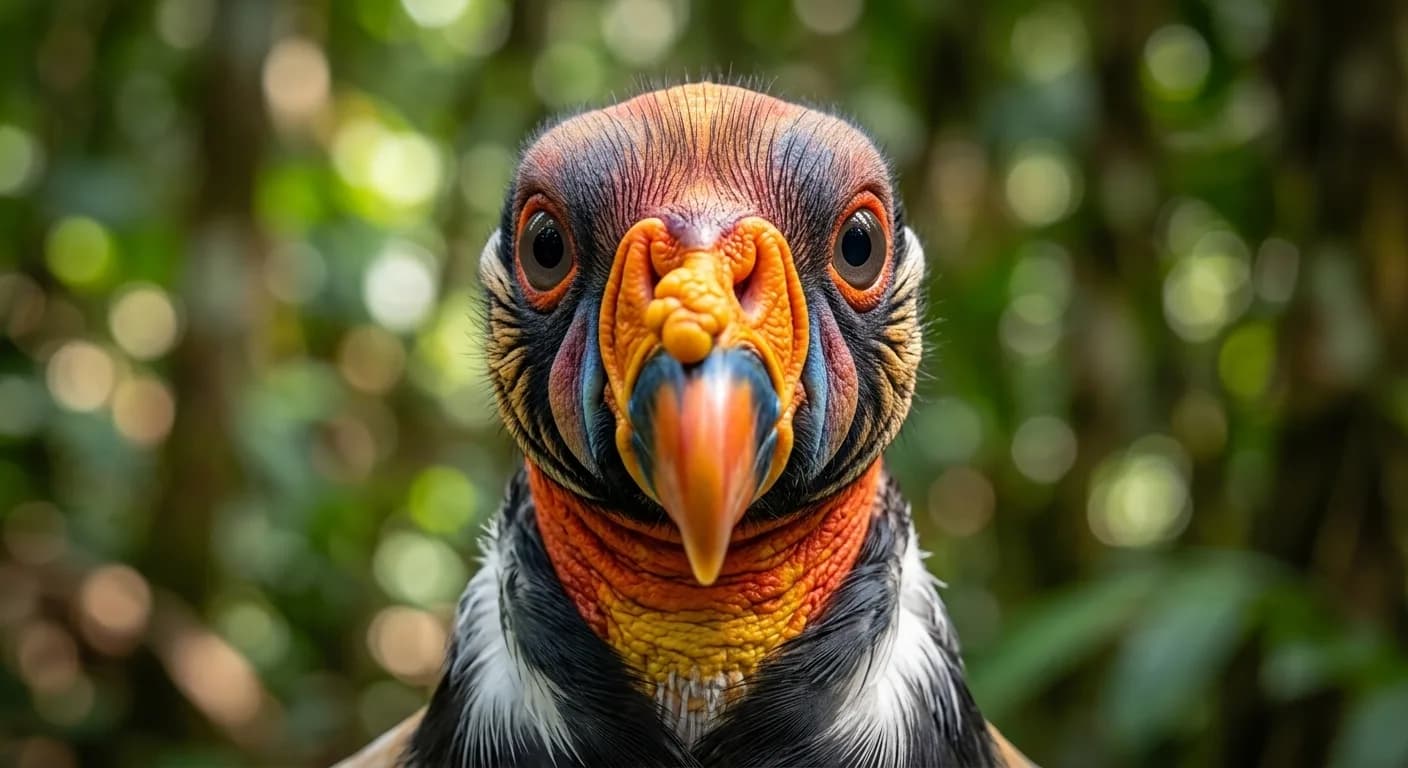
Its head and neck are vividly coloured, and it is usually first onto a large carcass because it can tear through hide that smaller vultures cannot.
From King Vulture
Its name comes from its rule over the carcass: the smaller vultures wait for it to arrive and open the hide, because its bill is the only one able to break it, and then withdraw while it eats.
From King Vulture
Unlike the turkey vulture, which locates carrion by smell, this bird has almost no sense of smell: studies suggest it follows the turkey vultures to the carcass and then displaces them.
From King Vulture
Unlike the turkey vulture it has a poor sense of smell, and often follows vultures that can smell out carrion in order to find food.
From Black Vulture
It cannot smell carrion: it follows the turkey vulture, which can, and once the carcass has been located it arrives in a group and drives the turkey vulture off by weight of numbers, a parasitism between scavengers documented right across the Americas.
From Black Vulture
It urinates on its legs: the evaporation cools it and the acidity of the urine disinfects the skin after walking over carcasses, a behaviour called urohidrosis.
From Black Vulture