Mammals · Artiodactyla · Bovidae
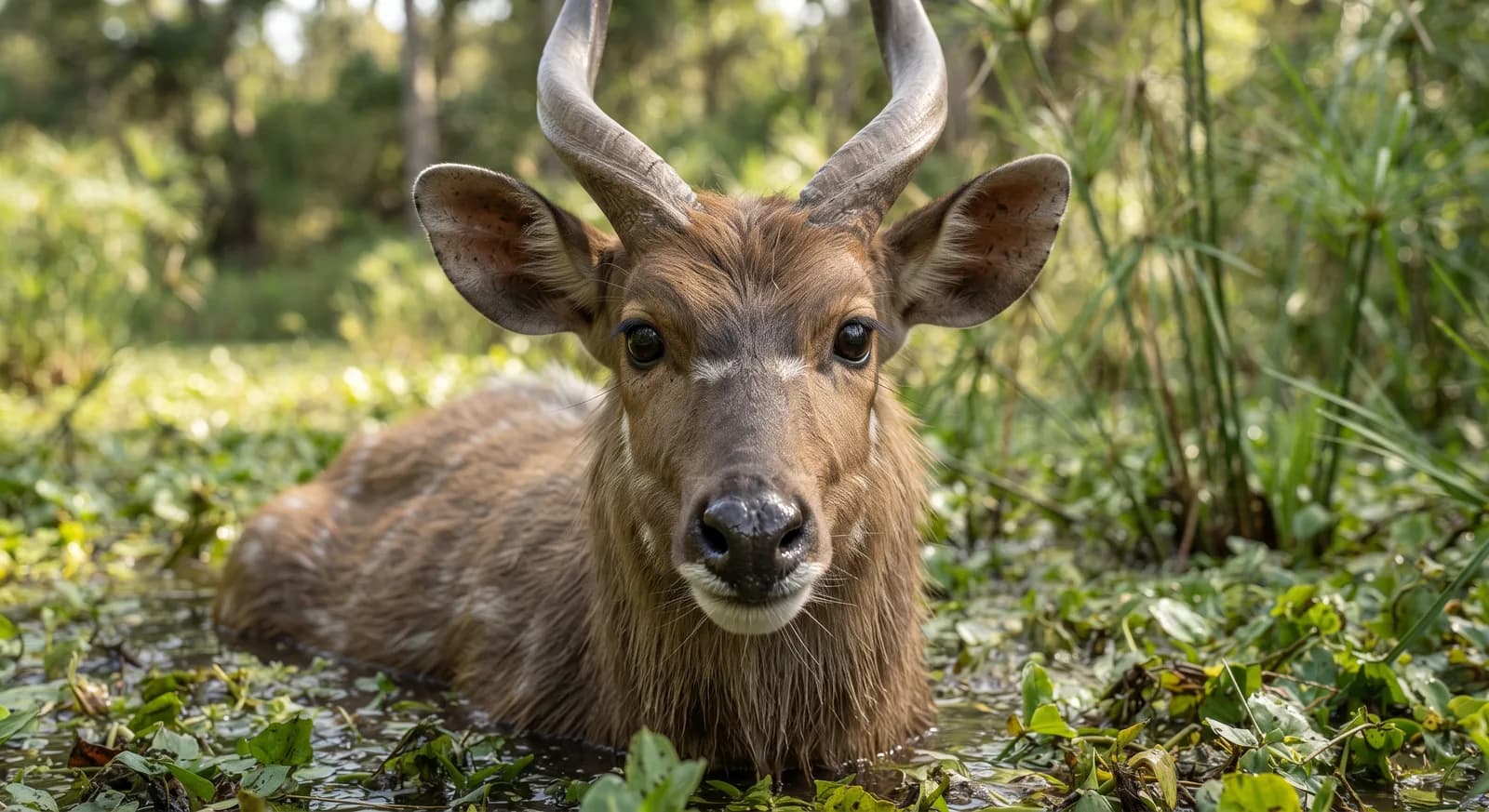
Sitatunga
Tragelaphus spekii
The species is abundant and widely distributed; it faces no significant short-term risk. See full glossary
It is the antelope best adapted to life in water anywhere in the world, with extraordinarily long, splayed hooves that let it walk over floating vegetation and swamp islands without sinking.
Weight
24 kg – 125 kg
Size
72 cm – 1.2 m
Lifespan
12 years
Diet
Herbivore
Feeds mainly on plants.
Activity
Irregular activity
Active at irregular times, by day or night depending on circumstances.
Social structure
Solitary
Lives and hunts alone, joining others only to breed.
Sighting difficulty
Easy
Fun facts
- It is the antelope best adapted to life in water anywhere in the world.
- It can submerge almost entirely, leaving only its nostrils above the surface.
- Its elongated hooves let it walk over floating vegetation without sinking.
Life cycle & biology
- Skeleton type
- Vertebrate - internal bony skeleton (mammal)
- Habitat & environment
- Dense swamps and permanent papyrus marshes of central and western Africa
- Birth weight
- 4 kg
- Size at birth
- Precocial, but staying hidden on a platform of flattened reeds in the swamp for up to a month
- Sexual maturity
- Female: ~1-2 years | Male: 1.5-2.5 years
- Gestation / incubation
- 220-250 days (~7.5-8 months)
- Litter / clutch size
- 1 young per birth
- Lifespan in captivity
- Documented record of up to 22.6 years in captivity
Sources consulted: AnAge (genomics.senescence.info); Animal Diversity Web; Dimensions.com; South African Wildlife; African Wildlife Foundation; Arkive; SeaWorld; Wikipedia (Sitatunga)
Where to find it
See its range on the interactive mapWhere to watch it
Parques y spots de buceo donde se ha documentado esta especie — se muestran 10 de 13 documentados.
Related species
Other species in the catalogue with the most in common with Sitatunga — same habitat, park, country, tags or family.
Waterbuck
Kobus ellipsiprymnus
Steenbok
Raphicerus campestris
 Least Concern
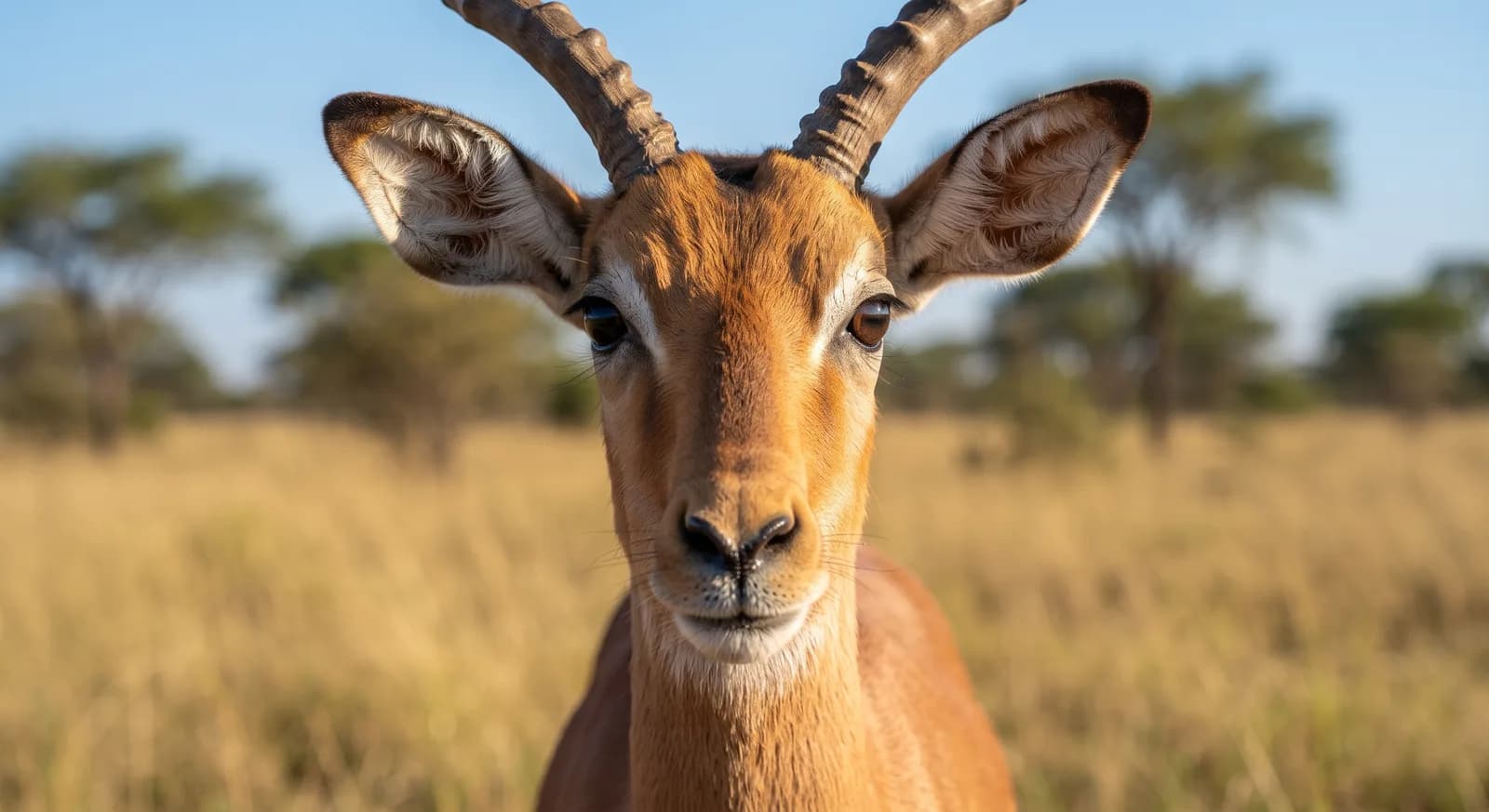
Impala
Aepyceros melampus
 Least Concern
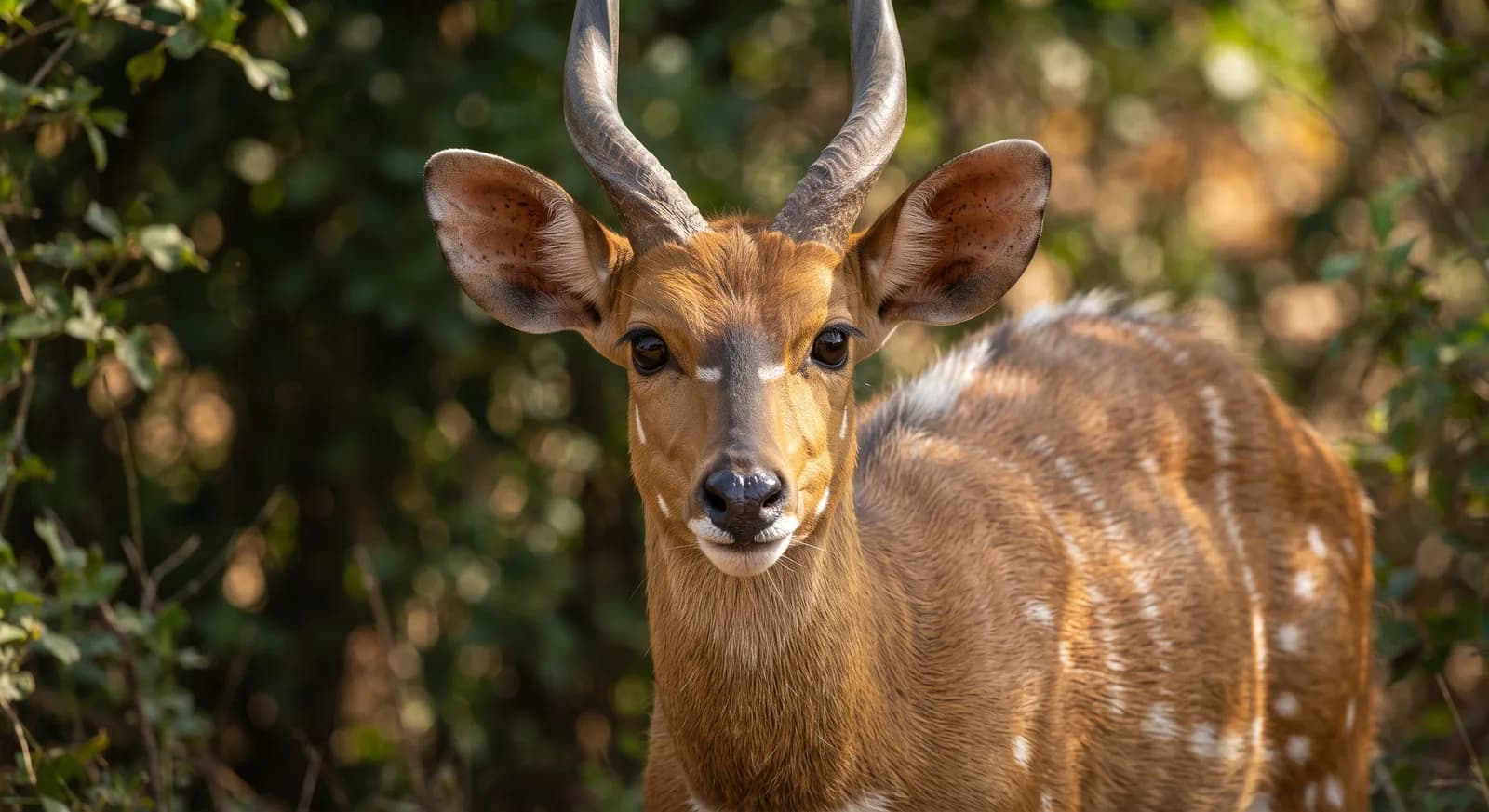
Bushbuck
Tragelaphus scriptus
Puku
Kobus vardonii
Common Duiker
Sylvicapra grimmia
Keep exploring
Based on what we already know about sitatunga.
Comments
Share an experience, a fun fact or a tip for seeing the sitatunga.
Be the first to comment.