One of the 7 gazelles on WAnimals
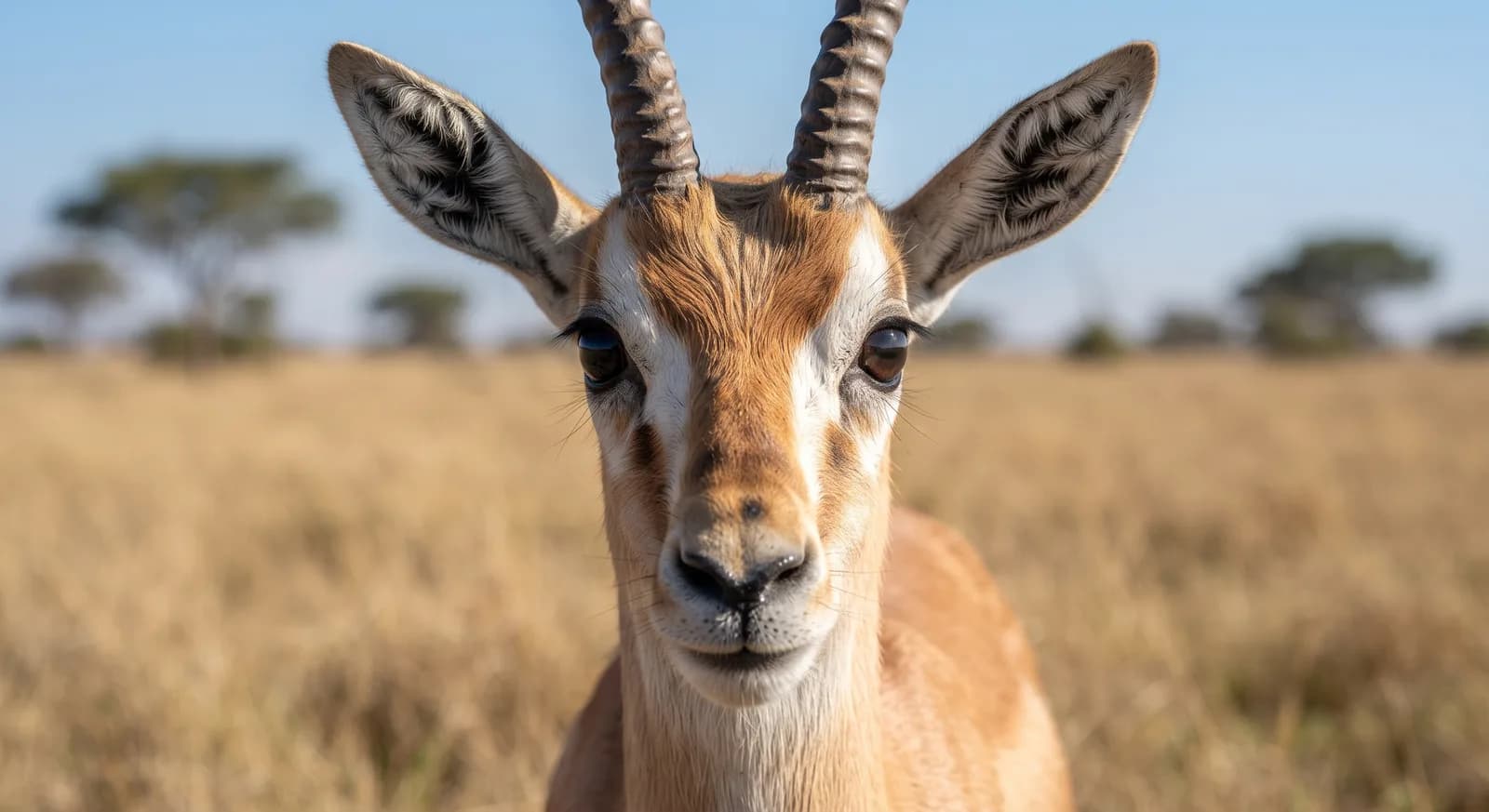
Mammals · Artiodactyla · Bovidae
Grant's Gazelle
Nanger granti
The species is abundant and widely distributed; it faces no significant short-term risk. See full glossary
A slender antelope with pale fawn coat and white belly, and ringed, lyre-shaped horns measuring 50-80 cm in the males. It is recognised at once by the broad white patch on its hindquarters, edged in black, which makes it look as though it is wearing trousers.
Weight
35 kg – 80 kg
Size
75 cm – 1.7 m
Lifespan
15 years
Diet
Herbivore
Feeds mainly on plants.
Activity
Diurnal
Active mainly during the day.
Social structure
Herd
Lives in large groups as a strategy against predators.
Sighting difficulty
Easy
Estimated population
Some 140,000 individuals according to the 2016 IUCN assessment
Fun facts
- GeneralIt can go its whole life without drinking, living off the water in plants.
- It tolerates body temperatures that would be fatal to almost any other mammal, an adaptation to the extreme heat of its plains.
- It does not need to drink: it gets all its water from plants, and on migration it moves in the opposite direction to most African ungulates, away from water.
- Only 25% of its populations are considered stable or increasing; if the trend continues, the IUCN expects to reclassify it as Near Threatened.
Life cycle & biology
- Skeleton type
- Vertebrate - internal bony skeleton (mammal)
- Habitat & environment
- Open savannah and semi-desert
- Sexual maturity
- Males: about 3 years | Females: around 420-450 days
- Gestation / incubation
- 198 - 199 days
- Litter / clutch size
- 1 young; the female leaves the herd to give birth and the calf stays hidden in the vegetation for the first weeks
Sources consulted: IUCN SSC Antelope Specialist Group 2016, IUCN Red List (e.T8971A50186774); Animal Diversity Web; Mpala Live! Field Guide; African Wildlife Foundation; Arctander et al. 1996, Heredity 76(5)
Where to find it
See its range on the interactive mapBest time: All year round; births peak between October and December
Where to watch it
Parks and dive sites where this species has been documented.
Related species
Other species in the catalogue with the most in common with Grant's Gazelle — same habitat, park, country, tags or family.
Waterbuck
Kobus ellipsiprymnus
Klipspringer
Oreotragus oreotragus
Kirk's Dik-dik
Madoqua kirkii
Hartebeest
Alcelaphus buselaphus
Steenbok
Raphicerus campestris
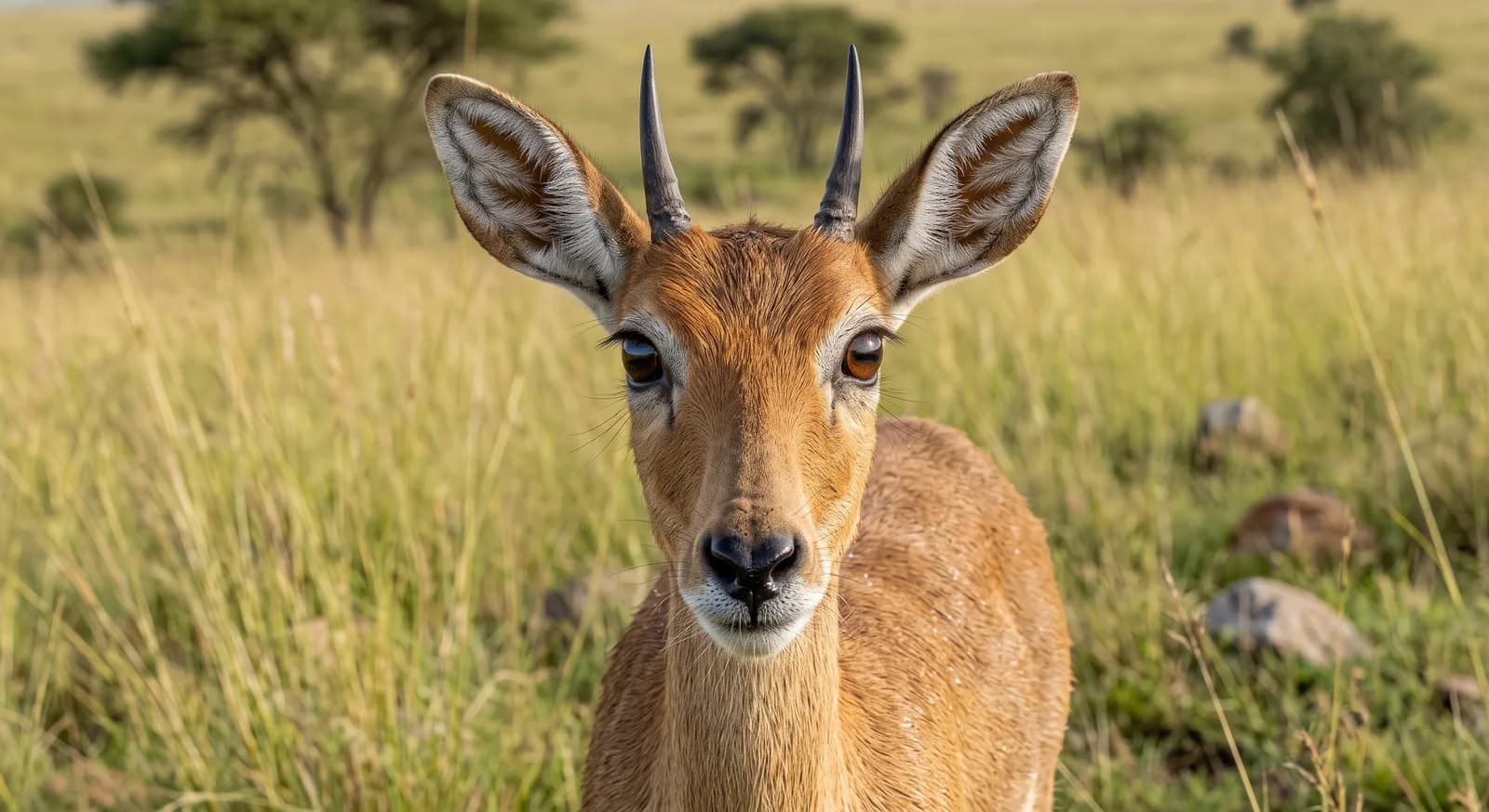 Least Concern
Oribi
Ourebia ourebi
Keep exploring
Based on what we already know about grant's gazelle.
Comments
Share an experience, a fun fact or a tip for seeing the grant's gazelle.
Be the first to comment.