Skip to content
WAnimals
  • Map
  • Species
  • Parks
  • Diving
Log inCreate account
WAnimals

The guide for travellers and animal lovers: discover, plan and share your wild adventures around the world.

Discover wildlife

  • Species
  • Ecosystems
  • Glossary
  • Tags

Explore places

  • Map
  • Countries
  • Parks
  • Diving

Plan experiences

  • Guides

Learn

  • Blog

Resources

  • Help centre
  • Contact
  • Install the app

Follow us

Account

  • Log in
  • Create account

© 2026 WAnimals. All rights reserved.

About usHow we build our profilesTerms of servicePrivacyLegal notice
MapSpeciesParksDiving
  1. Home
  2. Species
  3. Broad-tailed Hummingbird

Birds · Apodiformes · Trochilidae

Broad-tailed Hummingbird

Selasphorus platycercus

Least Concern

The species is abundant and widely distributed; it faces no significant short-term risk.

Spotted something wrong?

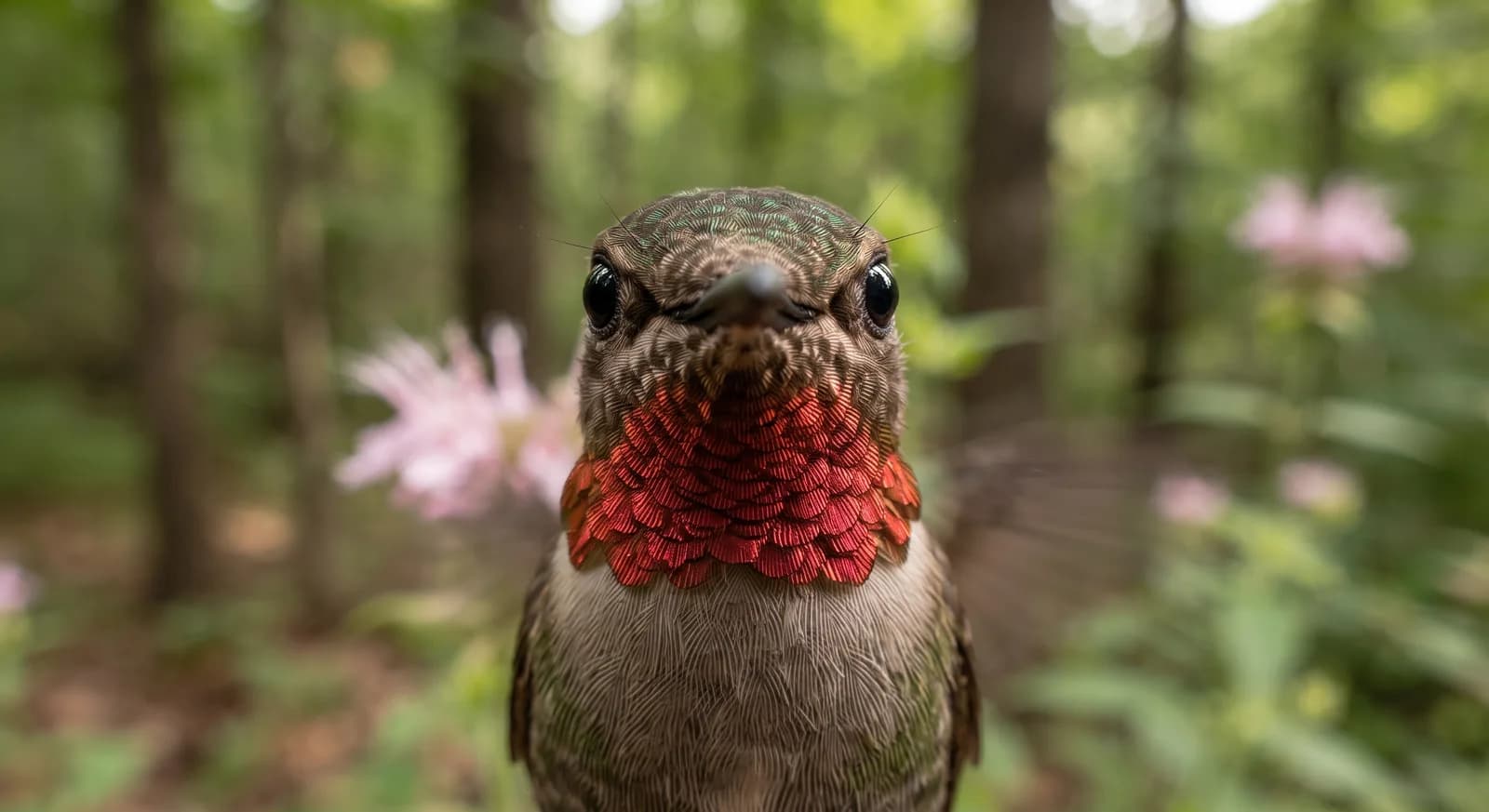
The broad-tailed hummingbird breeds at high altitude in the mountains of western North America, where it faces nights below freezing even in summer. It survives by entering torpor every night: it drops its body temperature by tens of degrees and cuts its metabolism to a fraction, waking with the sun. It is one of the most studied birds in the physiology of energy saving.

Weight

3 g – 5 g

Size

10 cm – 11 cm

Life expectancy

12 years

Diet

Omnivore

Combines animal and plant food depending on availability.

Activity

Diurnal

Active mainly during the day.

Social structure

Solitary

Lives and hunts alone, joining others only to breed.

Sighting difficulty

Easy

Temperate forestMountainGrassland
3countries15same family

Fun facts

  • The male produces a continuous metallic trill with his wing feathers on every beat, a high buzz audible at a distance that gives him away before he is seen.
  • It enters torpor every night of the breeding season: it drops its body temperature from 40 degrees to around 10 and cuts its metabolism to a twentieth, a saving without which it would not survive the high mountain nights.
  • It is one of the birds with the greatest documented longevity relative to its metabolism: there are ringed females that have passed twelve years of age while weighing three grams.

Life cycle and biology

Skeleton type
Vertebrate - internal bony skeleton (bird)
Habitat and environment
Meadows and open montane woodland of the Rockies and the Mexican sierras, up to 3,500 metres
Sexual maturity
12 months
Gestation / incubation
16 days
Litter / clutch size
2

Sources consulted: https://es.wikipedia.org/wiki/Selasphorus_platycercus

Where to find it

Loading map…

Related species

Other species in the catalogue with the most in common with Broad-tailed Hummingbird — same habitat, park, country, tags or family.

Same taxonomic family

Keep exploring

Based on what we already know about broad-tailed hummingbird.

Comments

Share an experience, a fun fact or a tip for seeing the broad-tailed hummingbird.

Be the first to comment.

See full glossary
This page in other languages: Español · Deutsch · Français · Português · Italiano
See its range on the interactive map→
Ruby-Throated HummingbirdLeast Concern

Ruby-Throated Hummingbird

Archilochus colubris

Least Concern

Anna's Hummingbird

Calypte anna

Least Concern

Lucifer Hummingbird

Calothorax lucifer

Least Concern

Volcano Hummingbird

Selasphorus flammula

Least Concern

Giant Hummingbird

Patagona gigas

Least Concern

Puerto Rican Emerald

Riccordia maugaeus

CountriesGuatemala
TagsOmnivore
Omnivore
Nectarivore
Diurnal
Solitary
Bird
Temperate forest
Mountain
Grassland
Guatemala
Mexico
United States