Skip to content
WAnimals
  • Map
  • Species
  • Parks
  • Diving
Log inCreate account
WAnimals

The guide for travellers and animal lovers: discover, plan and share your wild adventures around the world.

Discover wildlife

  • Species
  • Ecosystems
  • Glossary
  • Tags

Explore places

  • Map
  • Countries
  • Parks
  • Diving

Plan experiences

  • Guides

Learn

  • Blog

Resources

  • About us
  • How we build our profiles
  • Help centre
  • Contact
  • Install the app

Follow us

Account

  • Log in
  • Create account

© 2026 WAnimals. All rights reserved.

Terms of servicePrivacyCookiesLegal notice
MapSpeciesParksDiving
  1. Home
  2. Species
  3. Anna's Hummingbird

One of the 11 hummingbirds on WAnimals

Birds · Apodiformes · Trochilidae

Anna's Hummingbird

Calypte anna

Least Concern

The species is abundant and widely distributed; it faces no significant short-term risk.

Spotted something wrong?

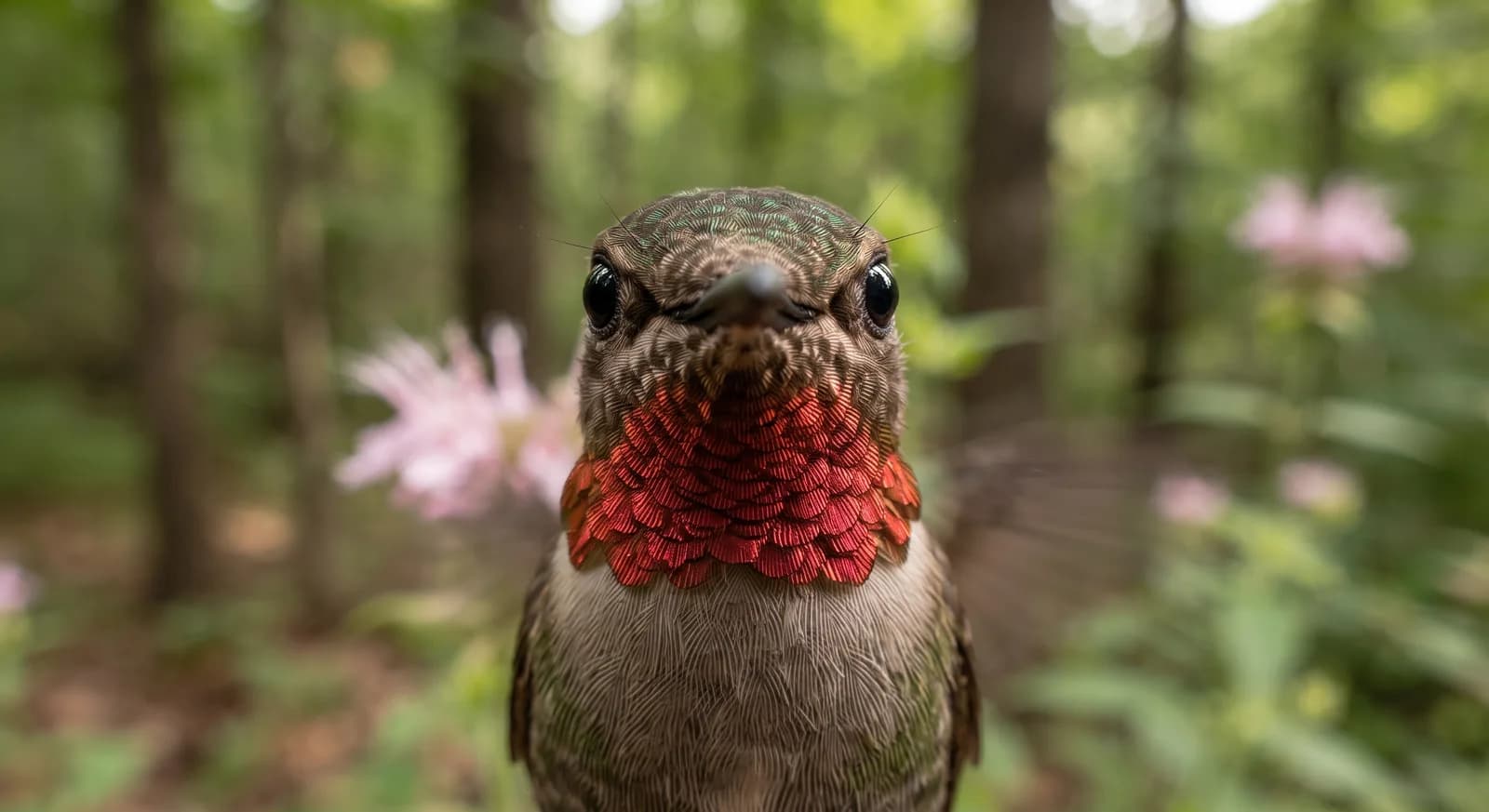
Anna's hummingbird is the resident hummingbird par excellence of the west coast of the United States: unlike almost all its relatives it does not migrate, and it spends the winter in California and the north-west. The male has a head and throat covered in iridescent feathers of an intense magenta pink. Its range has expanded enormously northwards thanks to gardens planted with exotics and to sugar feeders.

Weight

3 g – 6 g

Size

9 cm – 11 cm

Life expectancy

8 years

Diet

Nectarivore

Feeds mainly on flower nectar.

Activity

Diurnal

Active mainly during the day.

Social structure

Solitary

Lives and hunts alone, joining others only to breed.

Temperate forestDesertGrassland
3countries20parks15same family

Fun facts

  • GeneralThe male dives at 90 km/h and produces a chirp with his tail feathers.
  • Its courtship dive reaches almost 100 kilometres an hour and, relative to its size, is the fastest descent of any vertebrate: it exceeds 385 body lengths per second, more than a fighter jet at full power.
  • At the end of that dive it produces a sharp chirp that comes not from its throat but from its tail feathers, which vibrate as they spread in the air for a fraction of a second.
  • It has extended its range hundreds of kilometres northwards over the past century, as far as Canada, following urban gardens and feeders, and now sees out snowy winters by entering torpor every night.

Life cycle and biology

Skeleton type
Vertebrate - internal bony skeleton (bird)
Habitat and environment
Chaparral, open woodland, parks and gardens of the west coast of North America
Sexual maturity
12 months
Gestation / incubation
16 days
Litter / clutch size
2

Sources consulted: Wikipedia (en): Anna's hummingbird

Where to find it

Loading map…

The pins mark the parks where its presence is documented.

Where to see it

Parks and dive sites where this species has been documented — showing 10 of 20.

Related species

Other species in the catalogue with the most in common with Anna's Hummingbird — same habitat, park, country, tags or family.

Same taxonomic family
Shares a park
Shares a park
Shares a park

Keep exploring

Based on what we already know about anna's hummingbird.

Share an experience, a fun fact or a tip for seeing the anna's hummingbird.
See full glossary
This page in other languages: Español · Deutsch · Français · Português · Italiano
See its range on the interactive map→
YosemiteUnited States
RedwoodUnited States
Death ValleyUnited States
OlympicUnited States
Channel IslandsUnited States
Crater LakeUnited States
Pacific RimCanada
El VizcainoMexico
El Pinacate and Gran Desierto de AltarMexico
Sequoia National ParkUnited States
See all 20 parks
Ruby-Throated HummingbirdLeast Concern

Ruby-Throated Hummingbird

Archilochus colubris

Least Concern

Broad-tailed Hummingbird

Selasphorus platycercus

Least Concern

Lucifer Hummingbird

Calothorax lucifer

Least Concern

Mourning Dove

Zenaida macroura

Greater RoadrunnerLeast Concern

Greater Roadrunner

Geococcyx californianus

Least Concern

Common Nighthawk

Chordeiles minor

CountriesUnited States
ParksYosemiteUnited States
TagsNectarivore
Nectarivore
Diurnal
Solitary
Bird
Temperate forest
Desert
Grassland
United States
Mexico
Canada