One of the 2 tamarins on WAnimals
Mammals · Primates · Callitrichidae
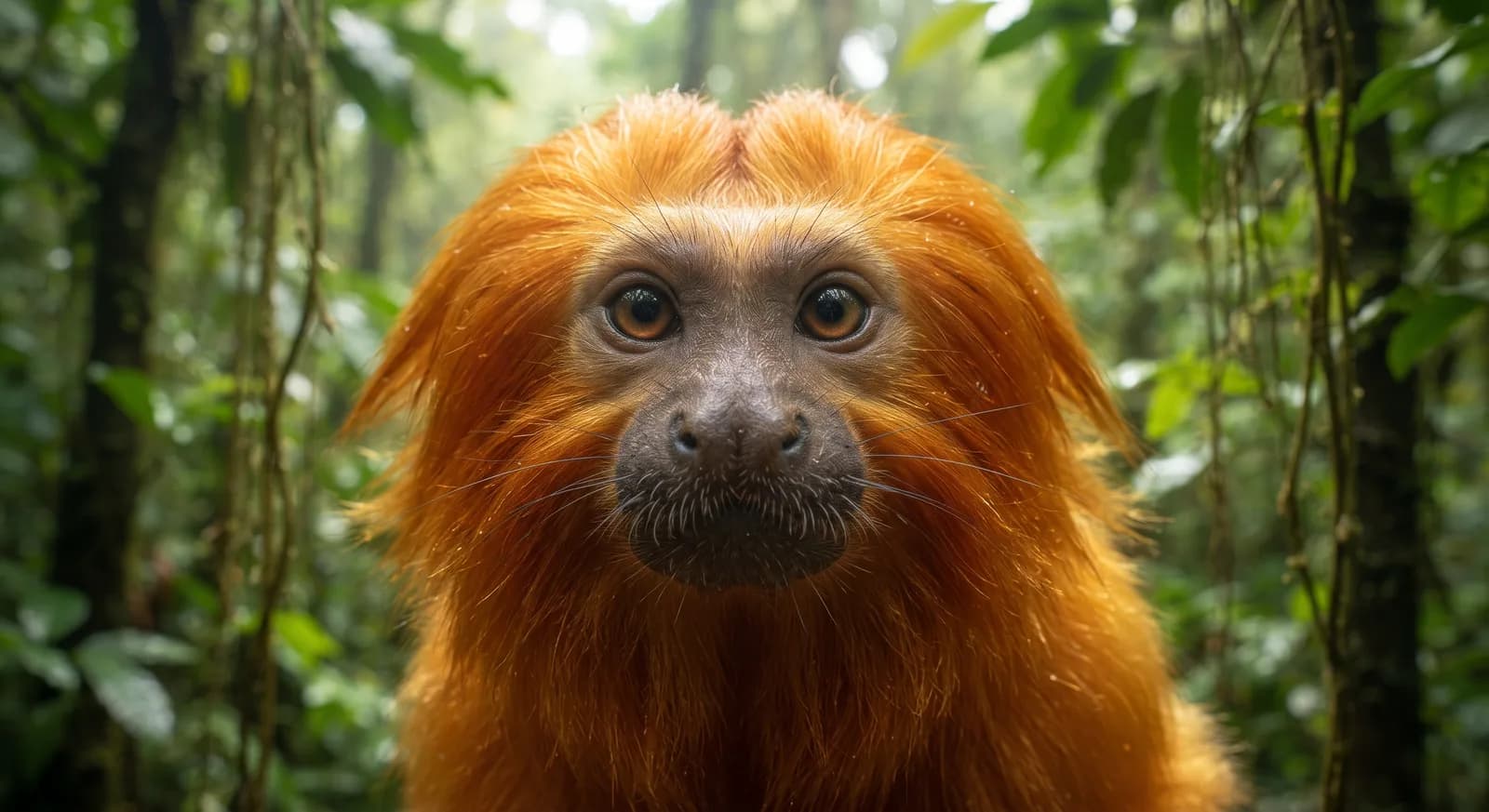
Leontopithecus rosalia
At very high risk of extinction in the wild in the near future.
Its striking golden mane, the product of sunlight and of carotenoids in its diet, gives the species its name. Only the group's dominant female breeds, chemically suppressing the fertility of the others through pheromones.
Weight
620 g – 700 g
Size
26 cm – 33 cm
Life expectancy
12 years
Diet
Omnivore
Combines animal and plant food depending on availability.
Activity
Diurnal
Active mainly during the day.
Social structure
Family group
Lives in small family groups with close bonds.
Estimated population
Around 2,000-2,500 animals in the remnants of Atlantic Forest in Rio de Janeiro, against fewer than 200 in the 1970s.
AI-generated images: illustrations, not photographs.
Sources consulted: AnAge · Marwell Zoo · Animal Diversity Web · New England Primate Conservancy · Zoo Atlanta · Animalia.bio · National Geographic · Smithsonian National Zoo · Primate Info Net
Best time: All year round at the Poço das Antas and União reserves, in Rio de Janeiro, by day, in the midstorey.
Other species in the catalogue with the most in common with Golden Lion Tamarin — same habitat, park, country, tags or family.
The golden lion tamarin is classified as endangered. Organisations such as the IUCN, WWF and the Wildlife Conservation Society work specifically on its conservation and that of its habitat; looking into their programmes is a good starting point if you want to get involved.
Based on what we already know about golden lion tamarin.