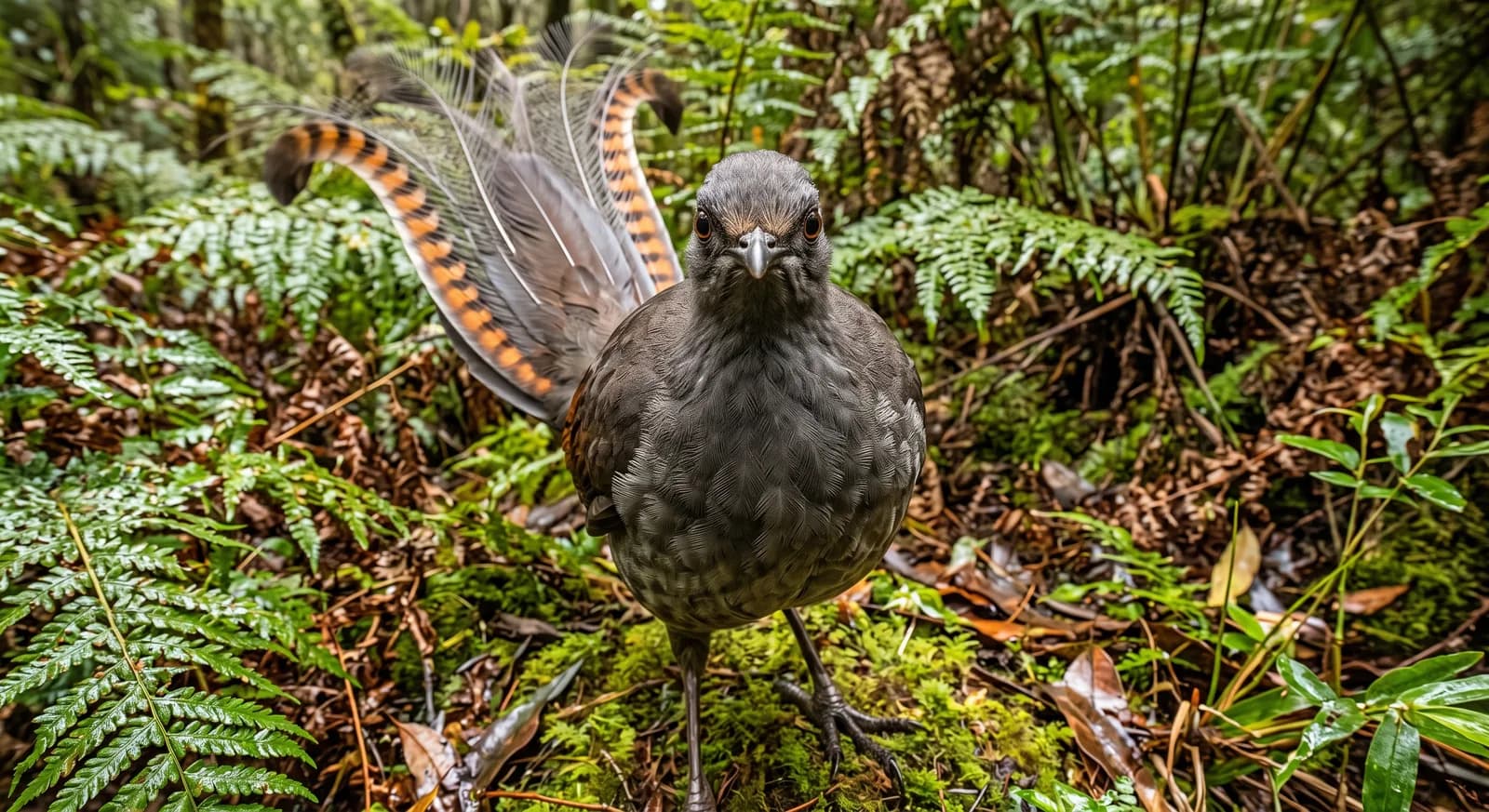
 Least Concern
Superb Lyrebird
Menura novaehollandiae
1 country4 parks
Species group · Birds
WAnimals has 4 species of bird, spread across 2 families (Menuridae, Paradisaeidae).
Ranges calculated from the profiles that record the figure, not from all 4.
Each one has its own full profile. This group does not replace them: it brings them together.
No species documented in this group is genuinely at risk according to the IUCN, with the data available today.
Recorded in 3 countries. The ones with the most species in the group:
It can reproduce complex artificial sounds with great fidelity, chainsaws and camera shutters included, working them into its territorial song.
From
It mimics anything it hears regularly: birds have been documented reproducing chainsaws, car alarms, camera shutters, dogs barking and the sound of a gunshot, always woven into their own song sequence.
From
It is one of the largest passerines in the world and also one of the longest-lived: it can exceed thirty years.
From
The male spreads a cape of black feathers that soak up as much as 99.95% of the light falling on them, a black so deep that his bill and eyes seem to float as he displays.
From
What was taken for a single species for decades was split into two in 2018, after differences in the courtship dance and in the anatomy were analysed.
From
Its black plumage is one of the darkest biological materials known: it absorbs up to 99.95% of visible light thanks to brush-shaped microstructures on the barbs of the feathers, a black comparable to the ultra-black materials made in laboratories.
From
·
Its scientific name means footless: the first specimens to reach Europe in the sixteenth century were skins prepared by Malay traders with the feet and wings removed, which led naturalists to believe that these birds floated perpetually in the air and never perched.
From
Alfred Russel Wallace spent months in the Aru Islands watching its leks, and his descriptions of the displays were central to the development of his ideas on sexual selection.
From