 Vulnerable
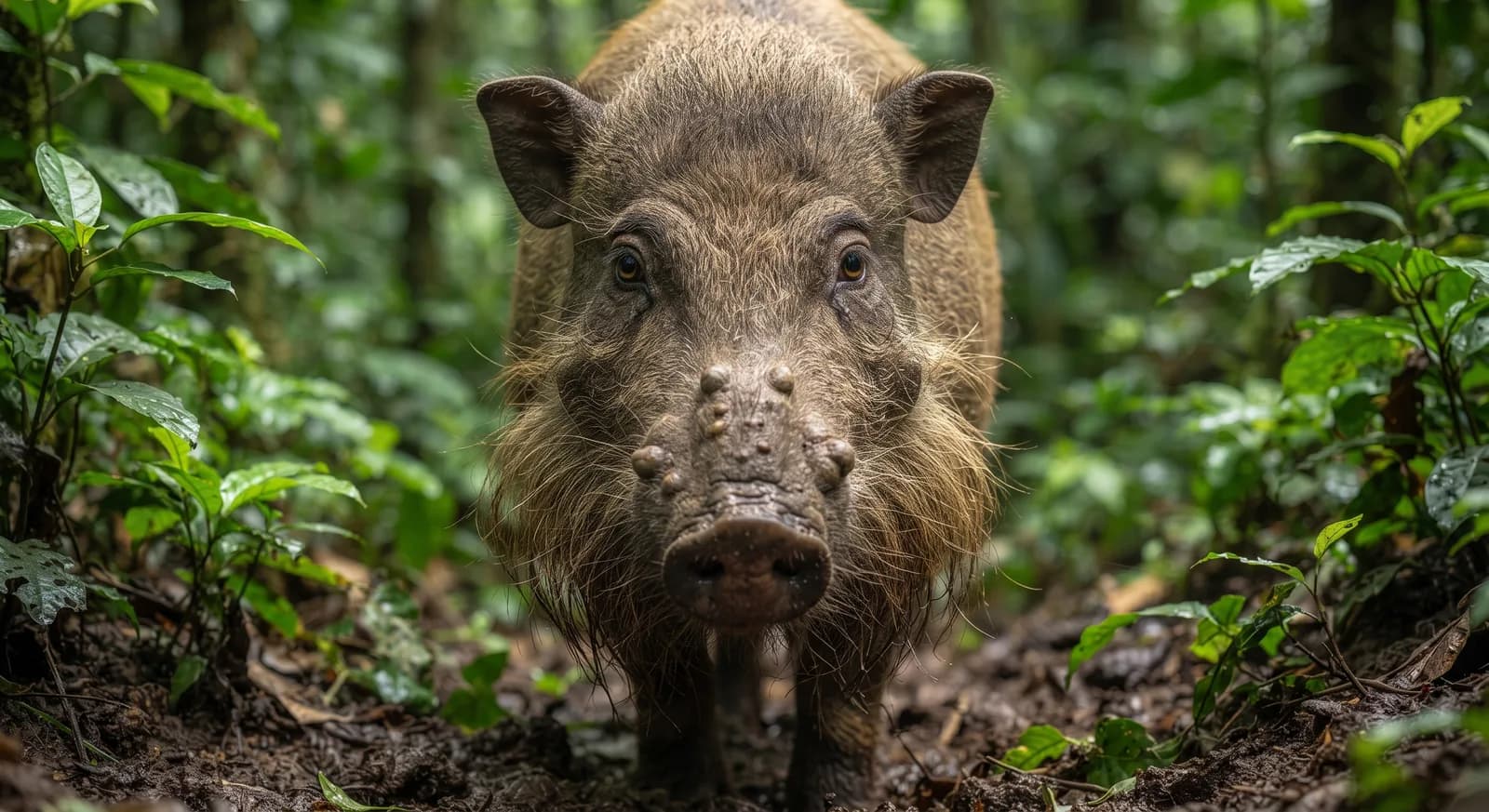
Bearded Pig
Sus barbatus
Mammals · Artiodactyla · Suidae
Babyrousa babyrussa
At high risk of extinction in the wild over the medium term.
Its name means "pig-deer" in Indonesian, after the spectacular upper tusks of the male, which grow upwards through the snout and curve back like antlers.
Weight
43 kg – 100 kg
Size
90 cm – 1.1 m
Life expectancy
10 years
Diet
Omnivore
Combines animal and plant food depending on availability.
Activity
Irregular activity
Active at irregular times, by day or night depending on circumstances.
Social structure
Solitary
Lives and hunts alone, joining others only to breed.
Sighting difficulty
Moderate
Sources consulted: AnAge; Animal Diversity Web; Scientific Papers USAMV; Louisville Zoo; Animalia.bio; Ultimate Ungulate; White Oak Conservation; Website of Everything; The Animal Facts
Best time: All year round on the islands of Buru and Sula, by day; it visits the salt licks deep in the forest regularly.
The pins mark the parks where its presence is documented.
Parks and dive sites where this species has been documented.
Other species in the catalogue with the most in common with Hairy Babirusa — same habitat, park, country, tags or family.
The hairy babirusa is classified as vulnerable. Organisations such as the IUCN, WWF and the Wildlife Conservation Society work specifically on its conservation and that of its habitat; looking into their programmes is a good starting point if you want to get involved.
It's documented in 1 protected area — one reason why protecting these places matters for its conservation.
Based on what we already know about hairy babirusa.
Share an experience, a fun fact or a tip for seeing the hairy babirusa.
Be the first to comment.