Skip to content
WAnimals
  • Map
  • Species
  • Parks
  • Diving
Log inCreate account
WAnimals

The guide for travellers and animal lovers: discover, plan and share your wild adventures around the world.

Discover wildlife

  • Species
  • Ecosystems
  • Glossary
  • Tags

Explore places

  • Map
  • Countries
  • Parks
  • Diving

Plan experiences

  • Guides

Learn

  • Blog

Resources

  • About us
  • How we build our profiles
  • Help centre
  • Contact
  • Install the app

Follow us

Account

  • Log in
  • Create account

© 2026 WAnimals. All rights reserved.

Terms of servicePrivacyCookiesLegal notice
MapSpeciesParksDiving
  1. Home
  2. Species
  3. Hilaire's Side-necked Turtle

One of the 41 turtles and tortoises on WAnimals

Reptiles · Testudines · Chelidae

Hilaire's Side-necked Turtle

Phrynops hilarii

Least Concern

The species is abundant and widely distributed; it faces no significant short-term risk.

Spotted something wrong?

Hilaire's side-necked turtle is a South American chelid with a long neck that it cannot draw straight back: it folds it sideways under the rim of the shell, as all the side-necked turtles of the southern hemisphere do. It is carnivorous and hunts fish, amphibians and invertebrates in the lagoons of the Southern Cone.

Weight

2 kg – 6 kg

Size

25 cm – 40 cm

Life expectancy

30 years

Diet

Carnivore

Feeds mainly on other animals.

Activity

Diurnal

Active mainly during the day.

Social structure

Solitary

Lives and hunts alone, joining others only to breed.

FreshwaterGrassland
4countries20parks2same family

Fun facts

  • It does not pull its head straight in: it folds it sideways under the rim of the shell, a mechanism different from that of northern hemisphere turtles and one that characterises a whole lineage that has been separate for more than a hundred million years.
  • The pleurodires, the group it belongs to, exist today only in South America, Africa and Australia, a distribution pattern that reflects the break-up of the supercontinent Gondwana.
  • It is commonly seen in groups basking on logs and banks in the coastal lagoons of Argentina and Uruguay, where it is one of the commonest aquatic turtles.

Life cycle and biology

Skeleton type
Vertebrate - internal bony skeleton with a shell (reptile)
Habitat and environment
Lagoons, marshes, slow rivers and wetlands of southern Brazil, Uruguay and north-eastern Argentina
Size at birth
About 4 cm of carapace on hatching
Sexual maturity
6 years
Gestation / incubation
120 days of incubation
Litter / clutch size
12 eggs

Sources consulted: Wikipedia (es): Phrynops hilarii

Where to find it

Best time: All year round in rivers and lagoons of southern Brazil, Uruguay and Argentina; in spring and summer it basks on logs and banks.

Loading map…

The pins mark the parks where its presence is documented.

Where to see it

Parks and dive sites where this species has been documented — showing 10 of 20.

Related species

Other species in the catalogue with the most in common with Hilaire's Side-necked Turtle — same habitat, park, country, tags or family.

Same taxonomic family
Shares a park
Shares a park
Shares a park
Shares a park
Shares a park

Keep exploring

Based on what we already know about hilaire's side-necked turtle.
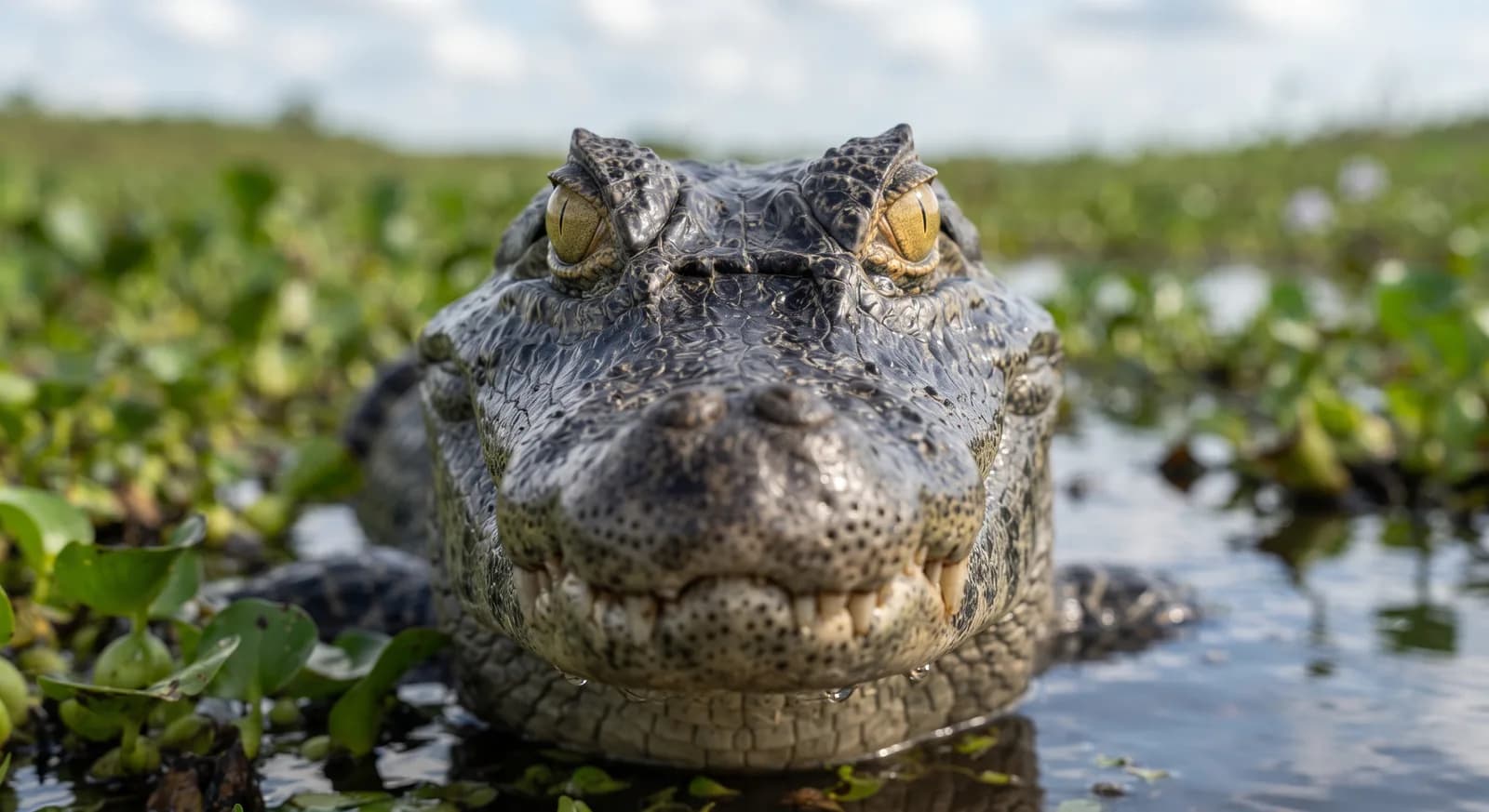
Share an experience, a fun fact or a tip for seeing the hilaire's side-necked turtle.
See full glossary
This page in other languages: Español · Deutsch · Français · Português · Italiano
See its range on the interactive map→
TalampayaArgentina
Ischigualasto (Valley of the Moon)Argentina
IberáArgentina
El PalmarArgentina
Pantanal MatogrossenseBrazil
Defensores del ChacoParaguay
Esteros de FarraposUruguay
EmasBrazil
CopoArgentina
ChacoArgentina
See all 20 parks
Least Concern

Mata Mata

Chelus fimbriata

Least Concern

Dwarf Caiman

Paleosuchus palpebrosus

Yellow AnacondaLeast Concern

Yellow Anaconda

Eunectes notaeus

Least Concern

Cascabel Rattlesnake

Crotalus durissus

Least Concern

Black-and-white Tegu

Tupinambis merianae

Yacare CaimanLeast Concern

Yacare Caiman

Caiman yacare

CountriesArgentina
ParksTalampayaArgentina
TagsCarnivore
Carnivore
Diurnal
Solitary
Reptile
Freshwater
Grassland
Argentina
Brazil
Paraguay
Uruguay