Skip to content
WAnimals
  • Map
  • Species
  • Parks
  • Diving
Log inCreate account
WAnimals

The guide for travellers and animal lovers: discover, plan and share your wild adventures around the world.

Discover wildlife

  • Species
  • Ecosystems
  • Glossary
  • Tags

Explore places

  • Map
  • Countries
  • Parks
  • Diving

Plan experiences

  • Guides

Learn

  • Blog

Resources

  • Help centre
  • Contact
  • Install the app

Follow us

Account

  • Log in
  • Create account

© 2026 WAnimals. All rights reserved.

About usHow we build our profilesTerms of servicePrivacyLegal notice
MapSpeciesParksDiving
  1. Home
  2. Species
  3. Humboldt's Hog-nosed Skunk

One of the 2 hog-nosed skunks on WAnimals

Humboldt's Hog-nosed Skunk (Conepatus humboldtii)

Mammals · Carnivora · Mephitidae

Humboldt's Hog-nosed Skunk

Conepatus humboldtii

Least Concern

The species is abundant and widely distributed; it faces no significant short-term risk.

Spotted something wrong?

Humboldt's hog-nosed skunk is the skunk of the Southern Cone of the Americas, recognisable by two broad white stripes running along its black back. It has a toughened snout and long front claws with which it turns over the soil in search of beetles, grubs, earthworms and small vertebrates, as well as fruit. It is nocturnal and solitary, and spends the day in burrows it digs itself or takes over from other animals. It is common across the Patagonian steppe and tolerates extensive grazing well.

Weight

1.5 kg – 3 kg

Size

30 cm – 49 cm

Life expectancy

8 years

Diet

Omnivore

Combines animal and plant food depending on availability.

Activity

Nocturnal

Active mainly at night.

Social structure

Solitary

Lives and hunts alone, joining others only to breed.

Sighting difficulty

Easy

DesertMountainGrassland
2countries19parks3same family

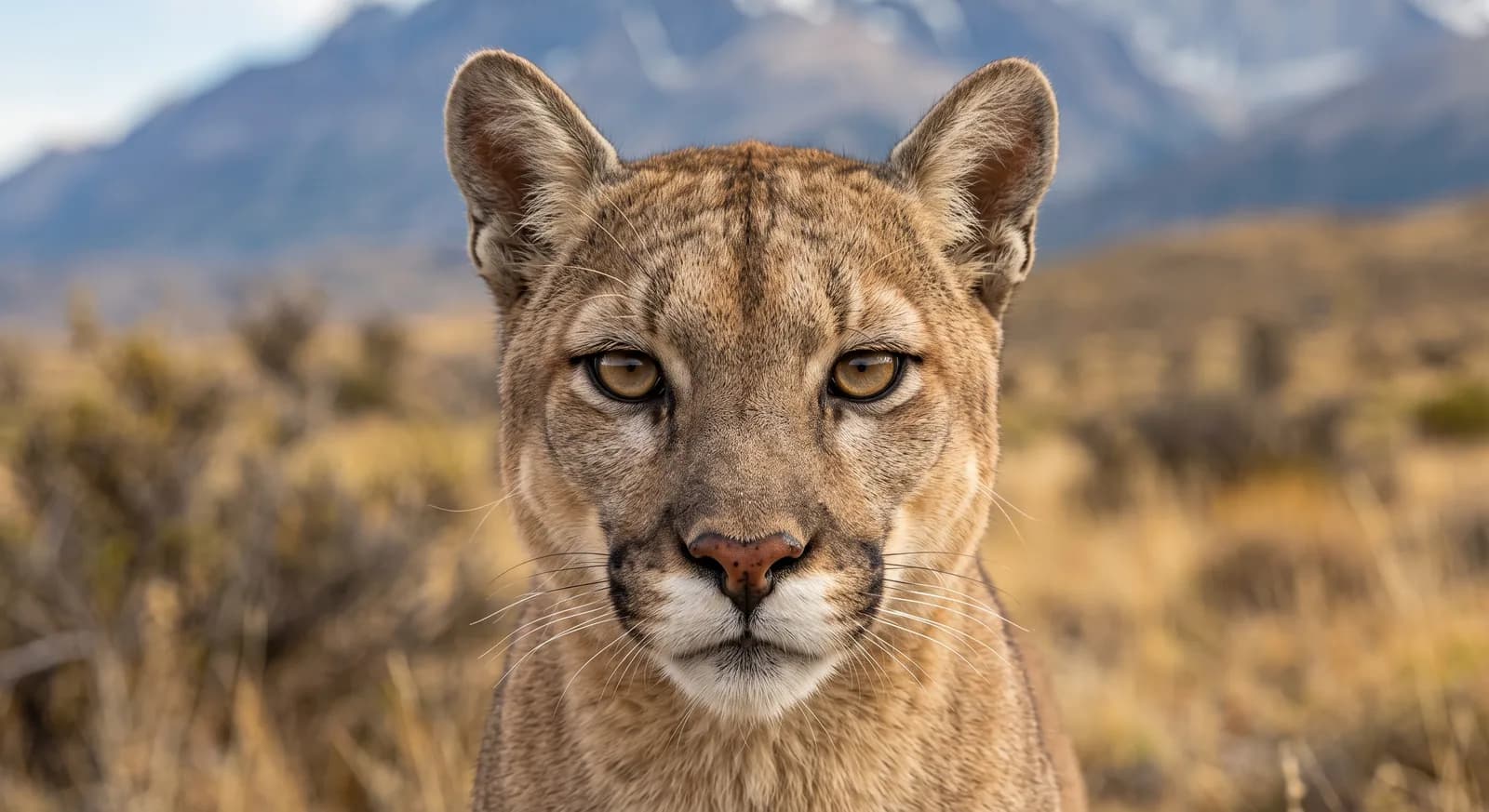
AI-generated images: illustrations, not photographs.

Fun facts

  • It gives warning before spraying: it stamps the ground with its front feet, arches its back, raises its tail and shows the white stripes; only if the intruder persists does it fire an oily fluid from its anal glands that carries several metres.
  • Its white stripes on a black ground are a classic example of aposematic colouring: they are not for concealment but for precisely the opposite, to be recognised from a distance and avoided.

Life cycle and biology

Skeleton type
Vertebrate - internal bony skeleton (mammal)
Habitat and environment
Patagonian steppe, arid scrub and mountain grassland of southern South America
Gestation / incubation
2 months
Litter / clutch size
3

Sources consulted: https://es.wikipedia.org/wiki/Conepatus_humboldtii

Where to find it

Loading map…

The pins mark the parks where its presence is documented.

Where to see it

Parks and dive sites where this species has been documented — showing 10 of 19.

Related species

Other species in the catalogue with the most in common with Humboldt's Hog-nosed Skunk — same habitat, park, country, tags or family.

Same taxonomic family
Shares a park
Shares a park
Shares a park
Shares a park
Shares a park

Keep exploring

Based on what we already know about humboldt's hog-nosed skunk.

Comments

Share an experience, a fun fact or a tip for seeing the humboldt's hog-nosed skunk.

Be the first to comment.

See full glossary
This page in other languages: Español · Deutsch · Français · Português · Italiano
See its range on the interactive map→
Nahuel HuapiArgentina
Los GlaciaresArgentina
Tierra del FuegoArgentina
TalampayaArgentina
Ischigualasto (Valley of the Moon)Argentina
Torres del PaineChile
ChiloeChile
Patagonia (Patagonia National Park)Chile
LaninArgentina
Los AlercesArgentina
See all 19 parks
Least Concern

Molina's Hog-nosed Skunk

Conepatus chinga

Least Concern

Large Hairy Armadillo

Chaetophractus villosus

Southern TamanduaLeast Concern

Southern Tamandua

Tamandua tetradactyla

PumaLeast Concern

Puma

Puma concolor

Least Concern

Cascabel Rattlesnake

Crotalus durissus

Least Concern

Geoffroy's Cat

Leopardus geoffroyi

CountriesArgentina
ParksNahuel HuapiArgentina
TagsOmnivore
Omnivore
Nocturnal
Solitary
Desert
Mountain
Grassland
Mammal
Argentina
Chile