Skip to content
WAnimals
  • Map
  • Species
  • Parks
  • Diving
Log inCreate account
WAnimals

The guide for travellers and animal lovers: discover, plan and share your wild adventures around the world.

Discover wildlife

  • Species
  • Ecosystems
  • Glossary
  • Tags

Explore places

  • Map
  • Countries
  • Parks
  • Diving

Plan experiences

  • Guides

Learn

  • Blog

Resources

  • Help centre
  • Contact
  • Install the app

Follow us

Account

  • Log in
  • Create account

© 2026 WAnimals. All rights reserved.

About usHow we build our profilesTerms of servicePrivacyLegal notice
MapSpeciesParksDiving
  1. Home
  2. Species
  3. Iberian Emerald Lizard

One of the 15 lizards on WAnimals

Reptiles · Squamata · Lacertidae

Iberian Emerald Lizard

Lacerta schreiberi

Near Threatened

It could become threatened in the near future if current threats go unchecked.

Spotted something wrong?

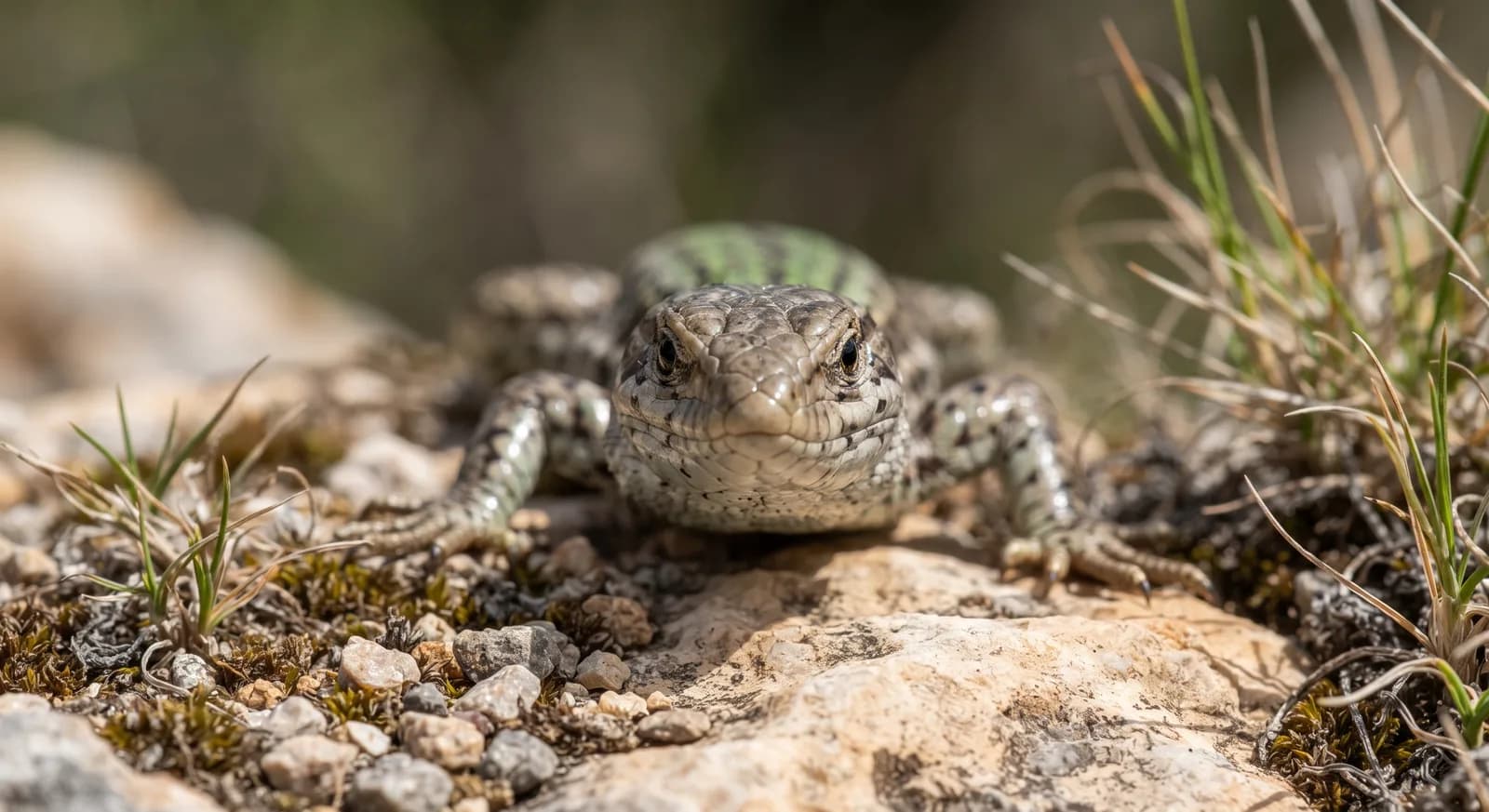
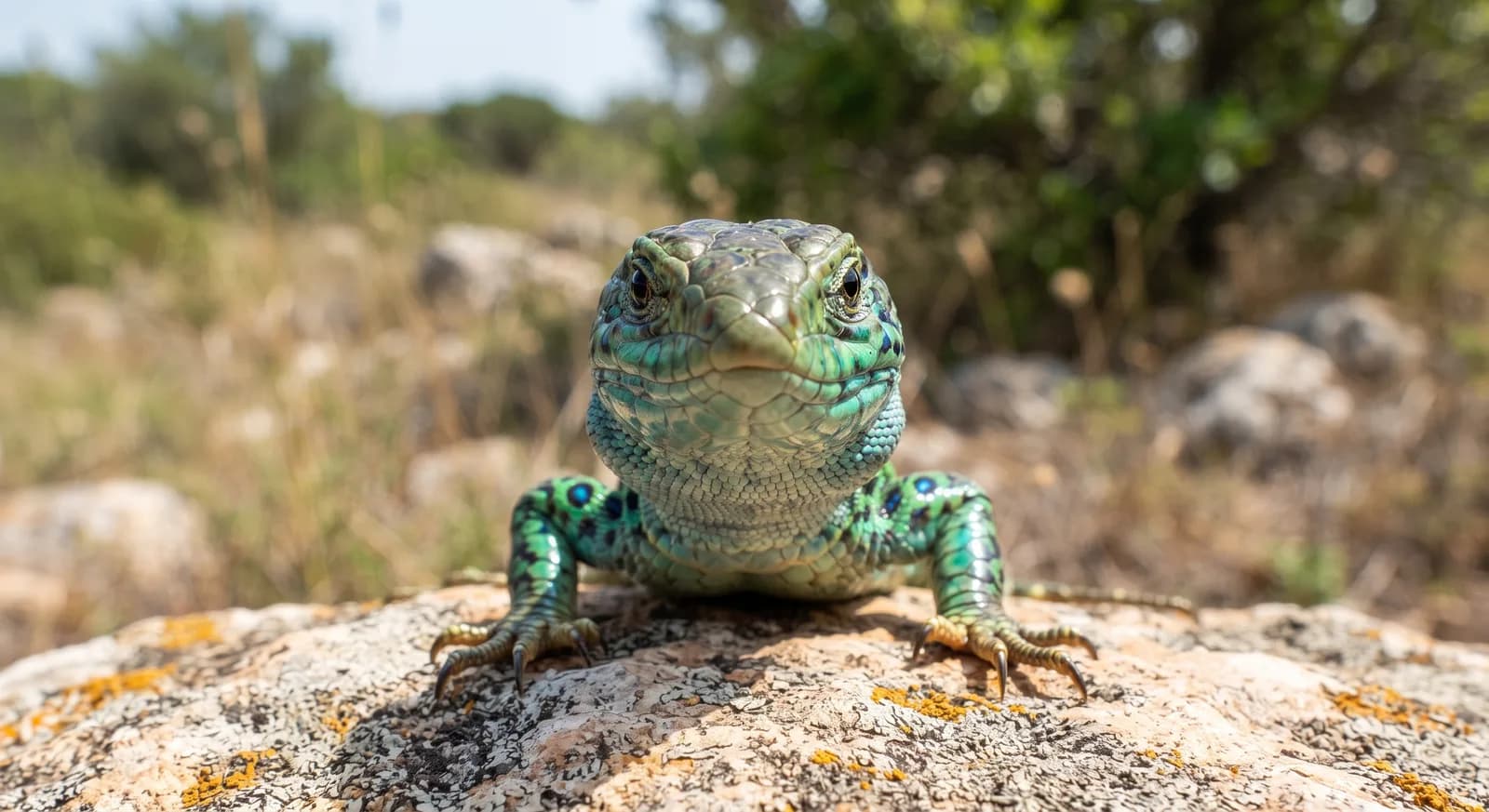
The Iberian emerald lizard, or Schreiber's green lizard, is an Iberian endemic tied to the mountain watercourses of the north-west of the peninsula. The male wears an intense green flecked with black and, in the breeding season, a head and throat of brilliant turquoise blue. It depends on well-preserved riverbanks and its distribution is highly fragmented.

Weight

30 g – 70 g

Size

25 cm – 40 cm

Life expectancy

8 years

Diet

Insectivore

Feeds mainly on insects and other invertebrates.

Activity

Diurnal

Active mainly during the day.

Social structure

Solitary

Lives and hunts alone, joining others only to breed.

Sighting difficulty

Moderate

Temperate forestMountainFreshwater
2countries21parks13same family

Fun facts

  • GeneralEndemic to Iberia; in spring the male's head and throat turn a deep blue.
  • It is a strict Iberian endemic: it exists only in the north-west of the peninsula, in Galicia, along the Cantabrian coast, in the Sistema Central and in a few Portuguese sierras, always tied to mountain streams.
  • In the breeding season the male's head and throat turn an intense turquoise blue that contrasts with the green of the body, making it one of the most striking lizards in the Spanish fauna.
  • Its populations in the Sistema Central are isolated glacial relicts and are among the most threatened: they depend on mountain streams whose shrinking under climate change leaves them with nowhere to go.

Life cycle and biology

Skeleton type
Vertebrate - internal bony skeleton (reptile)
Habitat and environment
Densely vegetated banks of mountain rivers and streams in north-western Iberia
Sexual maturity
2 years
Gestation / incubation
70 days of incubation
Litter / clutch size
12 eggs

Sources consulted: https://es.wikipedia.org/wiki/Lacerta_schreiberi

Where to find it

Loading map…

The pins mark the parks where its presence is documented.

Where to see it

Parks and dive sites where this species has been documented — showing 10 of 21.

Related species

Other species in the catalogue with the most in common with Iberian Emerald Lizard — same habitat, park, country, tags or family.

Same taxonomic family

Keep exploring

Based on what we already know about iberian emerald lizard.

Comments

Share an experience, a fun fact or a tip for seeing the iberian emerald lizard.

Be the first to comment.

See full glossary
This page in other languages: Español · Deutsch · Français · Português · Italiano
See its range on the interactive map→
Picos de EuropaSpain
Peneda-GeresPortugal
Sierra de GuadarramaSpain
SomiedoSpain
RedesSpain
Cíes IslandsSpain
Duero InternacionalPortugal
Serra da EstrelaPortugal
Aiako HarriaSpain
Aizkorri-AratzSpain
See all 21 parks
Ocellated LizardNear Threatened

Ocellated Lizard

Timon lepidus

Least Concern

Spanish Wall Lizard

Podarcis hispanicus

Least Concern

Large Psammodromus

Psammodromus algirus

Endangered

Cyren's Rock Lizard

Iberolacerta cyreni

Western Green LizardLeast Concern

Western Green Lizard

Lacerta bilineata

Common Wall LizardLeast Concern

Common Wall Lizard

Podarcis muralis

CountriesSpain
ParksPicos de EuropaSpain
TagsInsectivore
Insectivore
Diurnal
Solitary
Near Threatened
Reptile
Temperate forest
Mountain
Freshwater
Spain
Portugal