Skip to content
WAnimals
  • Map
  • Species
  • Parks
  • Diving
Log inCreate account
WAnimals

The guide for travellers and animal lovers: discover, plan and share your wild adventures around the world.

Discover wildlife

  • Species
  • Ecosystems
  • Glossary
  • Tags

Explore places

  • Map
  • Countries
  • Parks
  • Diving

Plan experiences

  • Guides

Learn

  • Blog

Resources

  • Help centre
  • Contact
  • Install the app

Follow us

Account

  • Log in
  • Create account

© 2026 WAnimals. All rights reserved.

About usHow we build our profilesTerms of servicePrivacyLegal notice
MapSpeciesParksDiving
  1. Home
  2. Species
  3. Rohu

Bony fish · Cypriniformes · Cyprinidae

Rohu

Labeo rohita

Least Concern

The species is abundant and widely distributed; it faces no significant short-term risk.

Spotted something wrong?

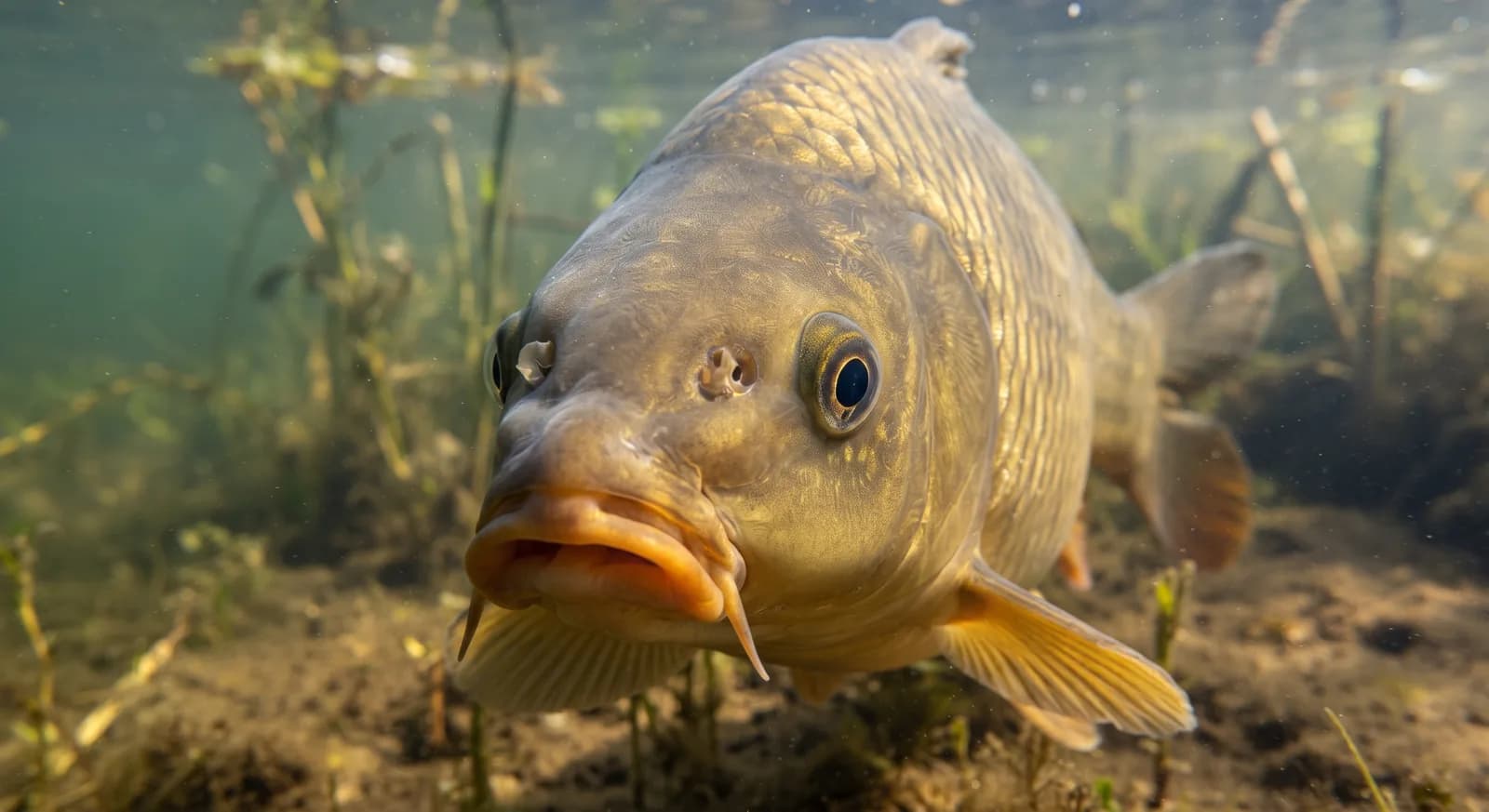
The rohu is a large cyprinid of the rivers of the Indian subcontinent, with an arched body and large scales with reddish glints. It feeds in the water column on phytoplankton and plant matter, using its fleshy, fringed lips. It is one of the most widely farmed fish in the world.

Weight

24.8 kg on average

Size

50 cm – 2 m

Diet

Herbivore

Feeds mainly on plants.

Social structure

Colony

Lives in large concentrations, often for breeding reasons.

Sighting difficulty

Easy

Freshwater
7countries10same family

Fun facts

  • It is part of the traditional Indian carp polyculture: it is raised alongside other species that feed at different levels of the pond, so that none of them competes with the others.
  • Its breeding depends on the monsoon floods, and hatcheries had to learn to induce it hormonally in order to farm it.
  • It is the most widely eaten freshwater fish in India and Bangladesh.
  • It is one of the three major Indian carps, together with the catla and the mrigal, and has been the basis of the subcontinent's polyculture aquaculture for centuries.
  • Polyculture works because the three occupy different layers: the catla feeds at the surface, the rohu in the water column and the mrigal on the bottom. The same pond is thus put to use three times over.
  • It is herbivorous and feeds by scraping algae and plants with thick, fringed lips.
  • It depends on the monsoon to breed: it spawns in the swollen, turbid waters of the rainy season, and in captivity spawning has to be induced with hormones.
  • Its farming has spread to Bangladesh, Pakistan, Myanmar and several countries of South-East Asia.

Life cycle and biology

Skeleton type
Vertebrate - internal bony skeleton (fish)
Habitat and environment
Large rivers and floodplains of the Indian subcontinent
Sexual maturity
2.9 years

Sources consulted: https://es.wikipedia.org/wiki/Labeo_rohita

Where to find it

Loading map…

Related species

Other species in the catalogue with the most in common with Rohu — same habitat, park, country, tags or family.

Same taxonomic family

Keep exploring

Based on what we already know about rohu.

Comments

Share an experience, a fun fact or a tip for seeing the rohu.

Be the first to comment.
See full glossary
This page in other languages: Español · Deutsch · Français · Português · Italiano
See its range on the interactive map→
Least Concern

Koi

Cyprinus rubrofuscus

Least Concern

Sumatra Barb

Puntigrus tetrazona

Least Concern

Harlequin Rasbora

Trigonostigma heteromorpha

Common CarpLeast Concern

Common Carp

Cyprinus carpio

Least Concern

Zebra Danio

Danio rerio

GoldfishLeast Concern

Goldfish

Carassius auratus

CountriesBangladesh
TagsHerbivore
Herbivore
Colonial
Fish
Freshwater
Bangladesh
Bhutan
India
Myanmar
Nepal
Pakistan
Sri Lanka