Skip to content
WAnimals
  • Map
  • Species
  • Parks
  • Diving
Log inCreate account
WAnimals

The guide for travellers and animal lovers: discover, plan and share your wild adventures around the world.

Discover wildlife

  • Species
  • Ecosystems
  • Glossary
  • Tags

Explore places

  • Map
  • Countries
  • Parks
  • Diving

Plan experiences

  • Guides

Learn

  • Blog

Resources

  • Help centre
  • Contact
  • Install the app

Follow us

Account

  • Log in
  • Create account

© 2026 WAnimals. All rights reserved.

About usHow we build our profilesTerms of servicePrivacyLegal notice
MapSpeciesParksDiving
  1. Home
  2. Species
  3. Koi

One of the 4 carp on WAnimals

Bony fish · Cypriniformes · Cyprinidae

Koi

Cyprinus rubrofuscus

Least Concern

The species is abundant and widely distributed; it faces no significant short-term risk.

Spotted something wrong?

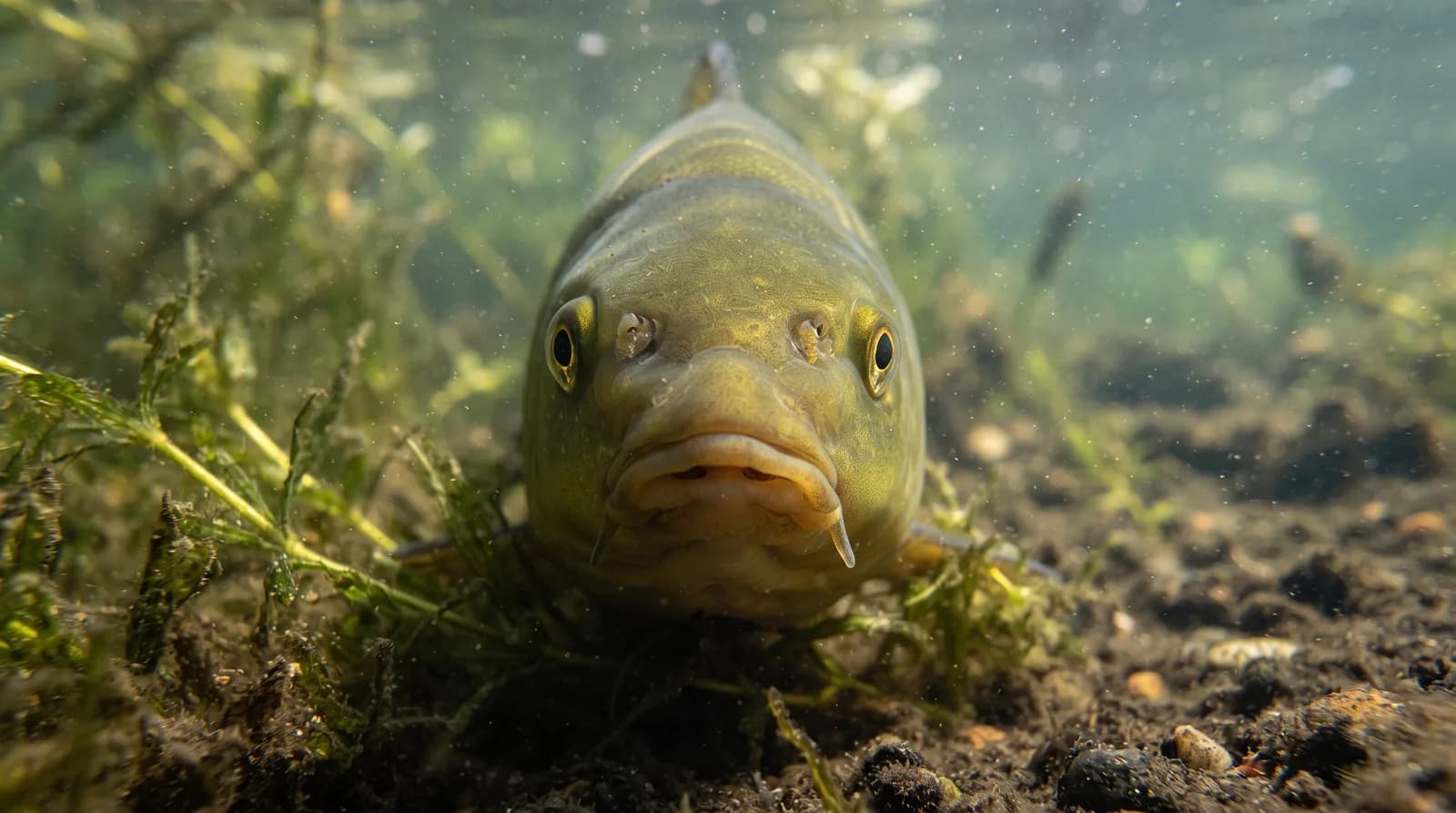
The East Asian carp from which every ornamental koi variety descends. It is a hardy, omnivorous bottom-dweller that stirs up the sediment in search of invertebrates, seeds and detritus. Koi are varieties selected over centuries in Japan from fish with colour mutations.

Size

40 cm – 1 m

Life expectancy

20 years

Diet

Omnivore

Combines animal and plant food depending on availability.

Social structure

School

Gathers in coordinated schools, typical of fish.

Sighting difficulty

Easy

Freshwater
56countries10same family

Fun facts

  • GeneralBred selectively in Japan since the 19th century; some fish have been credited with over 200 years.
  • Koi breeding began in the nineteenth century among the farmers of the Niigata region, who raised carp in their rice paddies and started setting aside the fish with coloured markings.
  • The age of 226 years attributed to the Japanese koi Hanako was worked out from the rings on a scale and is very widely quoted, but it has never been independently verified.
  • It can survive under the ice with its metabolism almost at a standstill and tolerate oxygen levels that would be lethal to most fish.
  • The koi is not a species: it is an ornamental variety of the Asian carp, selected for its colour from the 19th century onwards in the Japanese region of Niigata, among rice growers who kept them in their irrigation ponds.
  • For a long time it was attributed to the European ancestor Cyprinus carpio; today it is accepted that the koi derives from the East Asian carp, Cyprinus rubrofuscus, a distinct species.
  • Its longevity gives rise to a fair amount of mythology. A specimen called Hanako is often cited as having lived for more than two hundred years, but that figure comes from the reading of a single scale and has not been independently confirmed. Well-cared-for koi usually live between twenty and fifty years.
  • Released into the wild, it behaves like any carp: it stirs up the bottom as it feeds, clouds the water and degrades submerged vegetation.

Life cycle and biology

Skeleton type
Vertebrate - internal bony skeleton (bony fish)
Habitat and environment
Ornamental ponds, lakes and canals

Sources consulted: https://es.wikipedia.org/wiki/Cyprinus_rubrofuscus; Movement Ecology 2023 y NCBI PMC8901867, comportamiento social de Cyprinus

Where to find it

Loading map…

Related species

Other species in the catalogue with the most in common with Koi — same habitat, park, country, tags or family.

Same taxonomic family

Keep exploring

Based on what we already know about koi.

Comments

Share an experience, a fun fact or a tip for seeing the koi.

Be the first to comment.

See full glossary
This page in other languages: Español · Deutsch · Français · Português · Italiano
See its range on the interactive map→
Least Concern

Rohu

Labeo rohita

Least Concern

Roach

Rutilus rutilus

Least Concern

Sumatra Barb

Puntigrus tetrazona

TenchLeast Concern

Tench

Tinca tinca

Least Concern

Harlequin Rasbora

Trigonostigma heteromorpha

Least Concern

Dace

Leuciscus leuciscus

CountriesAlbania
TagsOmnivore
Omnivore
Colonial
Fish
Freshwater

Europe38

Asia10

North America3

Oceania2

South America2

Africa1

Albania
Argentina
Australia
Austria
Belarus
Belgium
Albania
Austria
Belarus
Belgium
Bosnia and Herzegovina
Bulgaria
Croatia
Cyprus
Czechia
Denmark
Estonia
Finland
France
Germany
Greece
Hungary
Ireland
Italy
Latvia
Lithuania
Luxembourg
Malta
Moldova
Montenegro
Netherlands
North Macedonia
Norway
Poland
Portugal
Romania
Serbia
Slovakia
Slovenia
Spain
Sweden
Switzerland
Ukraine
United Kingdom
China
India
Indonesia
Israel
Japan
North Korea
Russia
South Korea
Taiwan
Türkiye
Canada
Mexico
United States
Australia
New Zealand
Argentina
Brazil
South Africa