Skip to content
WAnimals
  • Map
  • Species
  • Parks
  • Diving
Log inCreate account
WAnimals

The guide for travellers and animal lovers: discover, plan and share your wild adventures around the world.

Discover wildlife

  • Species
  • Ecosystems
  • Glossary
  • Tags

Explore places

  • Map
  • Countries
  • Parks
  • Diving

Plan experiences

  • Guides

Learn

  • Blog

Resources

  • About us
  • How we build our profiles
  • Help centre
  • Contact
  • Install the app

Follow us

Account

  • Log in
  • Create account

© 2026 WAnimals. All rights reserved.

Terms of servicePrivacyCookiesLegal notice
MapSpeciesParksDiving
  1. Home
  2. Species
  3. Southern Mountain Viscacha

One of the 2 viscachas on WAnimals

Mammals · Rodentia · Chinchillidae

Southern Mountain Viscacha

Lagidium viscacia

Least Concern

The species is abundant and widely distributed; it faces no significant short-term risk.

Spotted something wrong?

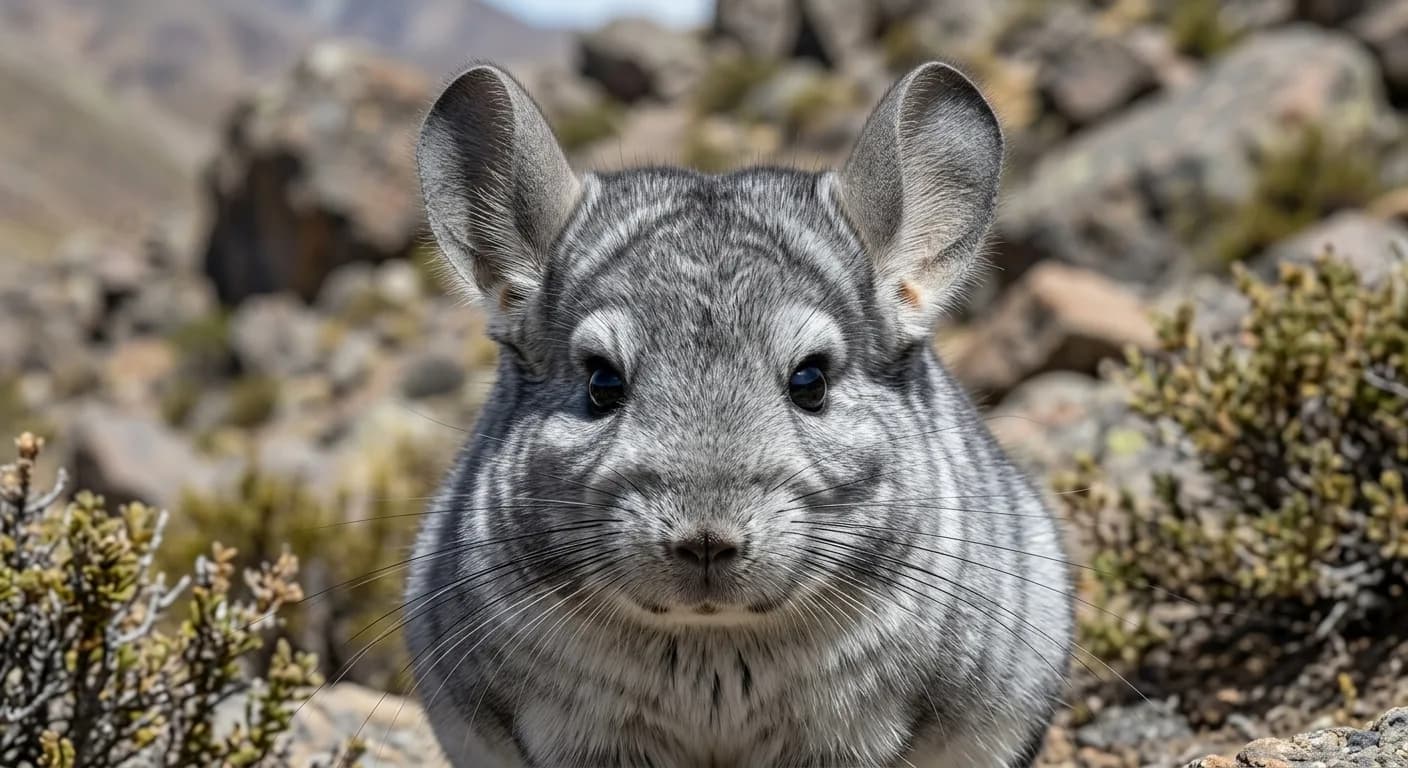
The southern mountain viscacha is an Andean rodent related to the chinchillas, with the look of a long-eared rabbit and a thick, curled tail that no rabbit has. It lives in colonies among the rocks and scree of the high cordillera, where it suns itself on the rocks in the middle of the day and takes refuge in the cracks at the first sign of danger. It is the main prey of the Andean cat and an important part of the diet of the puma and the culpeo on the puna.

Weight

1 kg – 3 kg

Size

30 cm – 45 cm

Life expectancy

9 years

Diet

Herbivore

Feeds mainly on plants.

Activity

Diurnal

Active mainly during the day.

Social structure

Colony

Lives in large concentrations, often for breeding reasons.

DesertMountain
7countries13parks3same family

Fun facts

  • comportamientoIt looks superficially like a long-tailed rabbit, though it is closer kin to the chinchilla, and groups of them sun themselves on the rocks in the early morning.
  • Its long tail curled upwards, together with its rabbit-like ears, gives it an unmistakable hybrid look, but it is related neither to rabbits nor to squirrels: it belongs to the chinchilla group.
  • It is the staple prey of the Andean cat, one of the most threatened cats in the world: where the viscachas disappear, the Andean cat disappears after them.

Life cycle and biology

Skeleton type
Vertebrate - internal bony skeleton (mammal)
Habitat and environment
Rocky outcrops, scree and crags of the puna and the high Andean steppe, up to more than 5,000 metres
Sexual maturity
12 months
Gestation / incubation
4.4 months
Litter / clutch size
1.5 (average)

Sources consulted: Wikipedia (es): Lagidium viscacia

Where to find it

Loading map…

The pins mark the parks where its presence is documented.

Where to see it

Parks and dive sites where this species has been documented — showing 10 of 13.

Related species

Other species in the catalogue with the most in common with Southern Mountain Viscacha — same habitat, park, country, tags or family.

Same taxonomic family
Shares a park
Shares a park
Shares a park
Shares a park

Keep exploring

Based on what we already know about southern mountain viscacha.
Share an experience, a fun fact or a tip for seeing the southern mountain viscacha.
See full glossary
This page in other languages: Español · Deutsch · Français · Português · Italiano
See its range on the interactive map→
TalampayaArgentina
Ischigualasto (Valley of the Moon)Argentina
LaucaChile
HuascaranPeru
CotopaxiEcuador
Eduardo AvaroaBolivia
SajamaBolivia
AntisanaEcuador
TorotoroBolivia
San GuillermoArgentina
See all 13 parks
Short-tailed ChinchillaEndangered

Short-tailed Chinchilla

Chinchilla chinchilla

Least Concern

Plains Viscacha

Lagostomus maximus

VicunaLeast Concern

Vicuna

Vicugna vicugna

GuanacoLeast Concern

Guanaco

Lama guanicoe

Least Concern

Common Yellow-toothed Cavy

Galea musteloides

Burrowing ParrotLeast Concern

Burrowing Parrot

Cyanoliseus patagonus

CountriesArgentina
ParksTalampayaArgentina
TagsHerbivore
Herbivore
Diurnal
Colonial
Desert
Mountain
Mammal
Argentina
Bolivia
Peru
Chile
Ecuador
Colombia
Venezuela