Skip to content
WAnimals
  • Map
  • Species
  • Parks
  • Diving
Log inCreate account
WAnimals

The guide for travellers and animal lovers: discover, plan and share your wild adventures around the world.

Discover wildlife

  • Species
  • Ecosystems
  • Glossary
  • Tags

Explore places

  • Map
  • Countries
  • Parks
  • Diving

Plan experiences

  • Guides

Learn

  • Blog

Resources

  • About us
  • How we build our profiles
  • Help centre
  • Contact
  • Install the app

Follow us

Account

  • Log in
  • Create account

© 2026 WAnimals. All rights reserved.

Terms of servicePrivacyCookiesLegal notice
MapSpeciesParksDiving
  1. Home
  2. Species
  3. Tenerife Lizard

One of the 15 lizards on WAnimals

Reptiles · Squamata · Lacertidae

Tenerife Lizard

Gallotia galloti

Least Concern

The species is abundant and widely distributed; it faces no significant short-term risk.

Spotted something wrong?

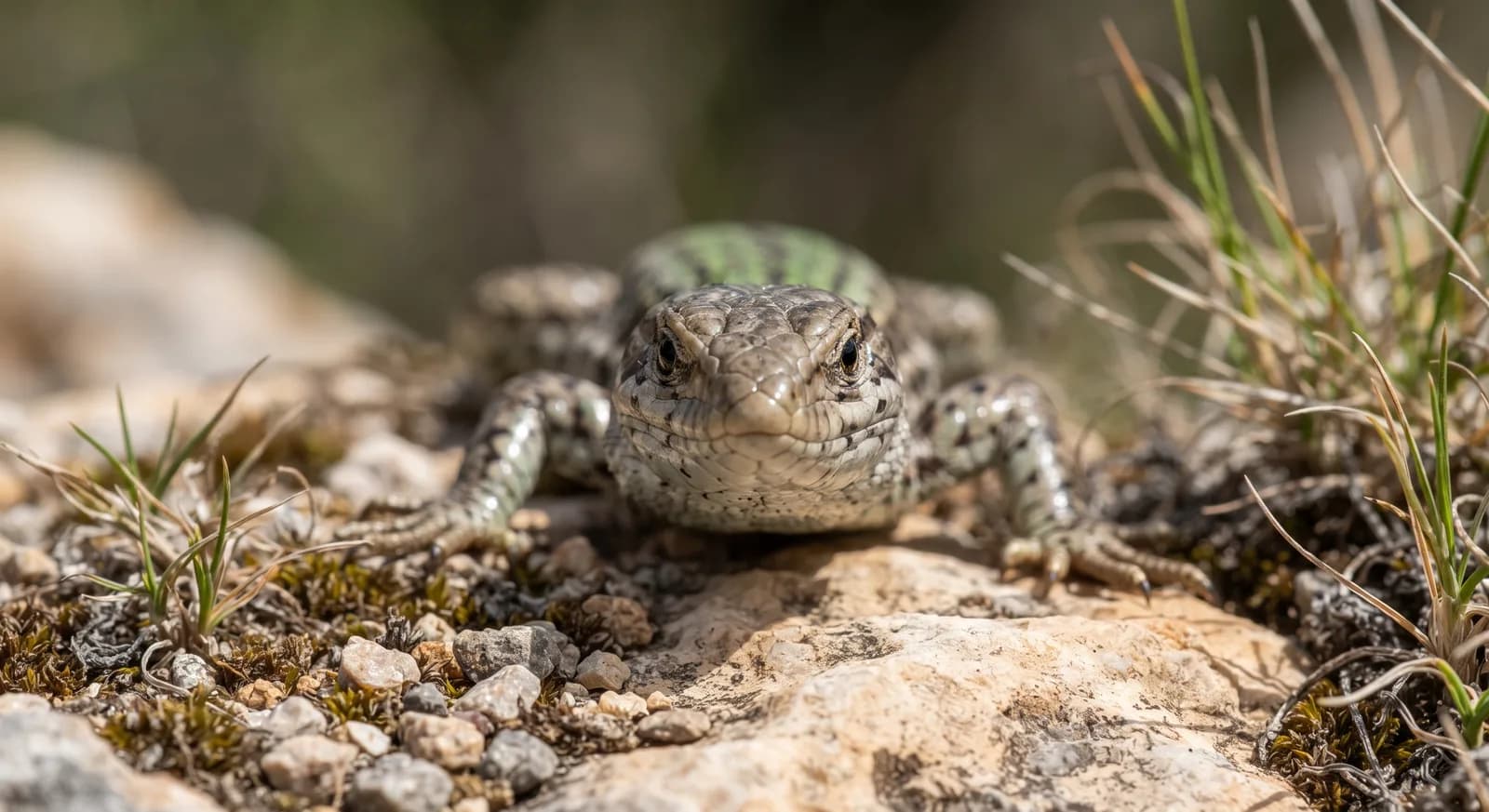
The Tenerife lizard is the commonest lizard on Tenerife and La Gomera, endemic to those islands. Adult males are dark with bright blue spots on the flanks and can exceed forty centimetres. It is omnivorous and eats a great deal of fruit, which makes it an important seed disperser on islands where there are no native fruit-eating mammals.

Weight

80 g – 200 g

Size

25 cm – 45 cm

Life expectancy

10 years

Diet

Omnivore

Combines animal and plant food depending on availability.

Activity

Diurnal

Active mainly during the day.

Social structure

Solitary

Lives and hunts alone, joining others only to breed.

Temperate forestDesertIslands
1countries3parks13same family

Fun facts

  • It is a key seed disperser in the Canaries: on islands with no native fruit-eating mammals, the lizards do that job, and several endemic plants depend on them to spread.
  • Adult males develop intense blue spots on the flanks and a disproportionately large head, and the differences between the populations of northern and southern Tenerife are so marked that separate subspecies are recognised.
  • The genus Gallotia is endemic to the Canaries and includes giant species that reached a metre long and that became extinct after people arrived; those that survive, such as the El Hierro giant lizard, are critically endangered.

Life cycle and biology

Skeleton type
Vertebrate - internal bony skeleton (reptile)
Habitat and environment
Malpaís badlands, scrub, farmland, laurel forest and gardens of Tenerife and La Gomera
Sexual maturity
2 years
Gestation / incubation
60 days of incubation
Litter / clutch size
8 eggs

Sources consulted: Wikipedia (es): Gallotia galloti

Where to find it

Loading map…

The pins mark the parks where its presence is documented.

Where to see it

Parks and dive sites where this species has been documented.

Related species

Other species in the catalogue with the most in common with Tenerife Lizard — same habitat, park, country, tags or family.

Same taxonomic family

Keep exploring

Based on what we already know about tenerife lizard.
Share an experience, a fun fact or a tip for seeing the tenerife lizard.
See full glossary
This page in other languages: Español · Deutsch · Français · Português · Italiano
See its range on the interactive map→
TeideSpain
GarajonaySpain
Caldera de TaburienteSpain
Least Concern

Large Psammodromus

Psammodromus algirus

Least Concern

Moroccan Rock Lizard

Scelarcis perspicillata

Least Concern

Atlantic Lizard

Gallotia atlantica

Western Green LizardLeast Concern

Western Green Lizard

Lacerta bilineata

Common Wall LizardLeast Concern

Common Wall Lizard

Podarcis muralis

Least Concern

Green Lizard

Lacerta viridis

CountriesSpain
ParksTeideSpain
TagsOmnivore
Omnivore
Diurnal
Solitary
Reptile
Temperate forest
Desert
Islands
Spain