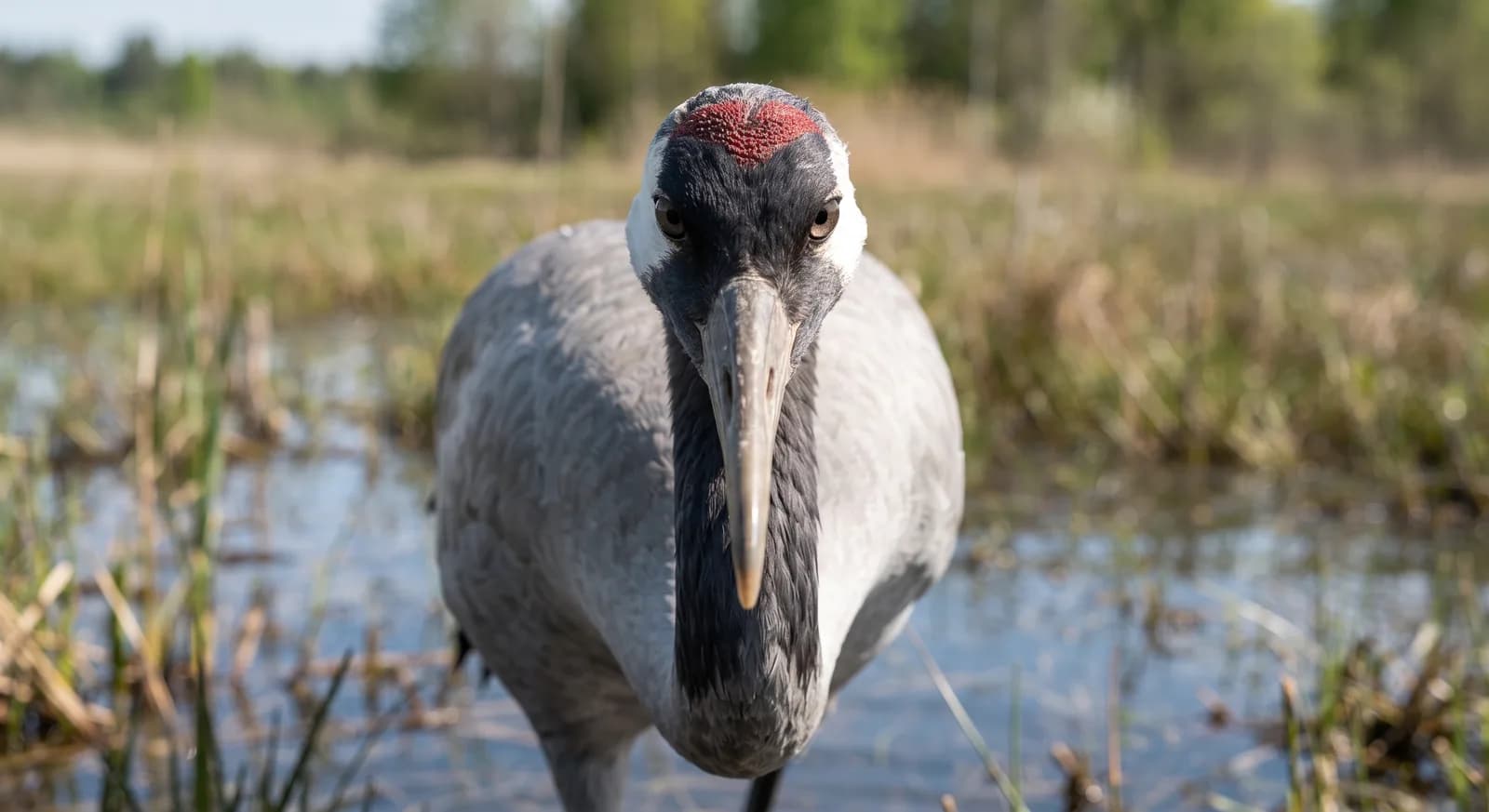
 Least Concern
Common Crane
Grus grus
The finest surviving example of laurisilva, a subtropical forest that covered southern Europe millions of years ago
Area
40 km²
Protection category
IUCN II
Parque nacional —
Designated in
1981
Garajonay occupies the central plateau and the ravine headwaters of La Gomera. Its value lies in preserving the best-conserved stand of laurisilva in the world, an evergreen, lauroid cloud forest that was common around the Mediterranean basin during the Tertiary and that vanished from the continent with the Quaternary cooling. Here it survives thanks to the trade wind: the moisture it carries condenses as it meets the relief and feeds the forest through what is called horizontal rain, which the leaves and mosses intercept and drip to the ground. The result is a permanently damp, shaded environment dominated by laurels, viñátigo, til and tree heath draped in lichen. The vertebrate fauna is sparse but highly distinctive, with the endemic Bolle's and laurel pigeons as its emblematic species, and an invertebrate community with a high degree of endemism. A fire in 2012 affected part of the park, and its recovery is being followed closely.
1 dive site within 300 km is also shown.
Ecosystems found in Spain, where Garajonay lies.
Where can I dive near here?
91 km away
What is worth looking out for this month in Spain?
Now is a good time: Common crane wintering at Gallocanta Lagoon (October to March (passage peaks in November and February))
Now is a good time: Soaring bird migration across the Strait of Gibraltar (Spring passage February to May and autumn passage July to November)
Now is a good time: Soaring bird migration across the Strait of Gibraltar (Spring passage February to May and autumn passage July to November)
Which other parks are like this one?
Same country: Spain
Same country: Spain
Same country: Spain
Same country: Spain
Based on what we already know about this park.
Region
Iberian Peninsula (Canary Islands)
Climate
Arid / desert, Temperate, Mediterranean, Mountain
Best season
All year round
Threatened:,,,
Now is a good time: Soaring bird migration across the Strait of Gibraltar (Spring passage February to May and autumn passage July to November)
 Spain