Skip to content
WAnimals
  • Map
  • Species
  • Parks
  • Diving
Log inCreate account
WAnimals

The guide for travellers and animal lovers: discover, plan and share your wild adventures around the world.

Discover wildlife

  • Species
  • Ecosystems
  • Glossary
  • Tags

Explore places

  • Map
  • Countries
  • Parks
  • Diving

Plan experiences

  • Guides

Learn

  • Blog

Resources

  • About us
  • How we build our profiles
  • Help centre
  • Contact
  • Install the app

Follow us

Account

  • Log in
  • Create account

© 2026 WAnimals. All rights reserved.

Terms of servicePrivacyCookiesLegal notice
MapSpeciesParksDiving
  1. Home
  2. Species
  3. Mediterranean Slipper Lobster
Mediterranean Slipper Lobster (Scyllarides latus)

Malacostracans · Decapoda · Scyllaridae

Mediterranean Slipper Lobster

Scyllarides latus

Data Deficient

There is not enough information to assess its risk of extinction.

Spotted something wrong?

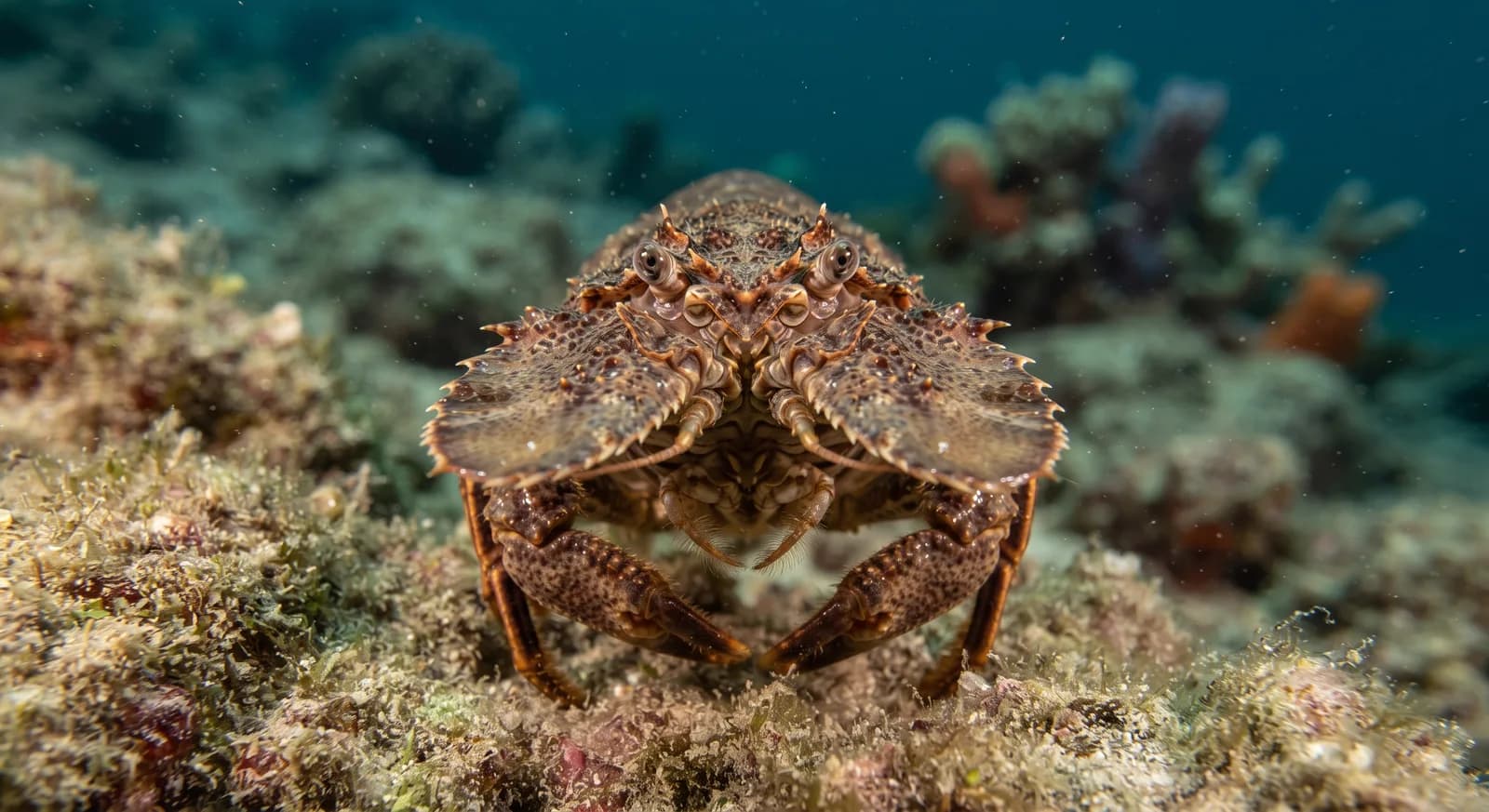
The Mediterranean slipper lobster is a decapod crustacean of the family Scyllaridae that lives in the Mediterranean and along the eastern coast of the Atlantic. It is a highly prized edible lobster, but it is scarce across most of its range through overfishing. Adults reach some 30 cm, are well camouflaged and have no claws. They are nocturnal in habit, emerging from caves and other refuges at night to feed on molluscs. They are preyed on by numerous bony fish. The most similar species is Scyllarides herklotsii, which lives on the Atlantic coast of Africa. Its larval and juvenile stages are largely unknown.

Size

25 cm – 45 cm

Life expectancy

20 years

Diet

Omnivore
Combines animal and plant food depending on availability.

Activity

Nocturnal

Active mainly at night.

Social structure

Colony

Lives in large concentrations, often for breeding reasons.

Ocean
31countries38parks73dive sites

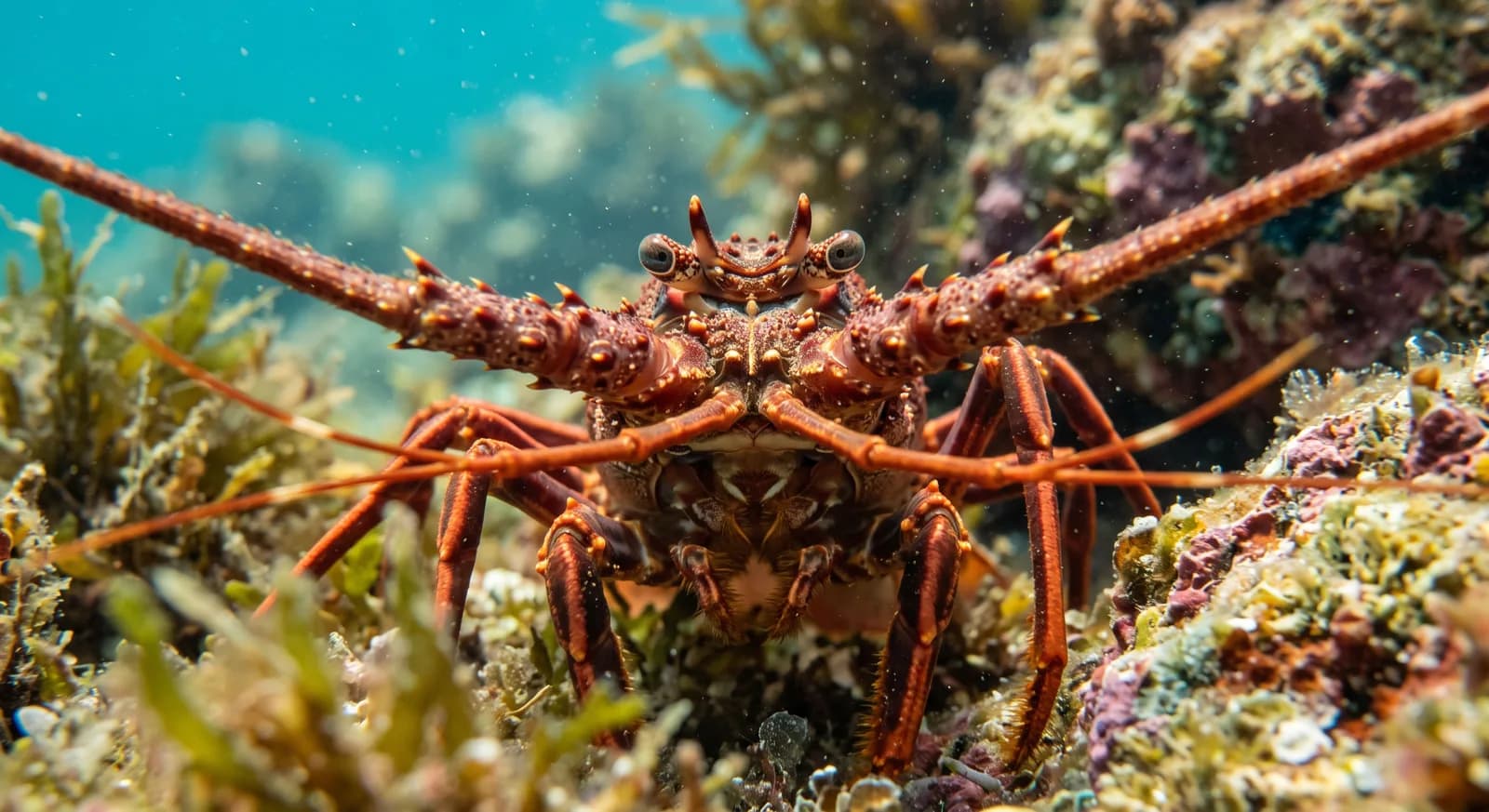
AI-generated images: illustrations, not photographs.

Fun facts

  • It is protected in several Mediterranean countries, and taking it by diving is banned across much of its range.
  • It is able to prise limpets off the rock, something very few predators manage, thanks to the strength of its front legs.
  • Its larval stage, the phyllosoma, is a transparent, flattened sheet that drifts for months in the open sea and looks nothing like the adult.
  • It has no claws or long antennae: its antennae are transformed into two broad, flattened, shovel-shaped plates, which give it an unmistakable silhouette and its Spanish names of cigarra de mar (sea cicada) and zapatilla de mar (sea slipper).
  • It digs with them and also uses them to push its way through; and with its legs it forces open the molluscs it feeds on, above all limpets and mussels.
  • When fleeing it swims backwards with flicks of its abdomen, as lobsters do.
  • Its flesh is excellent and has been heavily exploited, to the point that across much of the western Mediterranean it is now rare. Its slowness and its habit of gathering in caves make it trivially easy for a diver to catch.
  • It is protected in several Mediterranean countries, and fishing for it is banned or heavily restricted in Spain, Italy and France.
  • The IUCN classifies it as Data Deficient, which reflects how little is known about the real state of its populations.

Life cycle and biology

Skeleton type
Invertebrate - chitin exoskeleton (crustacean)
Habitat and environment
Caves and hollows on Mediterranean rocky bottoms, from 4 to 100 m

Sources consulted: Wikipedia (es): Scyllarides latus

Where to find it

Loading map…

Where to see it

Parks and dive sites where this species has been documented — showing 20 of 111.

Related species

Other species in the catalogue with the most in common with Mediterranean Slipper Lobster — same habitat, park, country, tags or family.

Shares a park
Shares a park
Shares a park
Shares a park
Shares a park
Shares a park

Keep exploring

Based on what we already know about mediterranean slipper lobster.

Share an experience, a fun fact or a tip for seeing the mediterranean slipper lobster.
See full glossary
This page in other languages: Español · Deutsch · Français · Português · Italiano

The pins mark the parks and dive sites where its presence is documented.

See its range on the interactive map→
Doñana National ParkSpain
TeideSpain
CalanquesFrance
Cinque TerreItaly
Alonissos and the Northern SporadesGreece
IchkeulTunisia
Majjistral ParkMalta
GarajonaySpain
TimanfayaSpain
Port-CrosFrance
Zenobia WreckCyprus
Medes IslandsSpain
Cap de CreusSpain
El Hierro / La RestingaSpain
Museo Atlántico (Lanzarote)Spain
Zakynthos (loggerhead turtle)Greece
Kastellorizo (Blue Cave)Greece
Malta (Blue Hole Gozo / Um El Faroud)Malta
Tavolara (Sardinia)Italy
Plemmirio Marine Reserve (Sicily)Italy
See all 38 parks
See all 73 dive sites
Common Spiny LobsterVulnerable

Common Spiny Lobster

Palinurus elephas

Common Hermit CrabNot Evaluated

Common Hermit Crab

Pagurus bernhardus

Common Spider CrabNot Evaluated

Common Spider Crab

Maja squinado

Not Evaluated

Mediterranean Hermit Crab

Clibanarius erythropus

Speckled Sea LouseNot Evaluated

Speckled Sea Louse

Eurydice pulchra

Sand HopperNot Evaluated

Sand Hopper

Talitrus saltator

CountriesSpain
ParksDoñana National ParkSpain
TagsOmnivore
Omnivore
Nocturnal
Colonial
Ocean
Crustacean

Europe17

Africa8

Asia6

Spain
Italy
Greece
Croatia
Portugal
France
Albania
Bosnia and Herzegovina
Bulgaria
Croatia
Cyprus
France
Gibraltar
Greece
Italy
Malta
Monaco
Montenegro
Portugal
Romania
Slovenia
Spain
Ukraine
Algeria
Cabo Verde
Egypt
Libya
Mauritania
Morocco
Senegal
Tunisia
Georgia
Israel
Lebanon
Palestine
Syria
Türkiye